San Ramon · Windemere · Dougherty Valley
Windemere Sub-Zero Not Cooling? Read the Frost Line Before You Worry
Up on the Dougherty Valley hillside in Windemere, a Sub-Zero that stops holding temperature almost always has a visible tell. Before you assume the worst, look at the freezer's frost line and read which compartment actually warmed — that one observation usually separates a coil-cleaning from a sealed-system repair.
Direct answer
In Windemere, a warm fresh-food side with a still-cold freezer is an airflow or defrost fault, not the compressor — check the evaporator frost line, the condenser behind the grille, and the evaporator fan. Both sides warm with nonstop running means the sealed system. The 94582 hillside heat and dust drive most of these. We diagnose either: (925) 940-3576.
Read the split
Which compartment warmed up in your Windemere kitchen?
Windemere's homes sit on the upper Dougherty Valley terraces in the 94582 ZIP, and the kitchens here lean toward newer panel-ready built-ins and Designer columns. Whatever the model, a Sub-Zero feeds both compartments cold air from one evaporator, so the way the warmth is distributed is the first thing that narrows the fault. Match your unit to a row, then read the section it points to.
Most calls we take from Windemere and neighboring Gale Ranch land in the top row — and that row almost never involves a compressor.
| What you see | Likely system | Common causes in Windemere | Compressor? |
|---|---|---|---|
| Fresh food warm, freezer still hard-frozen | Air delivery or defrost | Iced evaporator, stalled evaporator fan, stuck damper, dust-choked condenser, bad thermistor | No — coil clean or part swap |
| Both compartments warm, runs almost nonstop | Sealed system | Refrigerant leak, weak compressor, restricted drier | Yes — gauges and amp draw needed |
| Cold but drifts up on 100°F+ days, long runs | Heat load on the coil | Condenser packed with hillside dust, gasket leak, west-facing sun load | Sometimes — clean coil, then re-measure |
The frost-line test
What the evaporator frost line tells you
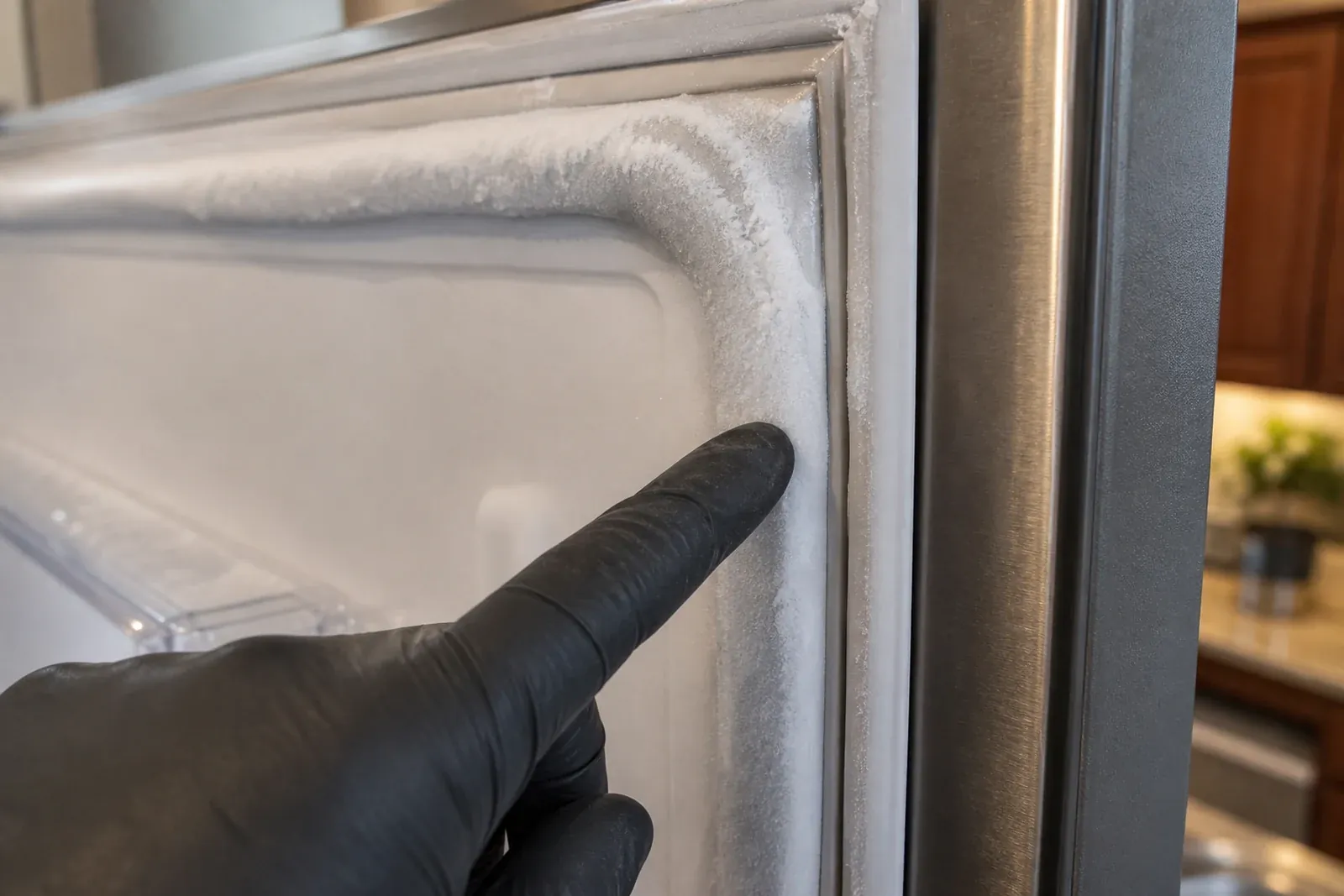
This is the one check that separates the two most common Windemere faults, and you can read it through the freezer in a couple of minutes. The evaporator coil lives behind the freezer's rear panel; under normal operation it carries a thin, even layer of frost that the defrost cycle clears on schedule. When defrost fails, frost keeps building until it bridges the coil and chokes the air the evaporator fan is trying to push up to the fresh-food side.
- Heavy, solid frost or ice across the back freezer panel while the fridge is warm points straight at a defrost fault — a defrost heater, sensor, or board, not the sealed system. The freezer stays cold because it sits right on the iced coil.
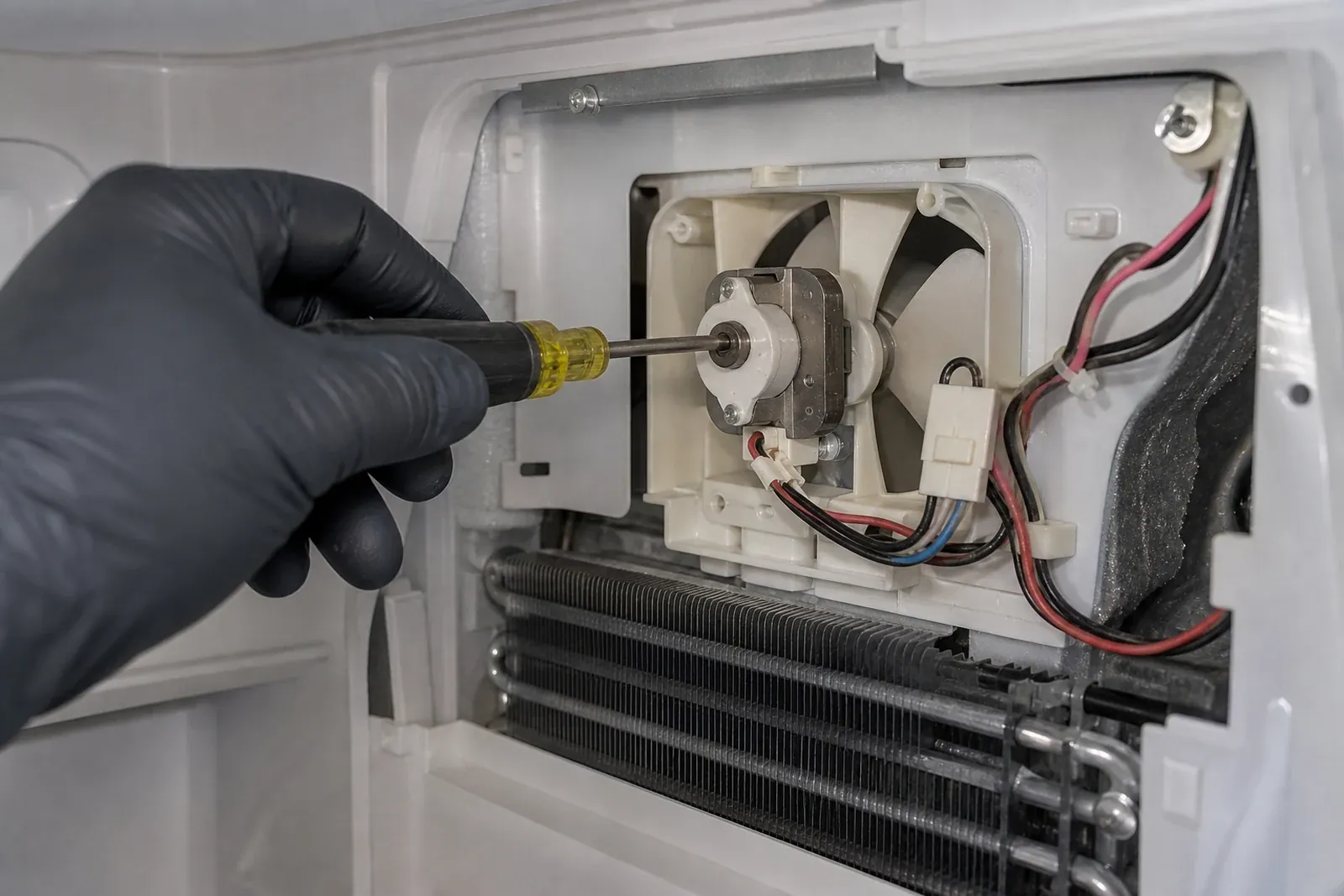
- No airflow at all and a clean coil usually means a stalled evaporator fan motor — cold is being made but nothing moves it.
- A clean coil with airflow but a slowly warming fridge often traces to a failed thermistor or a stuck damper mis-routing the cold.
All three are standard repairs in the $200–$650 band, and all are well clear of sealed-system territory.
The local trigger
Why hillside heat and dust start it in Dougherty Valley
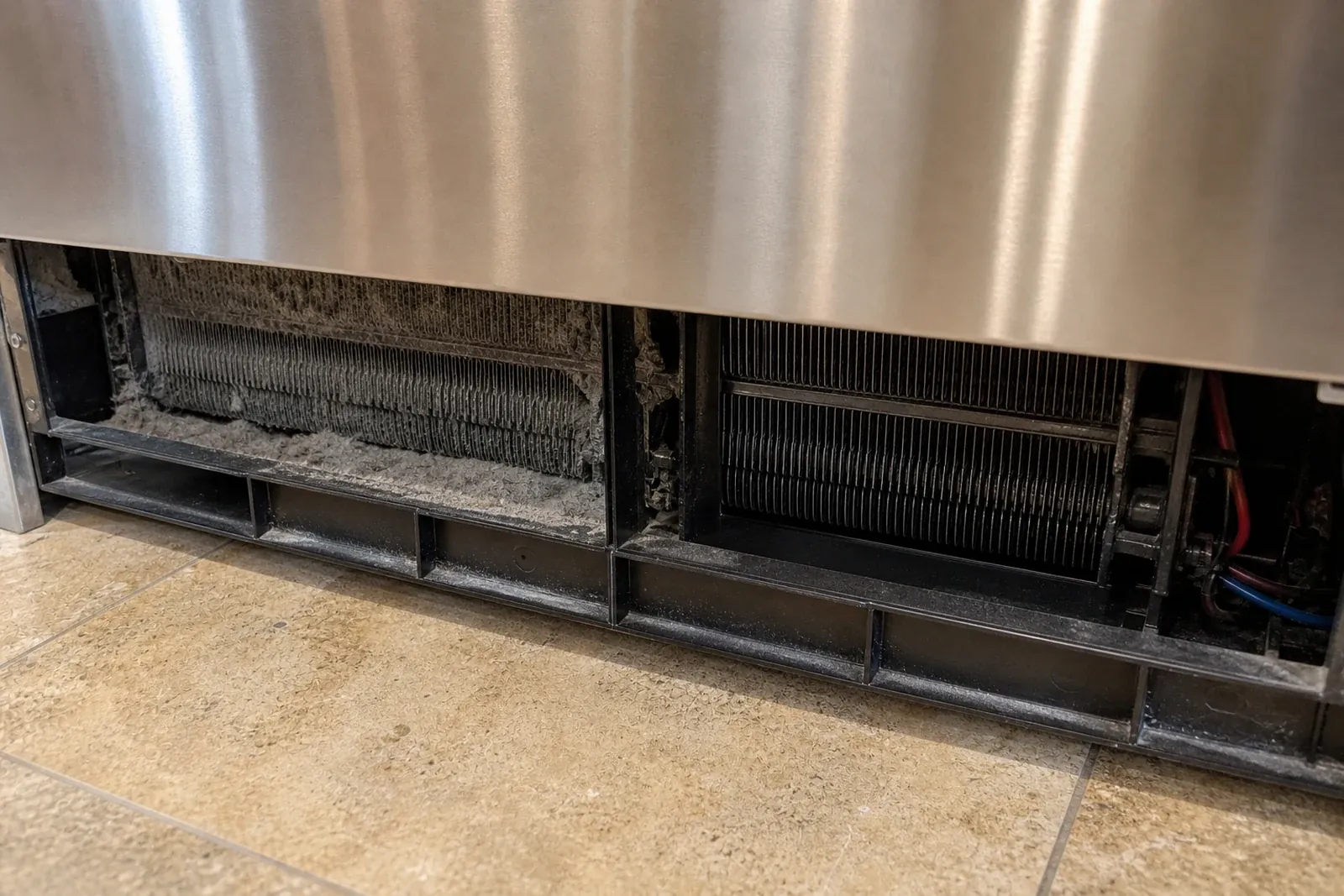
Windemere's perch above the valley floor is exactly why so many not-cooling calls here begin at the condenser. Inland summer days run 90–100°F-plus, and heat waves push toward 105°F — that piles heat load on a Sub-Zero's condenser just as the offshore Diablo winds drag dust and wildfire-season ash off the open Dougherty Valley hillsides onto the coil. A coil that should stay clean for months can felt over in days during a Diablo-wind event.
A blanketed condenser can't shed heat, so the compressor runs longer and the fresh-food side is the first to drift up. On the worst days that long-run heat load can also feed a defrost fault, because the system never gets the idle time it needs to clear frost normally. This is why we tell Windemere owners to clean the condenser every 3–6 months rather than the usual 6–12. The full pattern is laid out on our Dougherty Valley dust-and-heat page and the summer-heat not-cooling guide.
The geography compounds it in a way flatland San Ramon Village tracts never see. Windemere's upper terraces sit higher and more exposed than the older homes off Bollinger or Alcosta, so the same NE Diablo gusts that the valley floor barely notices arrive here loaded with grit straight off the bare hillside cuts behind the newest cul-de-sacs. West- and south-facing kitchens — common across these tracts so the great-room windows catch the Mount Diablo view — take direct afternoon sun on the cabinet wall, which warms the built-in's own surroundings and stacks more load on a coil that's already half-choked. Pair that with how tightly these panel-ready columns are framed into custom millwork, where the condenser breathes through one narrow upper grille rather than open air, and you have the exact recipe behind most warm-fridge calls we run up the hill into the 94582 ZIP each summer. It is also why a Windemere unit can read fine all winter and then drift warm the first week of real Tri-Valley heat, when the dust load and the sun load arrive together.
Before you call
Four checks worth doing first
None of these void anything or require tools, and what you find genuinely shortens the visit:
- Read the frost line. Look at the back of the freezer for heavy ice versus a thin even frost. Note which one you see.
- Look at the condenser. On most built-ins it's behind the upper grille. A gray felt of hillside dust over the coil can explain a warm fridge on its own.
- Listen for the fans. Open the freezer and listen for the evaporator fan; put a hand near the lower grille for the condenser fan. Silence where there should be air is a real clue.
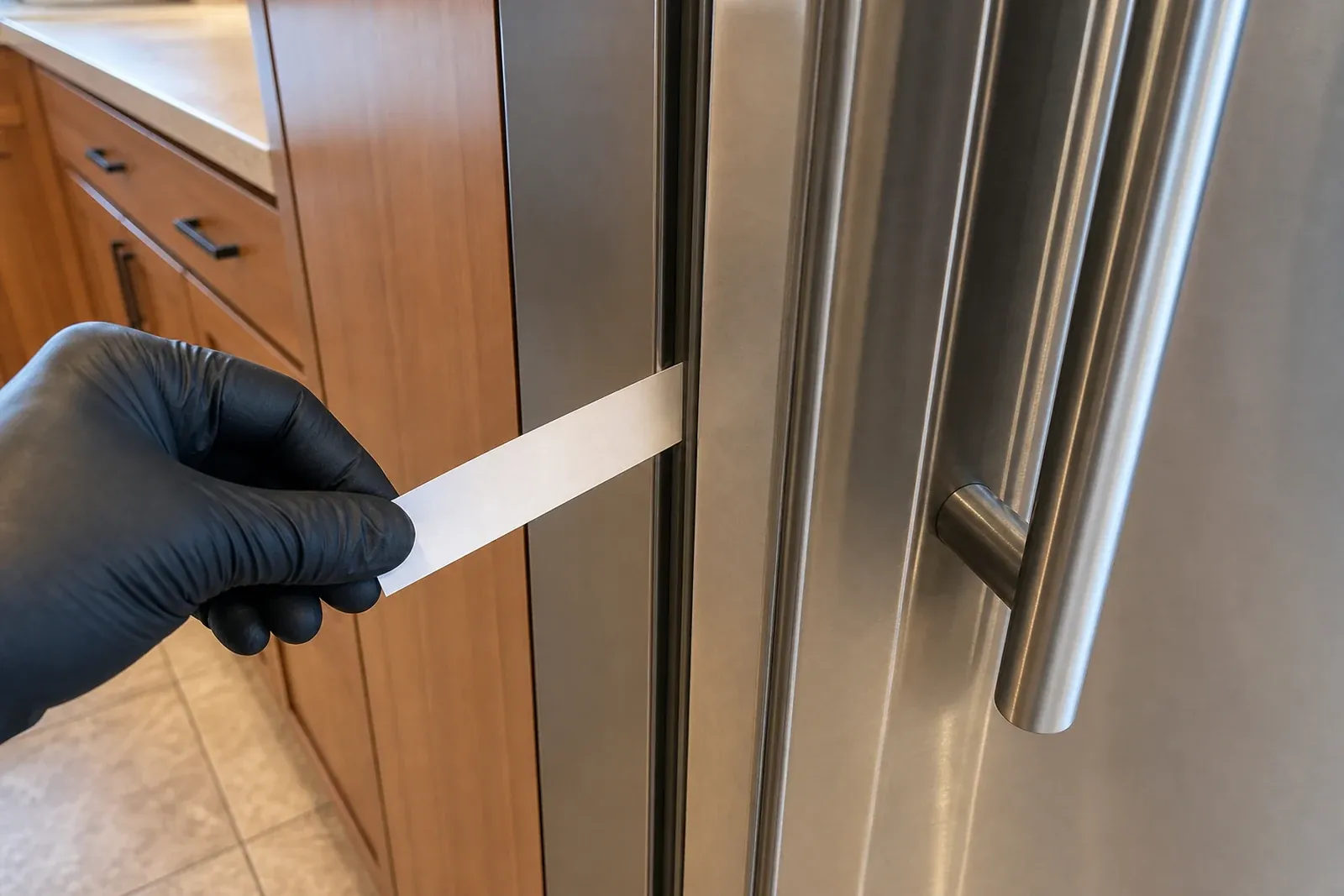
- Run the dollar-bill seal test. Close the door on a bill; if it slides with no drag, a tired gasket is leaking warm kitchen air in — see gasket and seal repair.
Jot down each compartment's temperature with the time. A short temperature log turns a guess into a diagnosis and helps us bring the right OEM part to Windemere on the first trip.
Don't do this
Should you lower the temperature on a warm Sub-Zero?
No — and it's the single most common thing we see Windemere owners do while they wait. A Sub-Zero that's struggling won't cool harder because you asked for a colder setpoint; you'll just run the compressor longer, add heat load on an already-stressed coil, and mask the symptom we need to read. A few more things to avoid:
- Don't keep dropping the setpoint. It hides the fault and can deepen a defrost problem by denying the system idle time.
- Never add refrigerant yourself. Sub-Zero sealed systems are closed and charged to spec; topping one off is illegal without EPA Section 608 certification and usually masks a leak that needs a real fix — see refrigerant handling.
- Don't clear an error code while temps are still rising. On older boards a flashing "Vacuum Condenser" or Service light is part of the diagnosis.
- Don't pull a built-in out alone. Windemere's panel-ready columns are heavy and the cabinet cutout is unforgiving — that's cabinet-safe work.
Getting us out
Booking a Windemere visit
We diagnose the unit in your kitchen, confirm the fault from the frost line and the gauges if needed, and quote a flat price before any work starts — the $95–$150 service call is credited toward the repair. From the Bishop Ranch and Crow Canyon corridor, Windemere and the rest of Dougherty Valley are a quick reach up the hill, along with Gale Ranch, Danville, Dublin, and Pleasanton. Windemere's long, steep hillside driveways are no problem; if your tract sits behind a gate or HOA call box, give us that access when you book so there's no wait at the entrance. See how the visit works, local repair costs, and the areas we cover. Yes — we service Windemere: book online or call (925) 940-3576.
Next step
Call with the Sub-Zero model number
Have the model-tag photo, current fresh-food and freezer temperatures, and the symptom timeline ready. That lets the San Ramon intake route the visit around the likely Sub-Zero part family instead of a generic appliance script.
FAQ
Questions San Ramon homeowners ask before scheduling
Why is my Windemere Sub-Zero not cooling?
In Windemere the most common reason is the Dougherty Valley hillside heat and Diablo-wind dust choking the condenser, which makes the fresh-food side drift warm first. After that come defrost faults that ice the evaporator, a stalled evaporator fan, a stuck damper, or a bad thermistor — all airflow problems, not the compressor. If the freezer is still hard-frozen, the sealed system is fine. Call (925) 940-3576.
Sub-Zero fresh food warm but freezer cold in Windemere — what does that mean?
That split means the cold is being made but not delivered upstairs to the fresh-food compartment, so the sealed system is working. Check the freezer's evaporator frost line: heavy ice points to a defrost fault, while a clean coil with no airflow points to the evaporator fan. A dust-choked condenser from the 94582 hillside is the other frequent cause. These are $200–$650 repairs, not a compressor.
Should I lower the temperature if my Sub-Zero is warm?
No. A struggling Sub-Zero won't cool harder because you set it colder — you'll just run the compressor longer, add heat load on an already-stressed Windemere coil, and hide the symptom we use to diagnose. Leave the setpoint where it was, note your compartment temperatures with the time, and avoid adding refrigerant or clearing error codes while temps are still rising.
Do you service Windemere and the rest of Dougherty Valley?
Yes. We cover Windemere, Gale Ranch, and the wider Dougherty Valley from the Bishop Ranch and Crow Canyon corridor, along with Danville, Dublin, and Pleasanton. The long, steep hillside driveways here are routine for us; if your tract is gated, just give us the gate or HOA access when you book. Call (925) 940-3576 or use the booking page to schedule.
There is ice on the back of my freezer and the fridge is warm — is that the compressor?
Almost certainly not. Heavy ice bridging the back freezer panel while the fridge warms is a classic defrost fault — a defrost heater, sensor, or control board failed, and frost choked the evaporator so no cold reaches the fresh-food side. The freezer stays cold because it sits on the iced coil. That's a standard repair in Windemere, not a sealed-system job.
How fast can you reach Windemere for a not-cooling call?
Often same day or next day, depending on when you call and where in Dougherty Valley you are. Windemere is a short run up from the Bishop Ranch corridor, so we get there quickly even on hot summer days when these calls cluster. For gated tracts, give us access details up front so we're not stuck at the call box. Book online or call (925) 940-3576.
Related