San Ramon · Estate wine columns
Dual-Zone Sub-Zero Wine Column Drift in San Ramon Estates
An estate wine column that reads a degree or two off is almost never the disaster it feels like at 9 p.m. before a dinner party. Log the readings for a day, then narrow the fault to one zone — because on a dual-zone Sub-Zero, the difference between a stuck damper and a tired thermistor is the difference between a quick fix and a sealed-system call.
Direct answer
On a dual-zone Sub-Zero wine column, a degree or two of swing is normal cycling, not failure. Log the displayed and an independent thermometer reading for a full day first. If only one zone reads wrong, suspect that zone's damper, sensor, or fan — not the compressor. Still drifting in Norris Canyon or Henry Ranch? Call (925) 940-3576.
The standard
How stable should a Sub-Zero wine column actually be?
A healthy Sub-Zero wine column holds each zone to roughly plus or minus 2°F of its set point over a normal day. That is the bar to measure against — not a frozen, never-moving number. The cabinet is built to swing inside that band as the compressor cycles, the interior lights warm the air, and someone opens the door to pull two bottles for the patio. A column that reads 55°F at noon, 53°F at midnight, and 56°F the next afternoon is doing exactly what it should.
What is not normal is a steady, one-direction climb that never recovers, or a spread wider than a few degrees between what the display claims and what an independent thermometer on a middle shelf actually reads. Estate collections in Norris Canyon Estates, Henry Ranch, and The Preserve are often decades in the making, and a column that creeps from 55°F to 61°F over a week will slowly cook a cellar nobody can replace. The whole point of a column is that band of stability — so the first job is proving whether your unit is inside it.
| What you observe | Likely cause | Where it points |
|---|---|---|
| Both zones swing 2-3°F around set point over a day | Normal compressor cycling and door openings | No fault — see /sub-zero-wine-storage-temperature |
| Display reads 55°F, shelf thermometer reads 61°F | Sensor or control-board reading is drifting | /san-ramon-sub-zero-temperature-log-not-cooling |
| Steady one-direction climb, never recovers | Heat-rejection fault — condenser, fan, or sealed system | /sub-zero-sealed-system-compressor |
| Only the upper (or lower) zone is wrong | That zone's damper, sensor, or evaporator fan | /sub-zero-designer-pro-column-repair-san-ramon |
| Both zones warm, unit barely running | Sealed system, control board, or Showroom Mode | /sub-zero-error-codes-alarms |
Evidence first
Log a day of readings before you call it drift
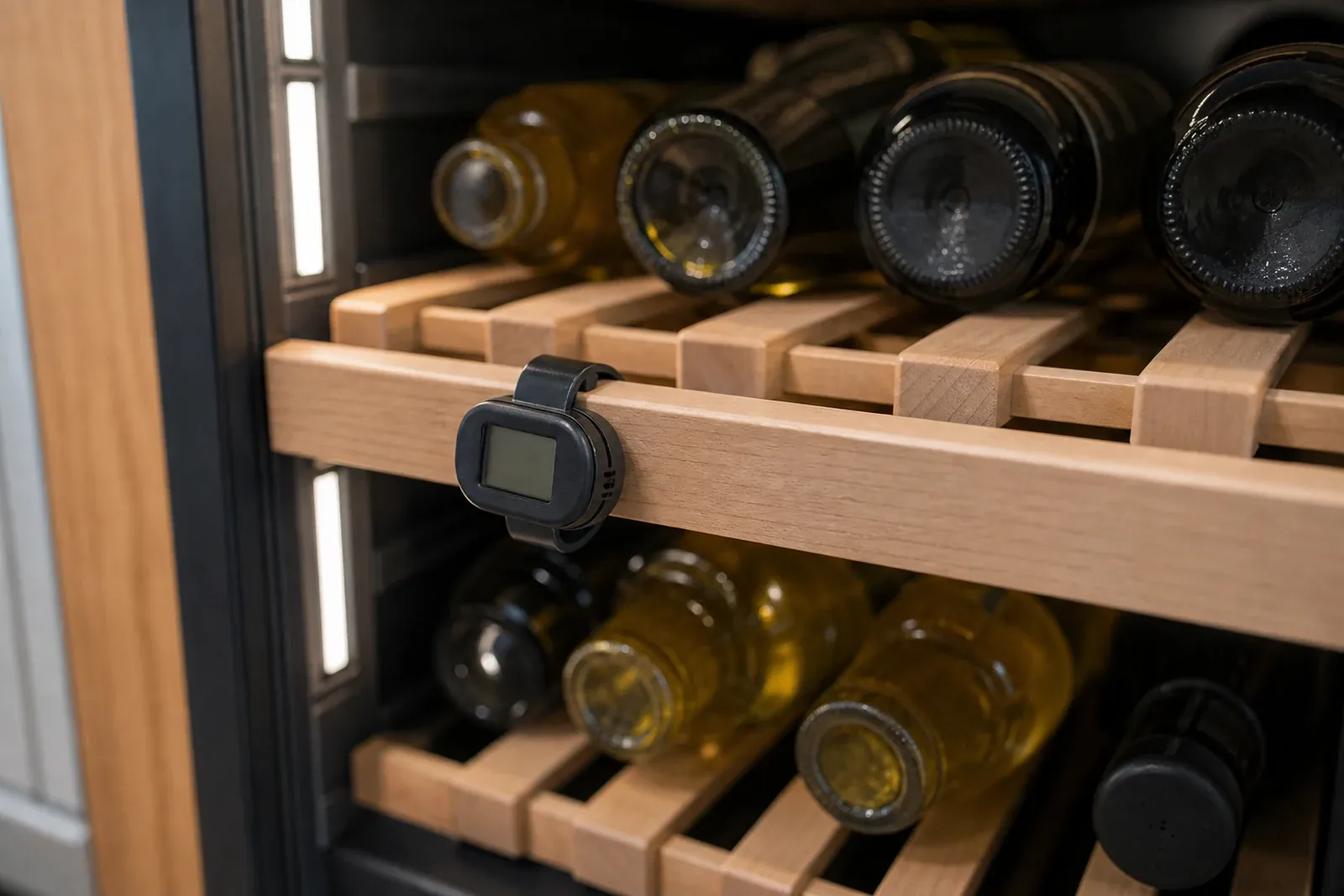
The most valuable thing you can hand a technician is a record, not a feeling. Set an independent thermometer on a middle shelf in each zone, then write down both the column's displayed temperature and the thermometer reading every few hours for a full 24 hours. Keep the door shut as much as a dinner-party week allows. This one habit separates a unit that is cycling normally from one with a real fault, and it usually saves a second trip up a long Norris Canyon driveway.
- Both zones stable within about 2°F — leave it alone; the swing is the column doing its job, and you have your answer for free.
- Display and shelf thermometer disagree by several degrees — the cabinet is reading itself wrong, which points at a thermistor or board rather than the cooling system.
- Slow steady climb in both zones — a heat-rejection problem: choked condenser, stalled condenser fan, or a column baking near a range or in afternoon Diablo sun.
- Only one zone off — keep the log per zone; that pattern is the single clearest clue you can give us.
Bring the log to the visit. It turns "it feels warm" into a pattern, and it is the backbone of our temperature-log diagnostic. Without it, drift is guesswork; with it, the fault usually names itself before we open the grille.
One zone wrong
When only one zone of a dual-zone column reads off
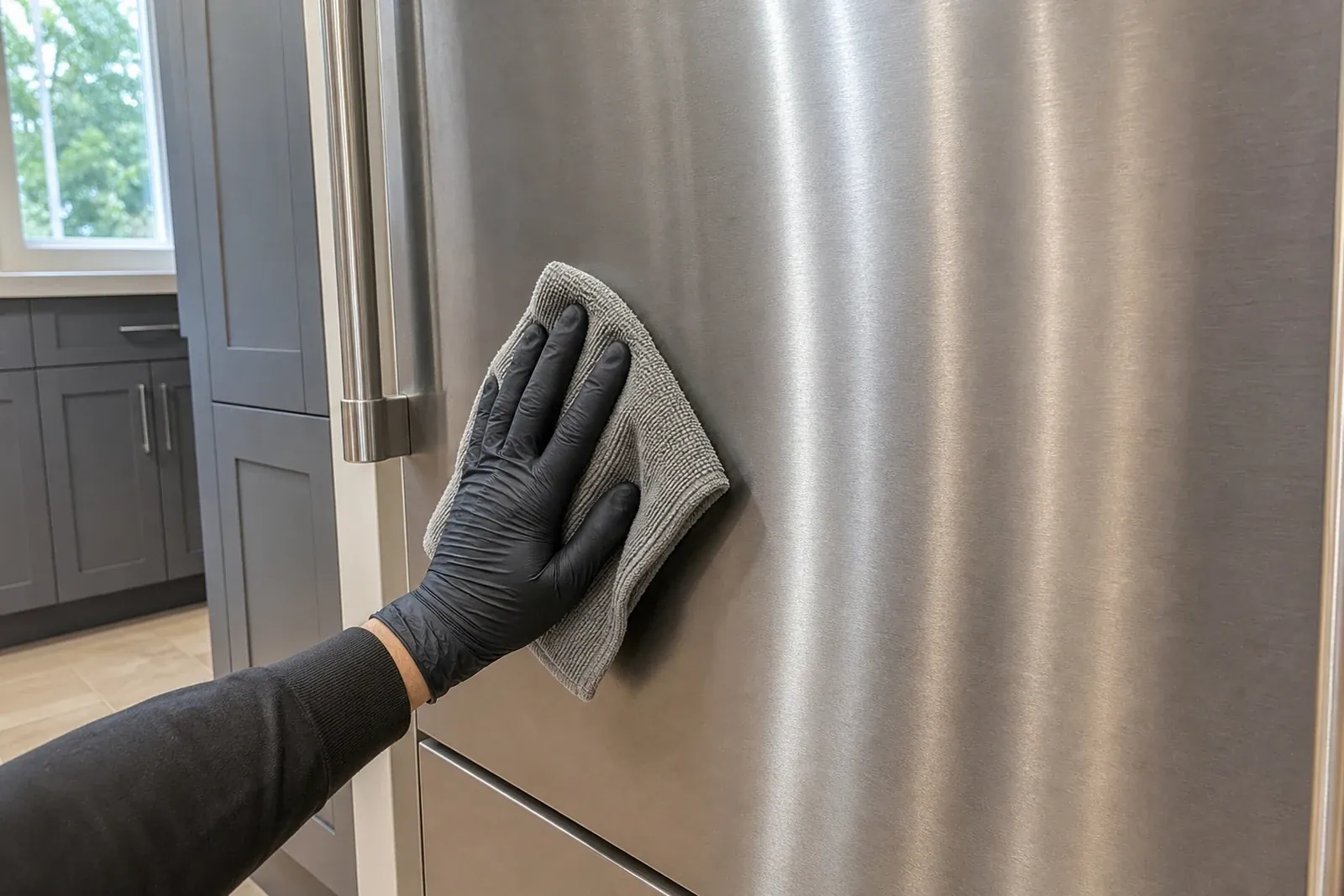
This is the most telling pattern of all, and it changes the whole diagnosis. A dual-zone Sub-Zero column shares one compressor and one condenser but splits the cold air between two independently controlled zones using a damper, a temperature sensor, and an evaporator fan per zone. So when the bottom zone holds a rock-steady 55°F while the top zone creeps to 60°F, the sealed system is almost certainly fine — if it were failing, both zones would warm together.
- Stuck or misadjusted damper — the air door that meters cold into the warm zone isn't opening fully, so that zone slowly drifts up while the other stays on target.
- Drifting zone sensor (thermistor) — the zone is telling the board it's colder than it is, so the board under-cools it. Sub-Zero thermistors commonly drift after roughly 8 years, which is why an older Designer column often develops a one-zone problem long before anything mechanical wears out.
- Weak or stalled zone evaporator fan — if the fan moving air across that zone's coil is slowing, the cold is there but isn't being circulated, and only that zone suffers.
Because the tag on a Designer wine column sits inside the cabinet to the left of the upper drawer area, photograph it so we can match the right damper and sensor part before the visit — that detail lives in our model number guide. One-zone faults are usually a moderate, non-sealed repair in the $200–$650 band rather than the $900–$1,800 sealed-system range, and our Designer and PRO column page walks through these in depth.
Summer load
Why San Ramon estate kitchens push a column harder
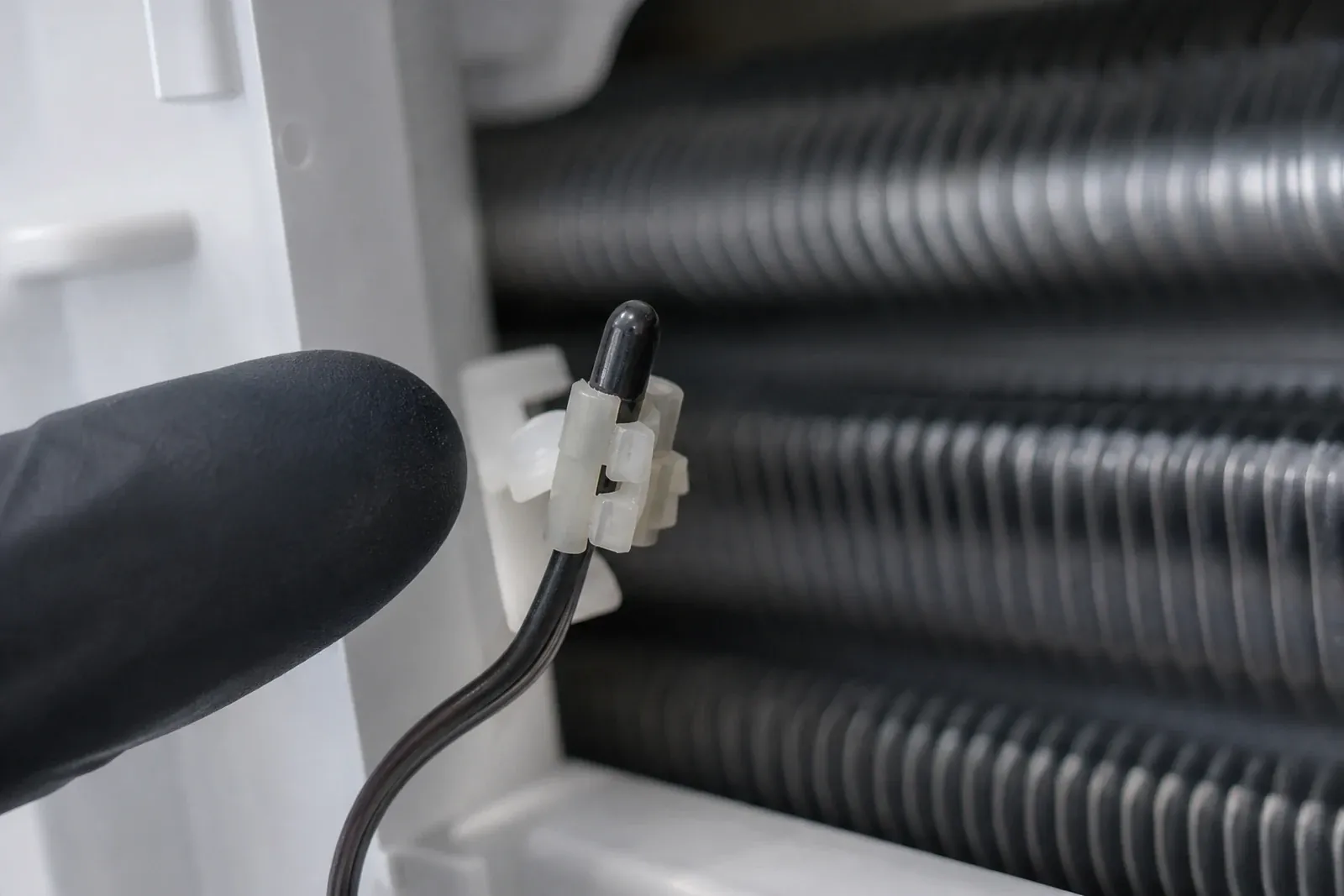
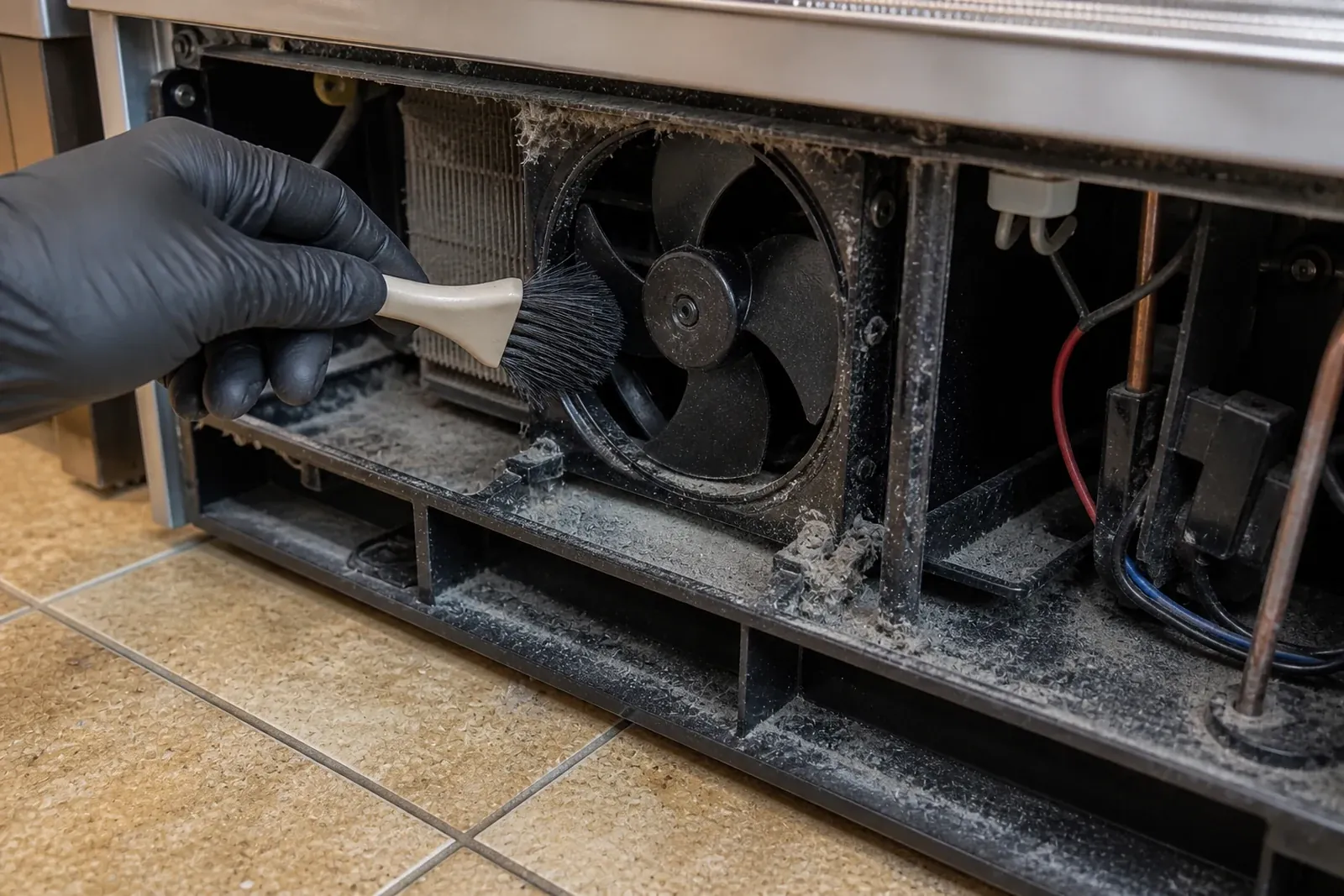
A wine column only holds its band if it can shed heat, and San Ramon makes that job harder than most. When Diablo Valley summers run 90–100°F and heat waves push toward 105°F, the condenser has to reject far more heat just to hold 55°F inside. Offshore Diablo winds drive fine hillside dust off the Norris Canyon and Henry Ranch grades, and wildfire-season ash from the Diablo Range can coat a condenser intake in days — not the months a manufacturer's manual assumes. A choked coil can't dump heat, so the column drifts warm no matter how the zones are set.
Two estate-kitchen realities make this worse. First, columns are frequently built into a wall of cabinetry beside a range or under-cabinet ovens, so radiant heat from cooking adds to the load. Second, an un-air-conditioned butler's pantry or a column on a sun-struck wall fights physics on a hot afternoon. For columns in Dougherty Valley, Gale Ranch, and Norris Canyon we clean condensers every 3–6 months, not the annual default — see the schedule in our maintenance calendar. If both zones climb together and the coil is clean, the next suspects are the condenser fan and then the sealed system, which on a unit under twelve years old may still be covered by Sub-Zero's 12-year sealed-system warranty.
Gated dispatch
Service to Norris Canyon Estates, Blackhawk, and Diablo
We service estate wine columns across the gated and hillside communities of the San Ramon Valley, with dispatch out to Blackhawk and Diablo at the foot of Mount Diablo. These addresses come with realities a flat-quote, verify-first approach is built for. Gated communities like Norris Canyon Estates and Canyon Lakes need gate or HOA access arranged up front, and the long, steep driveways on the Henry Ranch and Norris Canyon grades mean we plan a longer appointment window so the visit isn't rushed against the next call.
The priority for a long-held collection is conservative: stabilize the cabinet, prove the fault by zone using your log, and protect the wine rather than gamble on a guess. If a one-zone damper or sensor is the culprit, that is a contained repair; if the sealed system is genuinely involved, sealed-system work needs EPA Section 608 certification and gauges, never a phone quote — our EPA 608 page covers that. Panel-ready columns across the newer Dougherty Valley and Windemere tracts get a careful pull-out under our cabinet-safe service so custom millwork stays unmarked. Every diagnosis is flat-quoted and approved before work begins, and the $95–$150 service call is credited toward the repair. To get on the calendar, call (925) 940-3576 or book online — note the community and gate so we arrive ready.
Next step
Call with the Sub-Zero model number
Have the model-tag photo, current fresh-food and freezer temperatures, and the symptom timeline ready. That lets the San Ramon intake route the visit around the likely Sub-Zero part family instead of a generic appliance script.
FAQ
Questions San Ramon homeowners ask before scheduling
Why is my Sub-Zero wine column temperature drifting?
First confirm it's actually drifting and not just cycling: a healthy column swings within about plus or minus 2°F of its set point over a day. Log the display and an independent shelf thermometer for 24 hours. A steady one-direction climb usually means heat rejection — a condenser choked by Diablo-wind dust or wildfire ash, a stalled fan, or the column baking near a range. If the display and thermometer disagree by several degrees, suspect a sensor instead.
How stable should a Sub-Zero wine column be?
Aim for each zone to hold within roughly plus or minus 2°F of its set point across a normal day. The cabinet is designed to swing inside that band as the compressor cycles, the lights run, and the door opens — that is normal, not a fault. Judge it by the average over 24 hours, not by one reading taken right after you pulled three bottles for a dinner on the patio. A spread wider than a few degrees, or a climb that never recovers, is the real warning sign.
Why is only one zone of my dual-zone wine column wrong?
When one zone holds perfectly and the other drifts warm, the sealed system is almost certainly fine — a failing compressor would warm both zones together. The usual culprits are that zone's air damper not opening fully, its temperature sensor drifting (common after about 8 years), or its evaporator fan slowing. These are typically a $200–$650 non-sealed repair. Photograph the tag inside the cabinet left of the upper drawer so we match the right damper or sensor part before the visit.
Do you service wine columns in Norris Canyon Estates and Blackhawk?
Yes. We service estate wine columns across Norris Canyon Estates, Henry Ranch, The Preserve, and Canyon Lakes, with dispatch out to Blackhawk and Diablo at Mount Diablo. Gated communities need gate or HOA access arranged in advance, and the long hillside driveways mean we book a longer appointment window. Call (925) 940-3576 with the community and gate details so we arrive ready, gate code in hand.
Does a thermistor wear out in a Sub-Zero wine column?
Yes — a zone temperature sensor (thermistor) commonly drifts after roughly 8 years, telling the control board the zone is colder than it really is, so the board under-cools it. That is why an older Designer column often develops a one-zone-warm problem long before anything mechanical fails. A 24-hour log showing the display and an independent thermometer disagreeing by several degrees is the classic signature, and replacing the sensor is a contained repair.
How much does it cost to fix a wine column that won't hold temperature?
It depends on what the log and diagnosis reveal. A one-zone fault — damper, sensor, or evaporator fan — is usually a non-sealed repair in the $200–$650 range. A sealed-system or compressor repair runs $900–$1,800 and needs EPA-608 certified gauges, never a phone quote. The $95–$150 service call is credited toward the repair, and every job is flat-quoted and approved before work begins. Call (925) 940-3576 for an estate-kitchen visit.
Related