San Ramon · Heat-wave cooling
When a Tri-Valley Heat Wave Warms Your Sub-Zero — and What to Do
When the Tri-Valley climbs toward 105°F and the Diablo air sits still over San Ramon, a Sub-Zero that coasted all winter can suddenly run nonstop and drift warm on the fresh-food side. Most of the time this is a heat-load problem, not a dying compressor — and the fix is usually simpler and cheaper than owners fear.
Direct answer
A Sub-Zero warms in a San Ramon heat wave because the condenser can't shed heat fast enough — usually a dust-packed coil, a hot install location, or both. The freezer holds while fresh food drifts up first. Clean the condenser, give it air, then re-measure after 24 hours. Still warm with a clean coil? Call (925) 940-3576.
The mechanism
Why heat makes a healthy Sub-Zero run warm
A Sub-Zero doesn't make cold out of nothing — it moves heat from inside the cabinet and dumps it into your kitchen through the condenser coil behind the upper grille. The hotter the room, the harder that job gets. On a 75°F day the unit cycles comfortably; on a 102°F Dougherty Valley afternoon, with the kitchen itself sitting at 80°F-plus, the condenser has far less of a temperature gap to work with. The compressor runs longer, the coil stays hotter, and if anything is restricting heat rejection, the fresh-food compartment is the first place you'll see the cabinet lose the fight.
There's a reason the fresh food warms before the freezer. One evaporator feeds both compartments, and the control logic protects the freezer first. So in a heat wave you'll typically see a still-hard-frozen freezer while the fridge climbs into the high 40s or low 50s. That split is good news: it tells you the sealed system is making cold and the problem is heat rejection or airflow, not refrigerant. The expensive both-sides-warm-runs-forever picture is a different fault entirely — see our symptom-first cooling diagnostic.
Where it bites in San Ramon
The local installs that overheat first
Not every San Ramon kitchen loads a Sub-Zero the same way. The units we get the most heat-wave calls about share a pattern — they're fighting extra heat the coil was never meant to shed. The table below maps the common local install situations to why they run warm and what we do about it.
| San Ramon install | Why it warms in a heat wave | What we do about it |
|---|---|---|
| Outdoor / island unit on a patio | Direct sun plus 100°F+ air bakes the cabinet and condenser all afternoon | Shade the install, clean the coil, verify the fan; some need a sealed-system check |
| Built-in against a hot west wall or beside a range | Radiant heat from the wall or cooktop raises intake-air temperature | Improve clearance and airflow at the grille, then re-measure compartment temps |
| Garage-adjacent or pantry install with poor venting | Trapped warm air recirculates through the condenser | Clear the grille, confirm exhaust path, clean condenser every 3–6 months |
| Dougherty Valley / Gale Ranch hillside home | Fine hillside dust plus inland heat pack the coil fast | Deep condenser clean — see the dust-and-heat condenser page |
| Dual-zone wine column near a south window | Sun load pushes the cabinet above its narrow 55°F target | Shade the glass, clean the coil, check the condenser fan and door seal |
During the heat wave
What to do right now while it's hot
If your Sub-Zero is drifting warm in the middle of a Tri-Valley heat spell, a few things genuinely help before a technician arrives — and a few make it worse. Do these:
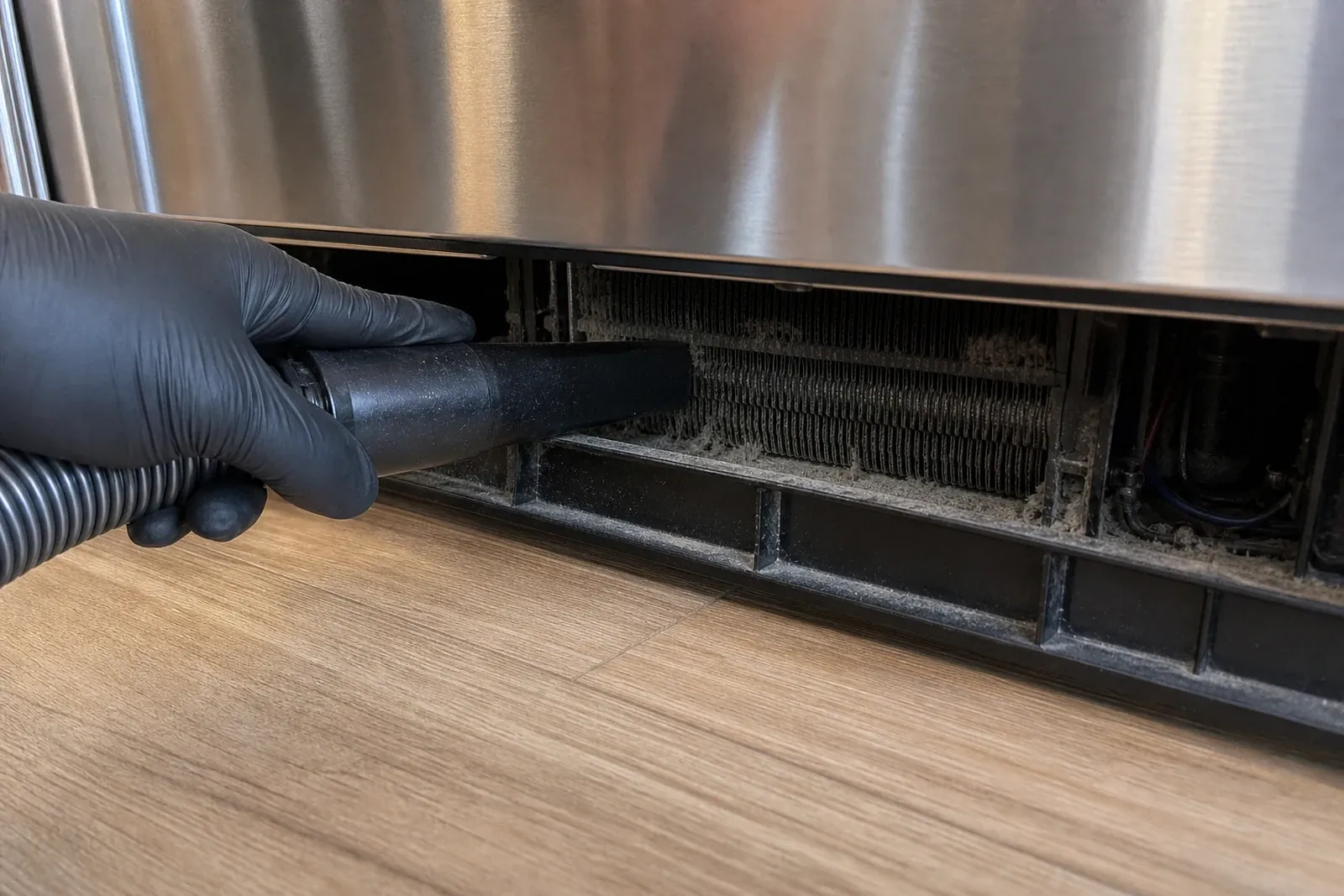
- Look at the condenser. Pop the upper grille and check for a gray felt of dust over the coil. If it's caked, that alone explains a lot — see how hillside dust and heat load the coil and our condenser-cleaning schedule.
- Give it air and shade. Make sure the grille isn't blocked by a basket or a panel. For an outdoor or island unit, throw shade on it during peak afternoon sun if you safely can.
- Stop opening it. Every door open pours 80°F kitchen air into a cabinet already struggling. Decide what you need, get it, close it.
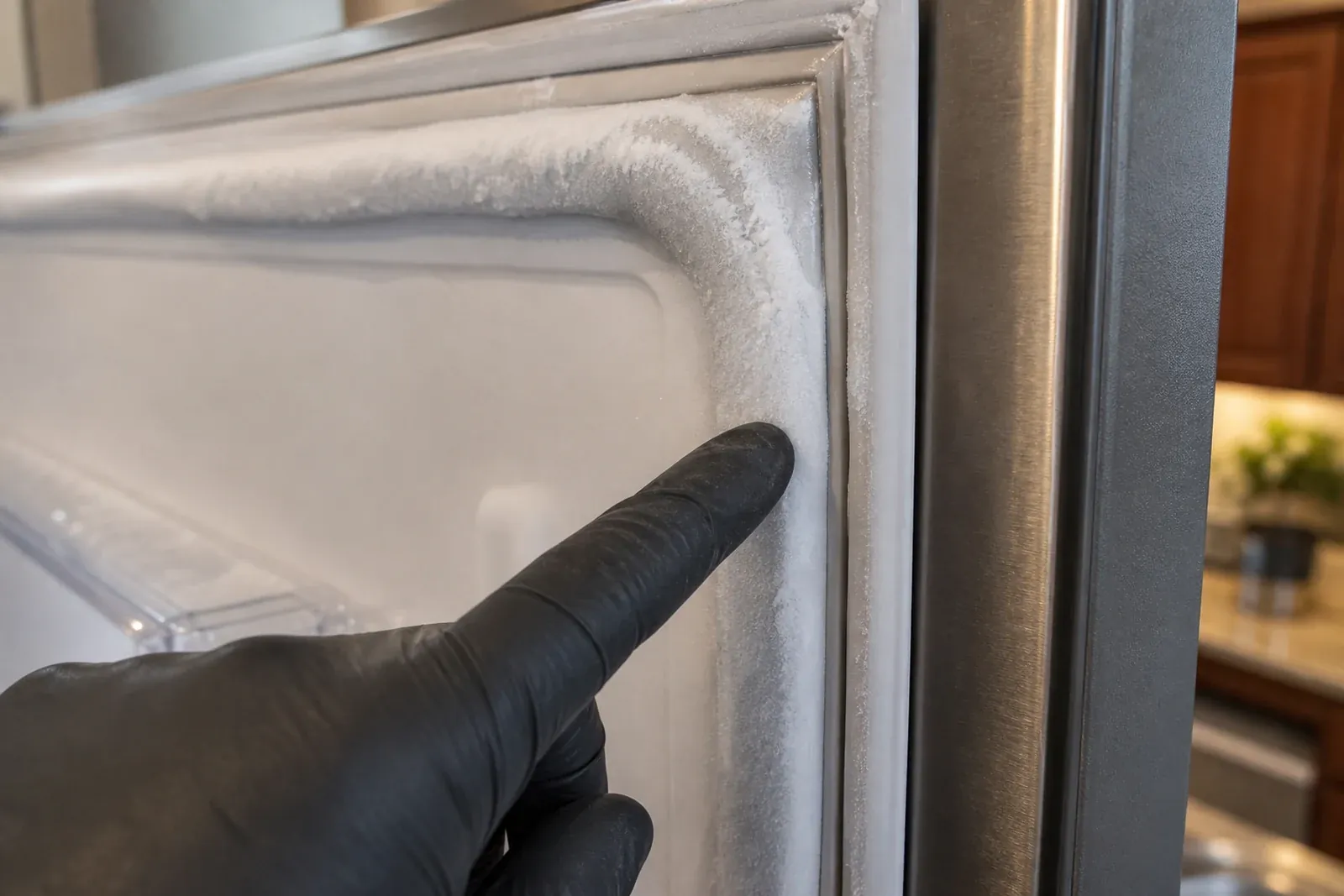
- Run the dollar-bill seal test. A tired gasket leaks hot San Ramon air straight into the box. If a bill slides out with no drag, see gasket and seal repair.
And don't do these: don't keep dropping the setpoint — it just runs the compressor harder without cooling faster; don't add refrigerant (it's illegal without EPA Section 608 and points to a leak anyway, per our refrigerant-handling page); and don't clear a flashing "Vacuum Condenser" or Service code while temperatures are still rising — that code is part of the diagnosis.
Food safety
Is the food still safe? Read the thermometer, not the panel
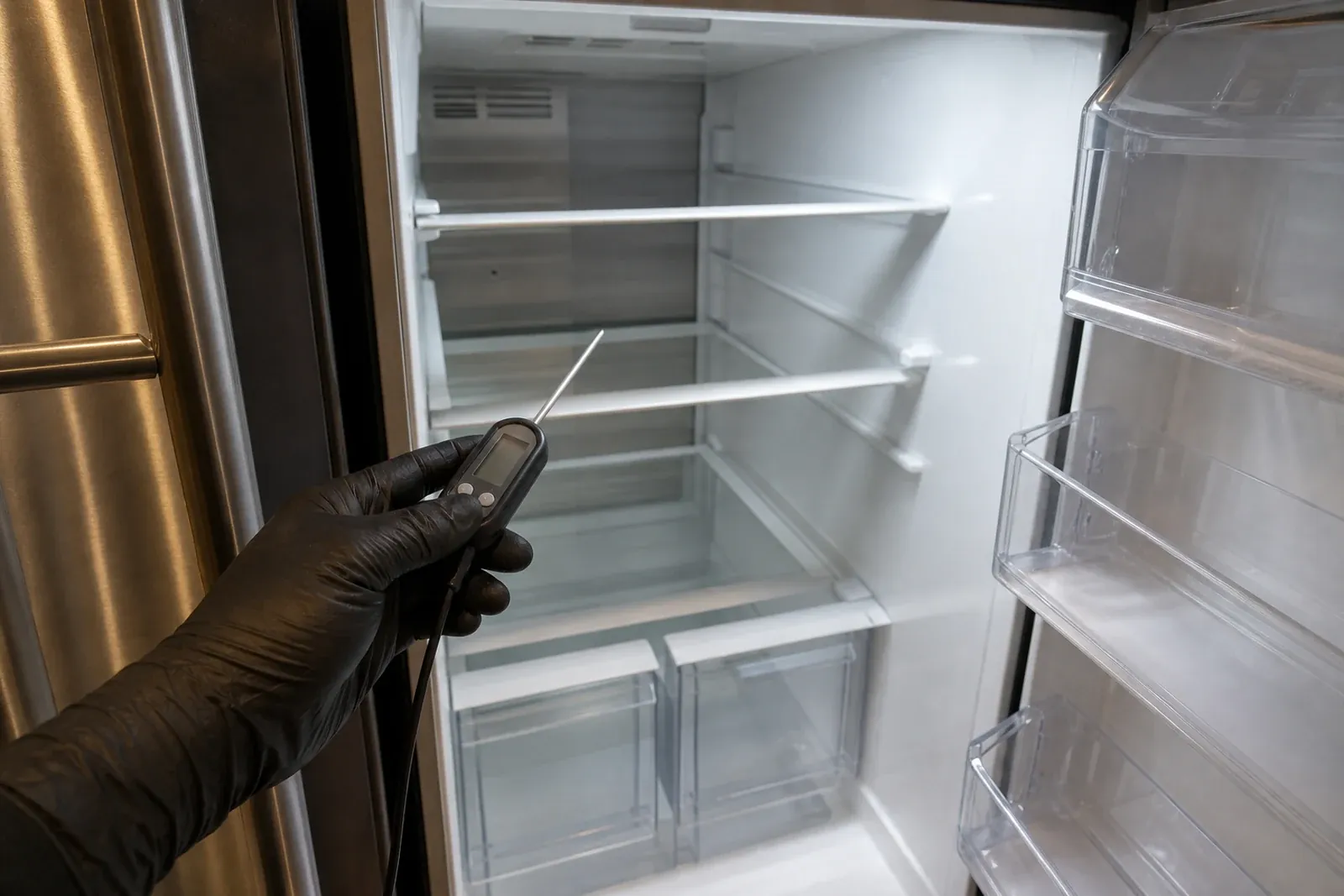
When the fridge drifts warm in a heat wave, the question isn't really about the appliance — it's about what's inside. Put a real thermometer in a glass of water on the middle shelf and watch the number, because the door display can lag the actual shelf temperature. The food-safety line is 40°F: below it, fresh food is fine; above it, perishables are on a clock.
- Under 40°F: you're okay. Cool the room, clean the coil, and re-measure.
- 40°F for under two hours: still safe — get the cooling sorted and you're fine.
- Above 40°F for more than two hours: discard high-risk items (raw meat, poultry, seafood, dairy, cut produce, leftovers). When in doubt, throw it out — a heat-wave power dip plus a warm box adds up fast.
- Freezer still hard-frozen: your frozen food is safe; the protected freezer is exactly why the fresh-food side warms first.
Keep a short note of the times and temperatures. That same temperature log tells us whether the box is recovering on its own or losing ground.
After the fix
Clean the coil, then re-measure — don't judge in five minutes
Here's the step most owners skip: after you clean the condenser or shade the unit, give it a full day before you decide it's fixed. A Sub-Zero that's been fighting a heat wave with a packed coil has soaked the cabinet and its contents with heat; it takes hours to pull that back down even once the coil is clear. We log the fresh-food and freezer temperatures when we arrive, clean and correct, then re-measure after the unit has had time to recover so we're judging the repair, not the leftover heat load.
If a clean coil, good airflow, and a sealed door still leave you running long and warm after 24 hours, that's when we look deeper — a weak condenser fan, a defrost fault icing the evaporator, or, in the minority of cases, the sealed system itself. Two things matter before you spend on that: Sub-Zero's 12-year warranty on the sealed system (compressor, condenser, evaporator, drier, tubing) may still cover the part, and a genuinely hot install location can mimic a sealed-system fault — which is why we re-measure first instead of quoting a compressor over the phone.
Getting us out
Booking a heat-wave visit in San Ramon
We diagnose in your kitchen, confirm the fault, and quote a flat price before any work — the $95–$150 service call is credited toward the repair. From the Bishop Ranch and Crow Canyon corridor we reach San Ramon, Danville, Dublin, and Pleasanton quickly; for Canyon Lakes, Norris Canyon Estates, and other gated communities, send the gate or HOA access when you book so we're not stuck at the entrance, and flag a long hillside driveway in Dougherty Valley or Henry Ranch. See how the visit works, local repair costs, and same-day options. Book online or call (925) 940-3576.
Next step
Call with the Sub-Zero model number
Have the model-tag photo, current fresh-food and freezer temperatures, and the symptom timeline ready. That lets the San Ramon intake route the visit around the likely Sub-Zero part family instead of a generic appliance script.
FAQ
Questions San Ramon homeowners ask before scheduling
Why does my Sub-Zero get warm in summer?
In a San Ramon summer the condenser has to dump cabinet heat into a kitchen that's already 80°F-plus, so it works far harder and the fresh-food side warms first. The usual trigger is a dust-packed condenser coil, sometimes a hot install spot like a patio island or a wall beside a range. Clean the coil, give it air, and re-measure. If it's still warm, call (925) 940-3576.
Sub-Zero not cooling during a heat wave — what should I check first?
Check the condenser coil behind the upper grille for a felt of dust, confirm the grille isn't blocked, and run the dollar-bill seal test on the door. Stop opening the unit and don't keep lowering the setpoint. If the freezer is still hard-frozen while the fridge is warm, the sealed system is fine and the issue is heat rejection or airflow — usually a $200–$650 fix, not a compressor.
Is it normal for a Sub-Zero to struggle in 100 degree weather?
A healthy Sub-Zero will run longer and cycle less often in a 100°F Tri-Valley heat wave — that's expected. What's not normal is the fresh-food side climbing past the mid-40s and staying there. Longer run times with temperatures holding near setpoint mean it's coping; rising temperatures mean something is restricting heat rejection, most often a dirty condenser or a hot, poorly vented install location.
How do I keep my Sub-Zero cooling in San Ramon summer?
Clean the condenser every 3–6 months in San Ramon's dust and heat instead of the standard 6–12, keep the grille clear, and shade outdoor or island units from direct afternoon sun. Change the water filter on schedule, keep the door seal tight, and don't crowd the cabinet so air can circulate. A clean coil and good airflow are what let the unit win on a 105°F day.
My freezer is still cold but the Sub-Zero fridge is warm in the heat — is the compressor failing?
Almost certainly not. A still-cold freezer proves the compressor and refrigerant are working; the protected freezer is exactly why the fresh-food side warms first. Compressor failure looks like both compartments warm with the unit running nonstop. Your split points to heat load or airflow — a packed condenser, a stalled evaporator fan, or a hot install location — which we diagnose and fix without touching the sealed system.
Is the food in my warm Sub-Zero still safe to eat after a heat wave?
Put a thermometer in a glass of water on the middle shelf and read that, not the door panel. Under 40°F is safe. Above 40°F for more than two hours means you should discard perishables like raw meat, dairy, and leftovers — when in doubt, throw it out. A hard-frozen freezer means your frozen food is fine. Note the times and temperatures so we can confirm the unit is recovering.
Related