San Ramon · Fire-season condenser care
Wildfire-Season Ash and Diablo Winds: Protecting Your San Ramon Sub-Zero Condenser
When an SCU-type fire burns the Diablo Range and offshore Diablo winds push smoke down into the San Ramon Valley, your Sub-Zero's condenser intake can choke on fine ash in a matter of days, not months. Here is how to tell a dirty coil from a real cooling fault.
Direct answer
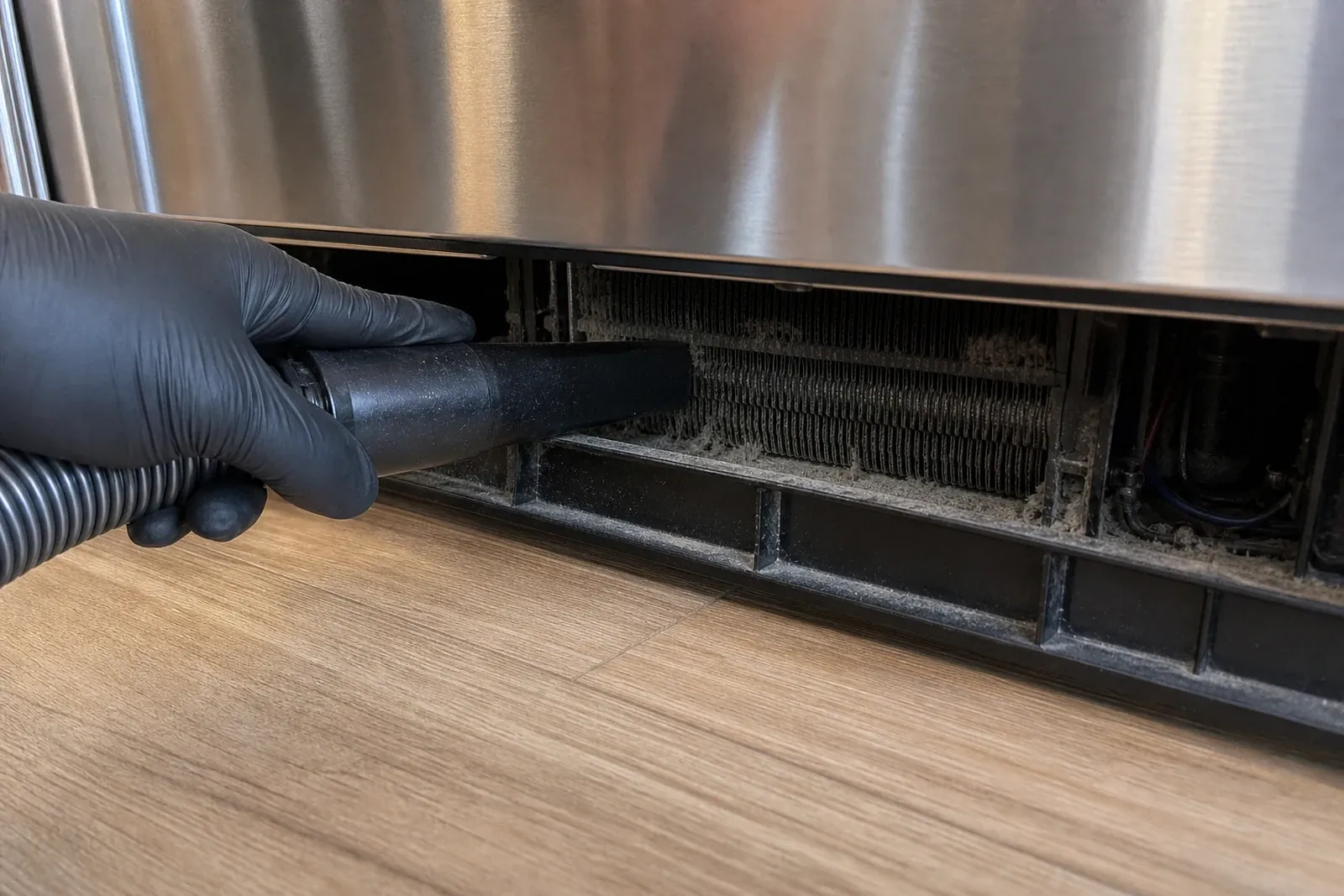
Yes. Wildfire ash and Diablo-wind dust pack the condenser intake of a San Ramon Sub-Zero fast, forcing the compressor to run long and the box to drift warm even when nothing is broken. Clean the coil first; if temperatures keep climbing after a thorough cleaning, book a diagnostic at (925) 940-3576.
Why it happens here
How Diablo winds and Diablo-Range smoke reach your coil
San Ramon sits in a wind funnel. Most of the year the marine breeze flows in from the west, but during fire weather the pattern reverses: dry, offshore Diablo winds race down off Mount Diablo and the Las Trampas ridge from the northeast, carrying dust, pollen, and — when the Diablo Range is burning in an SCU-type fire — a fine, gritty wildfire ash. That ash is far smaller and stickier than ordinary household dust, and it stays airborne long enough to find its way through screened windows, garage doors, and the gaps around a built-in's grille.
Your Sub-Zero pulls room air across its condenser to shed heat. The grille acts like the intake filter on an HVAC system, and in a smoke event it loads up the same way. Once a thin ash mat forms, every following gust packs it tighter, so the coil does not degrade gradually over months — it can go from clean to choked across a single bad week. Homes on the open hillsides — Dougherty Valley, Windemere, Gale Ranch, Norris Canyon Estates, Henry Ranch — catch the most because there is little to break the wind before it reaches the house. Lower, sheltered tracts in San Ramon Village and along the Bishop Ranch / Crow Canyon corridor load slower, but they still load.
Stack a Tri-Valley heat wave on top of a smoke event — and the two often arrive together, since Diablo winds are hot and dry — and the compressor is already working overtime against 95–105°F kitchens while breathing through a clogged grille. That is the worst-case combination for a built-in: high head pressure from the heat, starved airflow from the ash, and a sealed system that simply cannot keep up. Estate kitchens with dual-zone wine columns and panel-ready built-ins feel it first, because their tightly cabineted condensers already run with little margin.
The deceptive part
Why a dirty coil looks exactly like a broken refrigerator
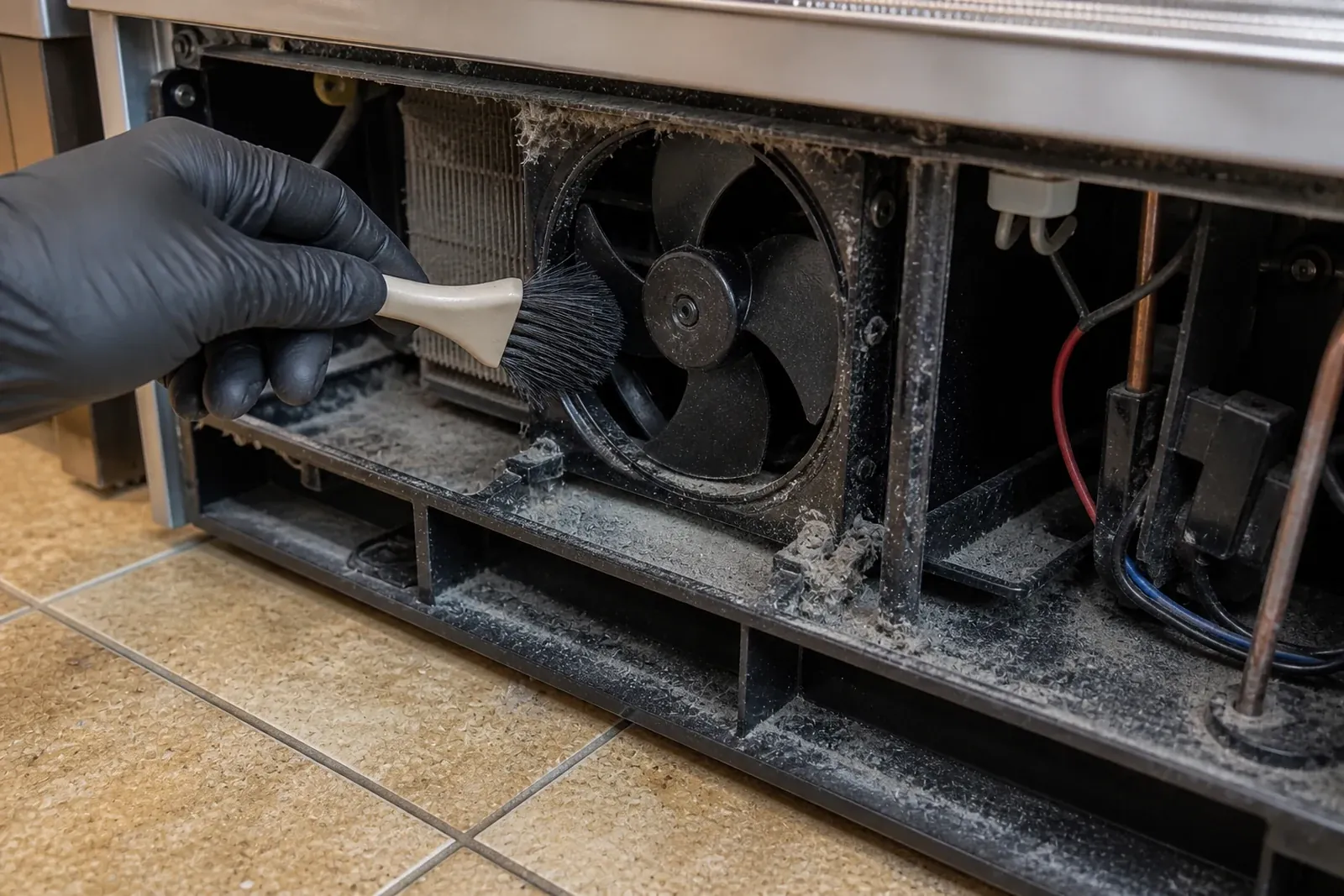
An ash-choked condenser cannot dump heat efficiently, so the compressor runs longer and longer trying to hit setpoint. The symptoms read like a sealed-system failure:
- The box drifts warm — fresh-food creeps from 38°F toward the mid-40s, ice cream softens — yet the unit is clearly still running.
- The compressor runs almost constantly and the machine compartment feels hot to the touch.
- A "Vacuum Condenser" or "Service" message flashes on older 500/600-series boards, or an EC code appears on newer ones — the control noticed the compressor ran too long.
- The kitchen feels warmer near the unit because all that rejected heat has nowhere to go.
The good news: in most fire-season cases nothing is actually failing. The coil is simply suffocating. That is why our first move on a post-smoke call is almost always a thorough not-cooling diagnostic that starts at the condenser, not a sealed-system quote. Do not clear a flashing condenser code while temperatures are still climbing — that reading is the most useful clue your unit can give us.
Decision table
Clean it yourself, or book a technician?
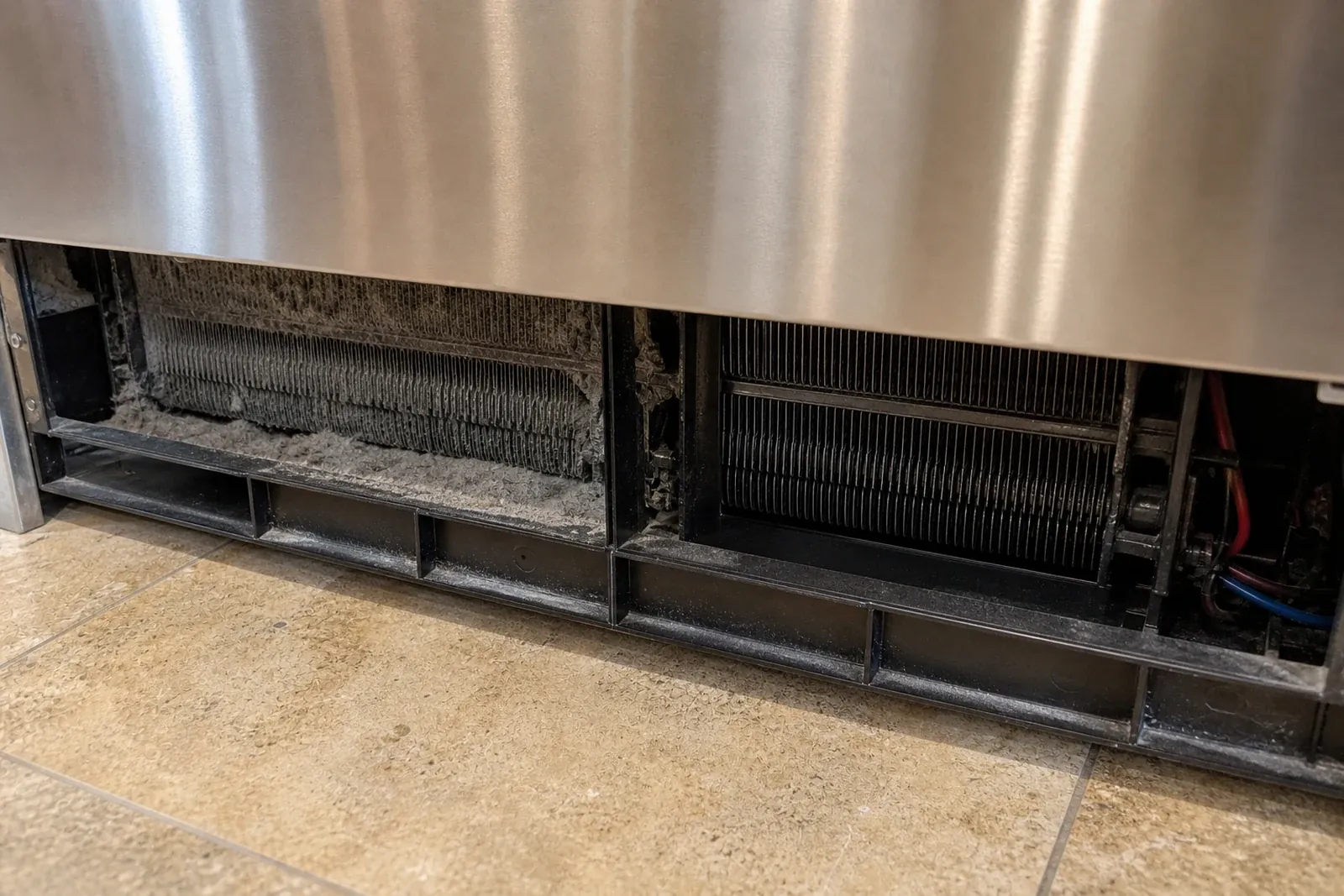
Most fire-season condenser care is owner-friendly: a vacuum brush across the grille, the breaker off first, and you are done. The table below is the rule of thumb we give San Ramon owners. The dividing line is simple — if a thorough cleaning lets the box recover within a day, it was an airflow problem and you saved yourself a service call; if it does not, you are looking at a component fault and running a stressed compressor against it only makes things worse. When a row lands in "Book a visit," that is the point where cleaning alone will not bring temperatures back and a diagnostic earns its keep.
| What you see after a smoke event | What it usually means | Action |
|---|---|---|
| Light gray film on the grille after a smoky day | Vacuum the grille; recheck temps in 24h | Clean it yourself |
| Heavy ash mat after a Diablo-wind / SCU-fire week | Full grille + fan-shroud cleaning, breaker off | Clean it yourself (or book if drift persists) |
| Box warmed during smoke, recovers within 24h of cleaning | Resume normal 6-month cadence | No visit needed |
| Box still warm 24h after a thorough cleaning | Likely fan motor, defrost, or sealed system | Book a diagnostic |
| Compressor loud / buzzing, both sides warm | Needs gauges + amp draw, never a phone quote | Book — see sealed-system page |
| Code returns minutes after clearing, temps rising | Do not keep clearing it; preserve the fault | Book a diagnostic |
Cadence
How often to clean during San Ramon's fire season
Sub-Zero's baseline guidance is to clean the condenser every 6–12 months. San Ramon's fire season rewrites that schedule. In dusty, hot, smoke-prone conditions we tighten it to every 3–6 months as a floor — and during an active Diablo-wind smoke event you should treat each major episode as its own trigger:
- After any multi-day smoke event with visibly poor air quality, inspect the grille and vacuum it — do not wait for the calendar.
- Exposed hillside homes in Dougherty Valley, Windemere, Gale Ranch, Norris Canyon, and Henry Ranch should plan on the short end (every 3 months through summer and fall).
- Outdoor and island refrigeration that bakes on a San Ramon patio collects ash even faster and should be checked monthly in fire season — see outdoor refrigerator service.
- Undercounter and wine units in tight cabinets have the least cooling headroom and the smallest grilles, so a thin ash layer hurts them disproportionately.
Pair condenser cleaning with the rest of the routine: in San Ramon's moderately hard DSRSD water, change the water filter every 3–6 months. The full schedule lives on our maintenance calendar.
Air quality
Ash, indoor air, and what is — and isn't — at risk
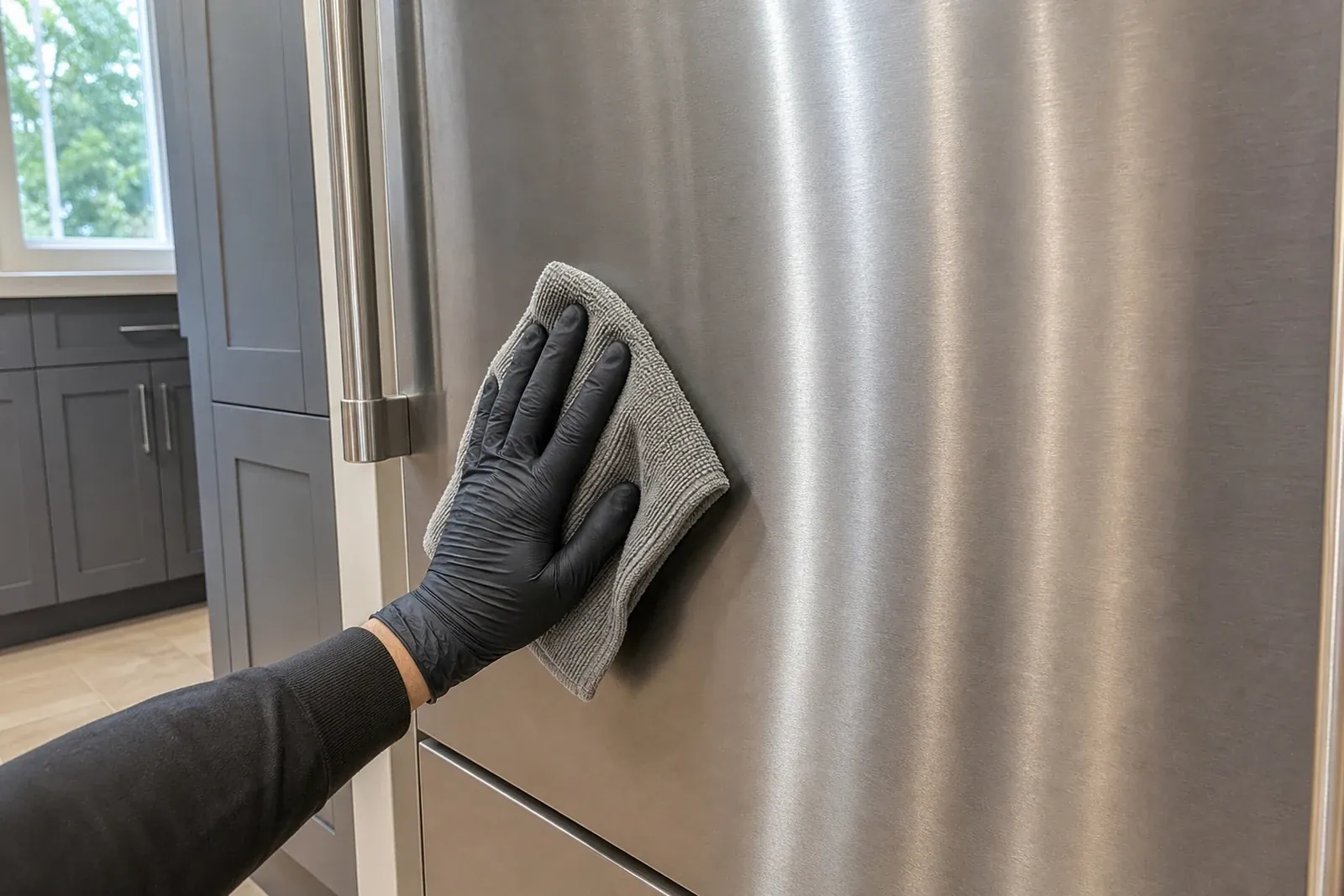
Owners often ask whether wildfire smoke can damage the refrigerator itself. For the most part, no. Ash is a thermal and airflow problem, not a corrosive one over a normal season — the coil is metal and the fan is built to move dusty air. What ash genuinely threatens is efficiency and compressor lifespan: a unit forced to run long, hot, and constantly for weeks ages faster than one that breathes freely. A well-maintained Sub-Zero is engineered for 25–30 years, but a sealed system that spends every fire season choking is the one that fails early. That is the real cost of skipping a cleaning, and it is also why we treat a fire-season "warm box" as a maintenance question first and a repair question second.
Two practical notes for the smoke-event household. First, the refrigerator gasket matters more than usual — if the door seal is tired, smoky, humid outside air leaks in and makes the box work harder; the dollar-bill test takes ten seconds. Second, keep the condenser intake clear of anything you stacked nearby during a busy, smoky week — boxes, bags, or an air purifier pushed against the grille will starve it just as effectively as ash.
If a cleaning does not recover the box, the next checks are airflow and the sealed system, not more vacuuming. Persistent warmth points toward the evaporator fan, the defrost cycle, or — on the rarest fire-season calls — a sealed-system fault that needs gauges and an amp-draw reading, never a phone quote. Sub-Zero's 12-year sealed-system warranty may still apply, so it is always worth checking before paying. And if you are unsure which model and grille you have, the model-number guide shows where the tag lives on each Sub-Zero series so we can match the right OEM parts the first time.
Next step
Call with the Sub-Zero model number
Have the model-tag photo, current fresh-food and freezer temperatures, and the symptom timeline ready. That lets the San Ramon intake route the visit around the likely Sub-Zero part family instead of a generic appliance script.
FAQ
Questions San Ramon homeowners ask before scheduling
Can wildfire smoke affect my Sub-Zero refrigerator?
Yes — indirectly but significantly. Wildfire smoke carries fine ash that settles on the condenser intake, and in San Ramon a Diablo-wind smoke event can coat the grille in days. A choked coil cannot shed heat, so the compressor runs long and the box drifts warm. The fix is usually cleaning, not a part. If it stays warm after cleaning, call (925) 940-3576.
How often should I clean my Sub-Zero condenser during fire season in San Ramon?
Tighten the normal 6–12-month schedule to every 3–6 months through San Ramon's hot, smoky season, and inspect the grille after any multi-day Diablo-wind smoke event regardless of the calendar. Exposed hillside homes in Dougherty Valley, Gale Ranch, and Norris Canyon should plan on the short end, and outdoor or undercounter units should be checked even more often.
My Sub-Zero got warm after a smoky week — why?
The most common cause is an ash-loaded condenser. After a smoke event the grille mats over with fine ash, the compressor can no longer dump heat, and the fresh-food compartment creeps from 38°F into the mid-40s even though the unit is still running hard. Vacuum the grille with the breaker off and recheck temperatures in 24 hours. If it is still warm, something else — fan motor, defrost, or sealed system — needs a diagnostic.
Does ash actually damage a refrigerator condenser?
Ash rarely corrodes the coil itself over a normal season — it is an airflow and heat problem, not a chemical one. The real damage is to the compressor's lifespan: forcing it to run long and hot for weeks behind a clogged grille ages the sealed system prematurely. Keeping the condenser clean through fire season is the cheapest protection your Sub-Zero has.
I cleaned the coil but my Sub-Zero is still warm — what now?
Give it a full 24 hours after a thorough cleaning to recover. If the box is still warm, the cause is not airflow. We then check the evaporator fan motor, the defrost cycle, the thermistor, and — only if those clear — the sealed system with gauges and amp draw. Do not keep clearing a flashing condenser code while temperatures rise; that reading helps us diagnose. Book at (925) 940-3576.
Why does a flashing 'Vacuum Condenser' message appear after a smoke event?
That message — common on 1998–2002 500/600-series boards — means the compressor ran longer than expected, which is exactly what happens when fire-season ash blocks the condenser. Clean the coil first, then hold the door-ajar (bell) key about 15 seconds to clear it only if temperatures are already back near normal. If temps are still rising, leave the code alone and book a diagnostic.
Related