San Ramon · Outdoor & island refrigeration
Sub-Zero Outdoor & Island Refrigeration Repair in San Ramon
An outdoor Sub-Zero lives a harder life than the one in your kitchen. It bakes on a Tri-Valley patio at 100°F, breathes Diablo-wind dust and wildfire-season ash straight onto its coil, and rides a wide day-to-night temperature swing — so when a patio or island unit drifts warm, the condenser and the seal are the first suspects, not the sealed system.
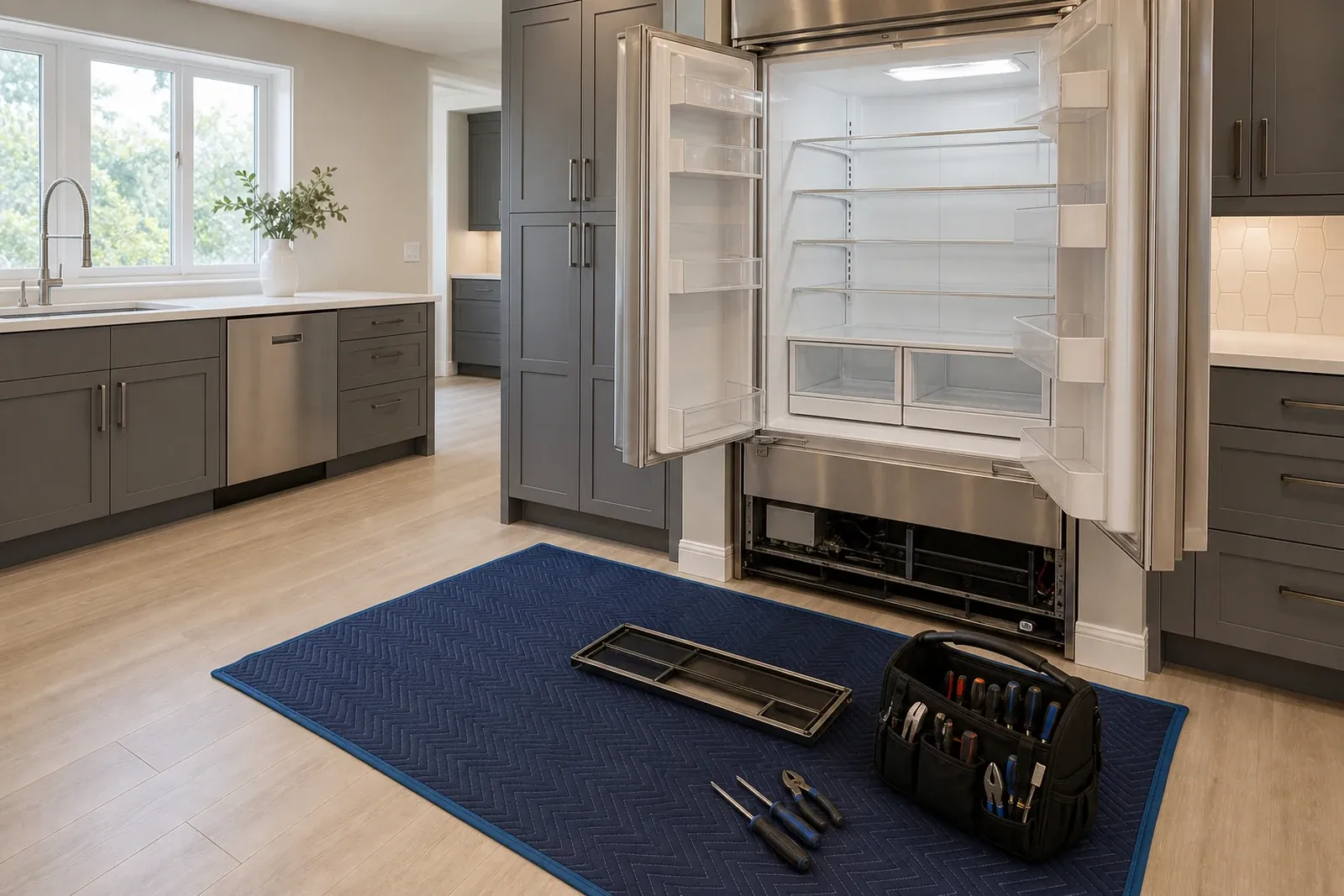
Direct answer
An outdoor Sub-Zero that won't cool in San Ramon is most often fighting heat and dust, not a dead compressor. A coil packed with Diablo-wind grit and wildfire ash can't shed heat on a 100°F patio, so the box climbs. Clean the condenser, confirm the fan spins, run a seal test, and give it shade. Still warm? Call (925) 940-3576.
Why outdoor is different
A patio Sub-Zero works against San Ramon's climate, not just your food
Indoors, a Sub-Zero rejects heat into a stable 70°F room. Outdoors, the same refrigeration has to dump heat into whatever the patio is doing — and in San Ramon that means hot, dry inland summers regularly in the 90–100°F range, with heat waves pushing toward 105°F. The hotter the surrounding air, the harder the condenser must work to pull the box down to temperature, and the longer the compressor runs to get there. A unit that holds 38°F effortlessly in spring can drift to 45°F during a July heat wave for no reason other than physics.
Layered on top of heat is airborne load. Offshore Diablo winds (the dry, northeast fire-weather flow) carry dust off the hills, and wildfire season blankets the area with ash from the Diablo Range and SCU-type fires. An indoor condenser sees household dust; an outdoor condenser facing the open patio can take that same grime in days, plus pollen, planter soil, and grass clippings. Add the daily temperature swing — searing afternoons, cool Tri-Valley nights — and the gasket flexes through a far wider range than an indoor door ever does.
Diagnose in order
Why your outdoor Sub-Zero isn't cooling — checked cheapest-first
The temptation with a warm outdoor unit is to assume the sealed system failed. It usually didn't. We work an outdoor non-cooling complaint the same evidence-first way as an indoor one, but we weight it toward the conditions a patio creates. The table below is the order we actually check on a San Ramon island kitchen — fast, cheap, and reversible at the top; sealed-system work only after the rest is ruled out.
| Likely cause | What you'll notice | What it takes to fix | San Ramon note |
|---|---|---|---|
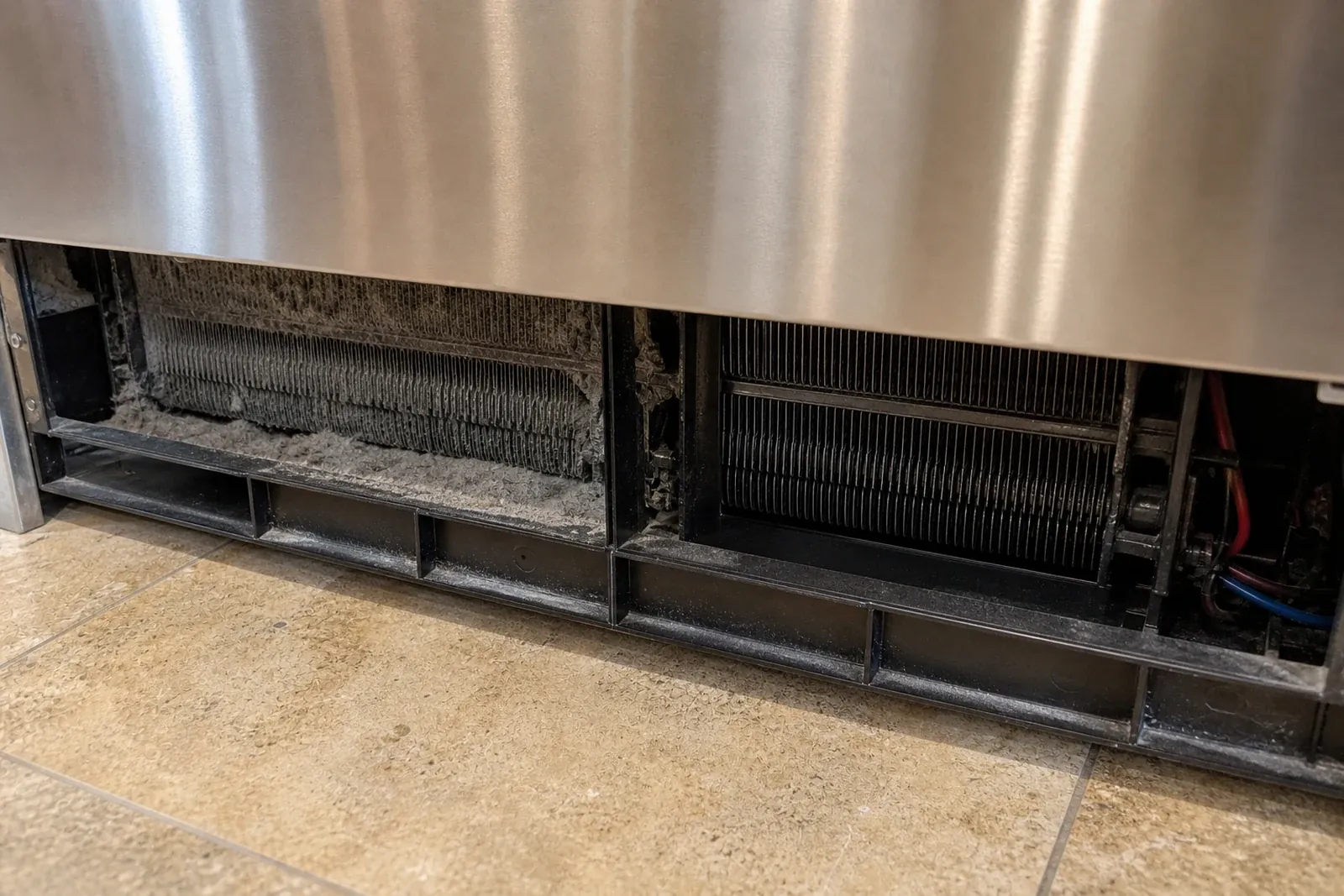
| Condenser coil packed with dust/ash | Box slowly climbs warm; compressor runs nearly nonstop on hot days | Vacuum and brush the coil; on patios in San Ramon, every 3–6 months | Most common — heat plus Diablo-wind grit |
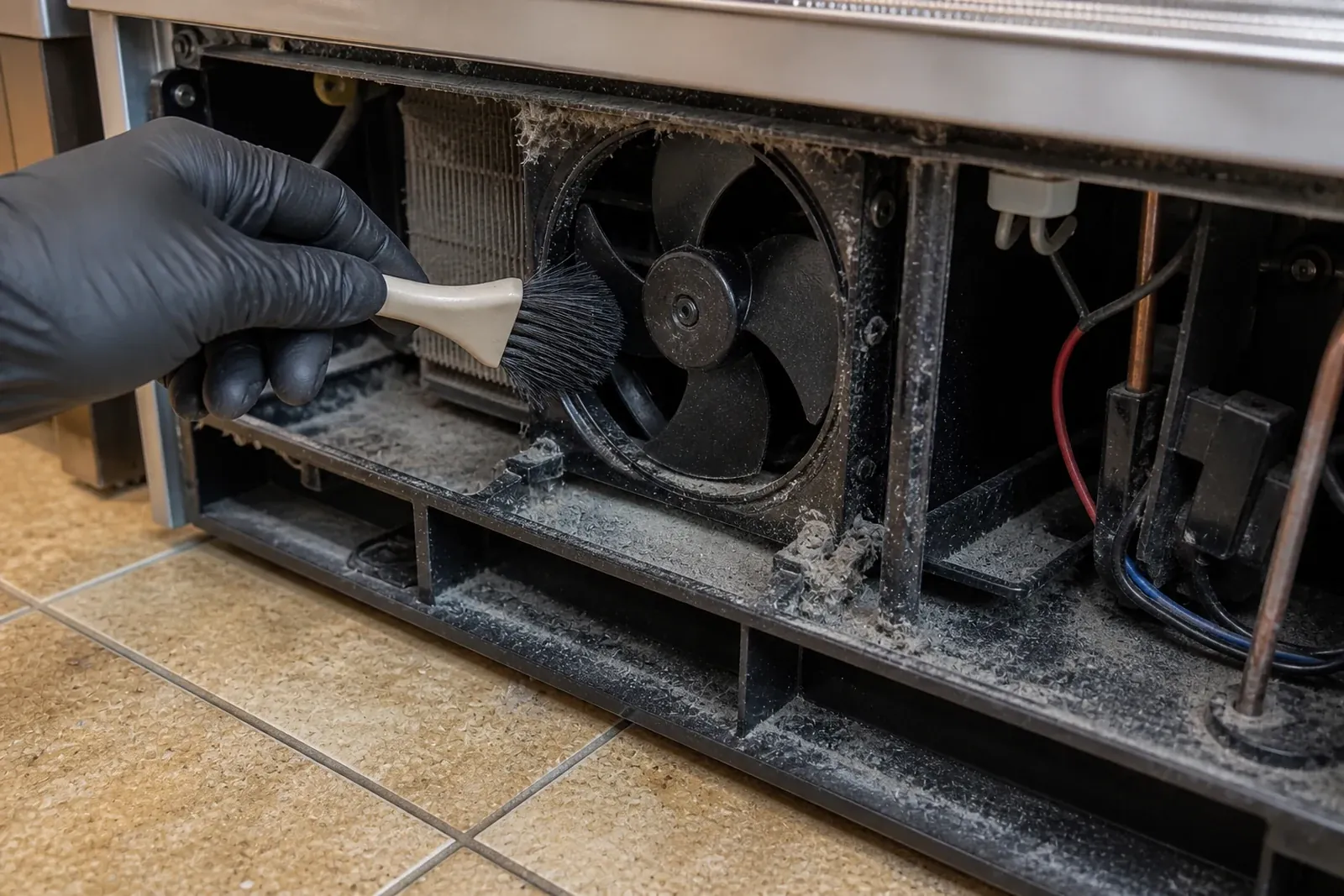
| Condenser fan stalled or clogged | Warm box, long run times, sometimes a buzz at the grille | Free or replace the fan; clear debris | Looks like a refrigerant fault from the front |
| Door gasket failed from sun & swings | Condensation, frost, or sweat at the seal; warm spots | Dollar-bill test, then OEM gasket replacement | UV and day-night swings age outdoor seals fast |
| Unit baking in direct sun / poor airflow | Worst in afternoon heat, recovers overnight | Add shade, clear the grille clearance, check the surround | An island in full sun fights a losing battle |
| Defrost or evaporator fault | Frost buildup, freezer fine but fridge warm | Inspect evaporator, defrost heater, thermistor | Wider temp swings stress the defrost cycle |
| Sealed system / compressor | Both sides warm, constant run, no cold at all | Gauges + amp draw on site; flat quote | Last suspect, not first — needs EPA 608 work |
The coil does the work
Outdoor units need condenser care two to four times more often
Sub-Zero's baseline guidance is to clean the condenser every 6 to 12 months. For an indoor box in a clean kitchen, that holds. For an outdoor unit on a San Ramon patio, we treat every 3 to 6 months as the floor — and after a bad wildfire-smoke stretch, sooner still. The coil is the single component that decides whether a refrigerator can do its job in the heat: it's the radiator that throws the heat back out. Choke it with ash and dust and the whole system slows, runs hot, and eventually the box climbs warm no matter how healthy the compressor is.
- Dougherty Valley, Windemere, and Gale Ranch hillside homes sit right in the dust path; coils there load fastest. See our Dougherty Valley dust-and-heat condenser notes.
- Norris Canyon Estates and Henry Ranch add long, dry approaches and open exposure to the same grit.
- Wildfire season is the accelerant — ash settles on an open-air coil within days, not months. Our wildfire-season condenser page covers the timing.
A neglected outdoor condenser doesn't just run warm — it pushes the compressor to run long and hot, which is exactly what shortens a sealed system's life. Cleaning the coil on schedule is the cheapest insurance against the most expensive repair. Build it into your maintenance calendar.
Seals & defrost
Gaskets and defrost take a beating outdoors
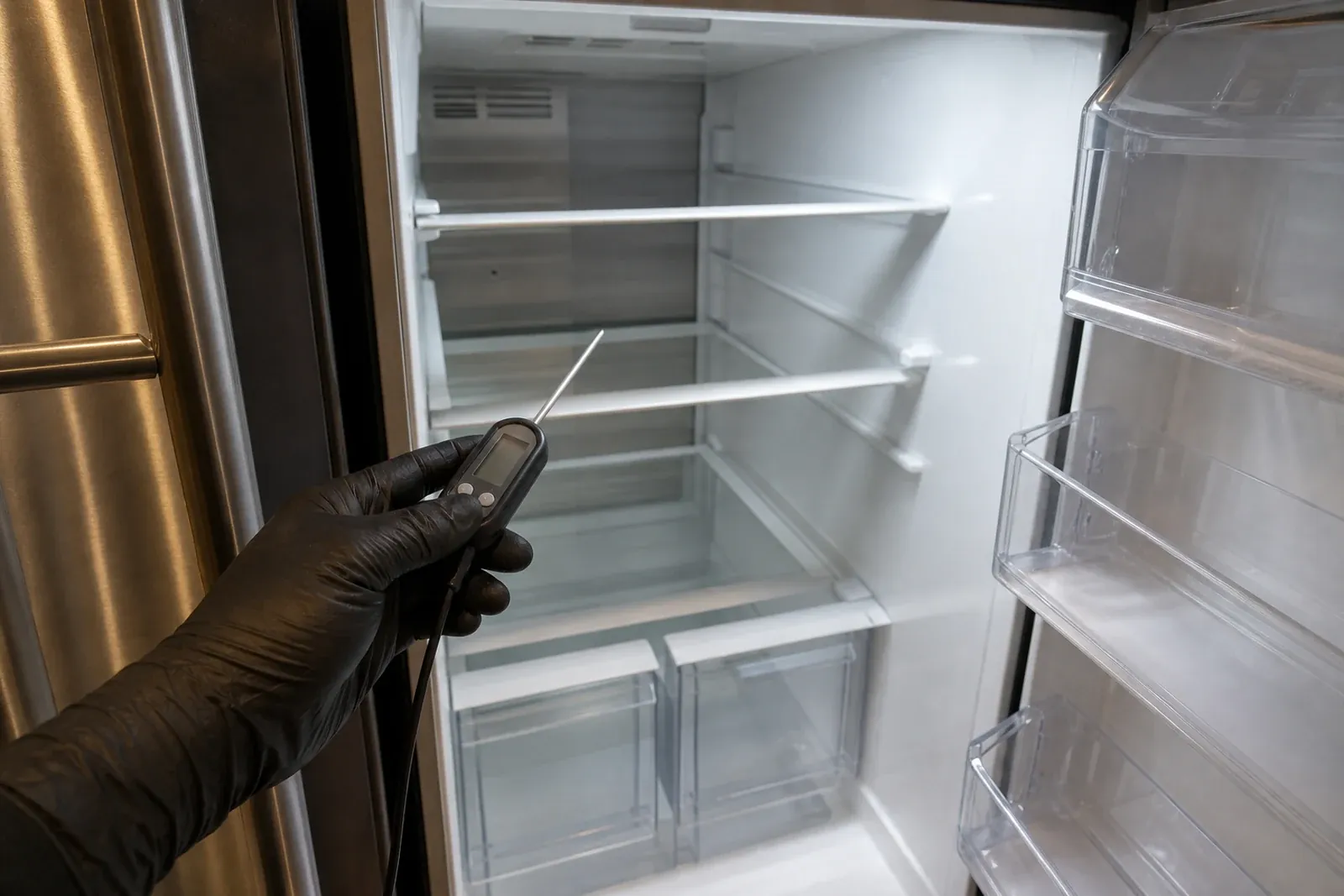
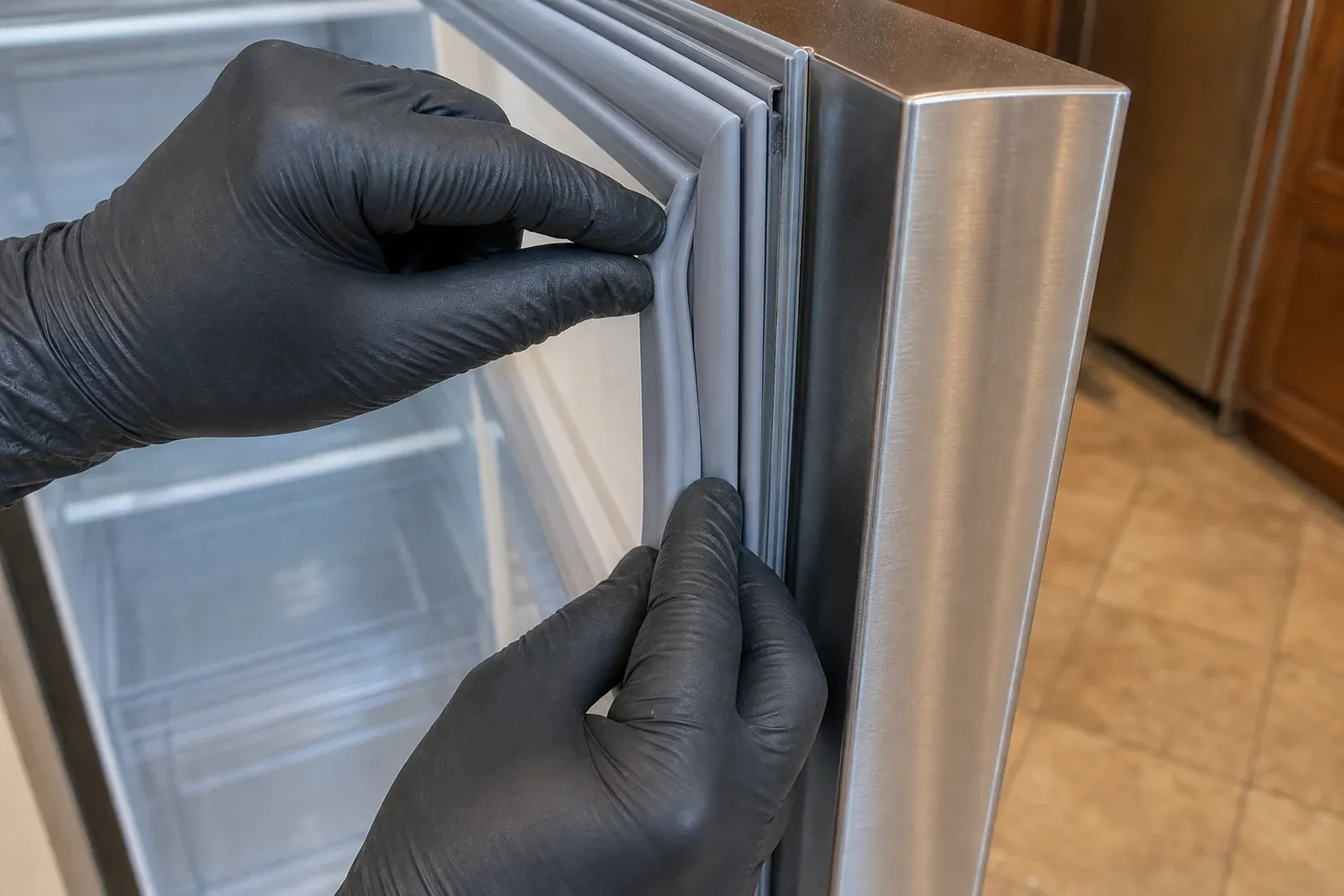
An indoor door opens into a climate-controlled room. An outdoor door faces direct sun, UV, and a temperature range that can run 50°F overnight to 100°F-plus by afternoon. That cycling hardens and shrinks a gasket years faster than an indoor seal, and a tired gasket on a hot patio is a double penalty: warm, humid outdoor air leaks in, condenses on cold surfaces, and the unit chases a moving target while sweating at the seam. Run the dollar-bill test — close the door on a bill and tug; if it slides free anywhere along the gasket, conditioned air is escaping. Frost, mold, or condensation at the seal confirms it.
The same wide swings stress the defrost cycle. More door openings on a summer evening, more humid air drawn in, and more frost for the defrost heater and thermistor to manage. When that system can't keep up, you'll see frost build on the evaporator and the fresh-food side drift warm while the freezer still feels cold — the classic split we walk through on the not-cooling diagnostic. Outdoor ice makers add another wrinkle: San Ramon's moderately hard DSRSD water (via Zone 7) scales inlet valves and shortens filter life, so an outdoor ice maker often needs the water side checked too — see the hard-water ice-maker guide.
Models & sealed system
Outdoor-rated units, model tags, and when it's the sealed system
Outdoor and island installations are usually undercounter or beverage-style boxes — the UC-24 family (UC-24BG/S beverage, UC-24C, UC-24R, UC-24RP) and the 315I undercounter ice maker show up most, sometimes alongside designer drawers or a built-in column in a covered outdoor kitchen. Confirm what you have before any parts conversation: on undercounter and 700-series units the model/serial tag sits inside the cabinet to the left of the upper drawer; photograph it and we'll match OEM parts and the exact procedure. Our model-number guide and undercounter repair page cover the tag locations and the tight-cabinet condenser realities those boxes share with outdoor installs.
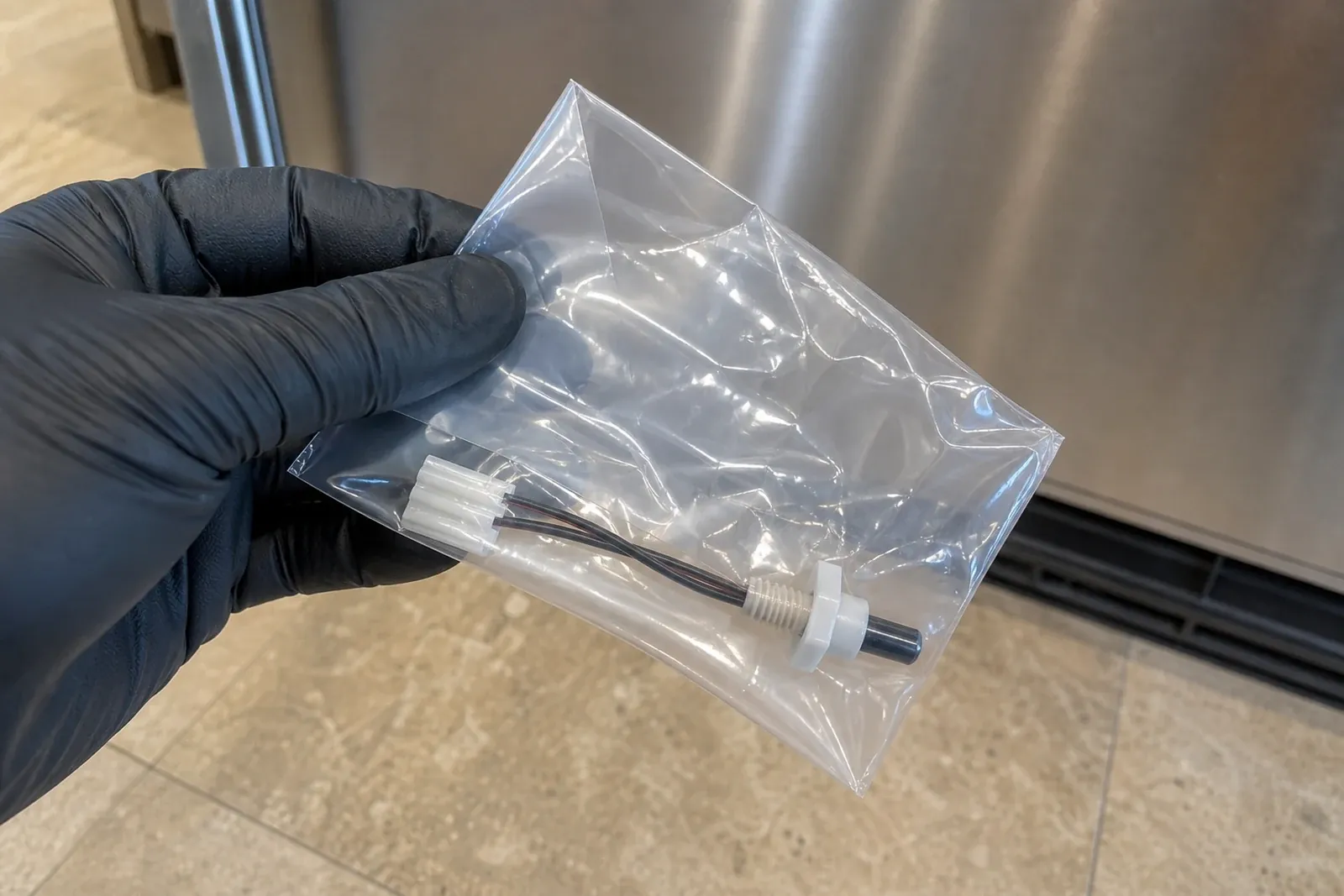
Only after the coil, fan, seal, airflow, and defrost are cleared do we reach for gauges. A genuine sealed-system or compressor fault shows both sides warm, constant running, and no cold at all — and it's diagnosed on site with refrigerant gauges and amp-draw readings, never quoted over the phone. That work requires EPA Section 608 certification because outdoor units span refrigerant eras (older R-12, mid R-134a, current R-600a isobutane). Good news on cost: Sub-Zero's 12-year sealed-system warranty on the compressor, condenser, evaporator, drier, and tubing may still apply — we check that before any quote. Whatever the fix, the $95–$150 service call is flat-quoted, approved before work, and credited toward the repair; see repair cost for the bands.
Next step
Call with the Sub-Zero model number
Have the model-tag photo, current fresh-food and freezer temperatures, and the symptom timeline ready. That lets the San Ramon intake route the visit around the likely Sub-Zero part family instead of a generic appliance script.
FAQ
Questions San Ramon homeowners ask before scheduling
Why is my outdoor Sub-Zero not cooling?
On a San Ramon patio the usual culprit is a condenser coil packed with Diablo-wind dust and wildfire-season ash, so it can't shed heat in 90–100°F air. Next suspects are a stalled condenser fan, a sun-aged door gasket, or the unit baking in direct afternoon sun. Clean the coil, confirm the fan spins, run a dollar-bill seal test, and add shade. If both sides stay warm, call (925) 940-3576 for sealed-system diagnosis.
Do outdoor refrigerators really need more maintenance than indoor ones?
Yes — meaningfully more. An outdoor Sub-Zero breathes open-air dust, pollen, and wildfire ash, and rejects heat into Tri-Valley summer air instead of a 70°F room. We clean outdoor condensers every 3–6 months in San Ramon versus the 6–12 month indoor baseline, and sooner after heavy wildfire smoke. The seal and defrost also age faster from the wide day-to-night temperature swings, so an annual once-over pays for itself.
My patio Sub-Zero struggles every summer — what's going on?
Summer is when the condenser's job gets hardest: in a 100°F heat wave near Mount Diablo, the coil has to dump heat into very hot air, so any dust or ash on it tips the box from coping to climbing. A unit sitting in direct sun or with poor grille clearance makes it worse. Most "summer struggle" cases clear up with a thorough coil cleaning, a working condenser fan, and shade — not a new compressor.
Do you repair outdoor Sub-Zero units in San Ramon?
Yes. We service outdoor and island Sub-Zero refrigeration across San Ramon and the Tri-Valley — Dougherty Valley, Windemere, Gale Ranch, Canyon Lakes, Norris Canyon Estates, and the Bishop Ranch corridor, plus Danville, Alamo, and Blackhawk. We bring OEM parts matched to your model tag, work the diagnosis cheapest-first, and flat-quote before any work. For gated communities, note gate or HOA access when you book. Call (925) 940-3576 or book online.
How often should I clean the condenser on an outdoor Sub-Zero?
Treat every 3–6 months as the minimum for an outdoor unit in San Ramon, versus Sub-Zero's 6–12 month indoor guidance. Hillside dust in Dougherty Valley and Gale Ranch, Diablo-wind grit, and wildfire-season ash load an open-air coil within days. After a smoky stretch, check it even sooner — a choked coil makes the compressor run long and hot, which is what shortens the sealed system's life.
Is condensation around my outdoor Sub-Zero's door a problem?
Often, yes. Outdoor gaskets harden and shrink faster from sun and wide day-night swings, and warm humid patio air leaking past a tired seal condenses on cold surfaces. Run the dollar-bill test along the gasket; if it slides out with no resistance, or you see frost or mold at the seam, the seal has failed and the unit is chasing a leak. A genuine OEM gasket replacement fixes it and stops the temperature drift.
Related