San Ramon · Dougherty Valley 94582
Why Dougherty Valley Sub-Zeros Run Hot: Hillside Dust, Afternoon Sun, and a Coil That Clogs Fast
The newer hillside builds across Dougherty Valley, Windemere, and Gale Ranch share a problem the brochures never mention: an east-facing afternoon sun, a steady feed of hillside grit on the Diablo wind, and a built-in condenser that packs solid long before its 12-month service interval. When a Sub-Zero up here starts warming in July, the coil is almost always the first place to look.
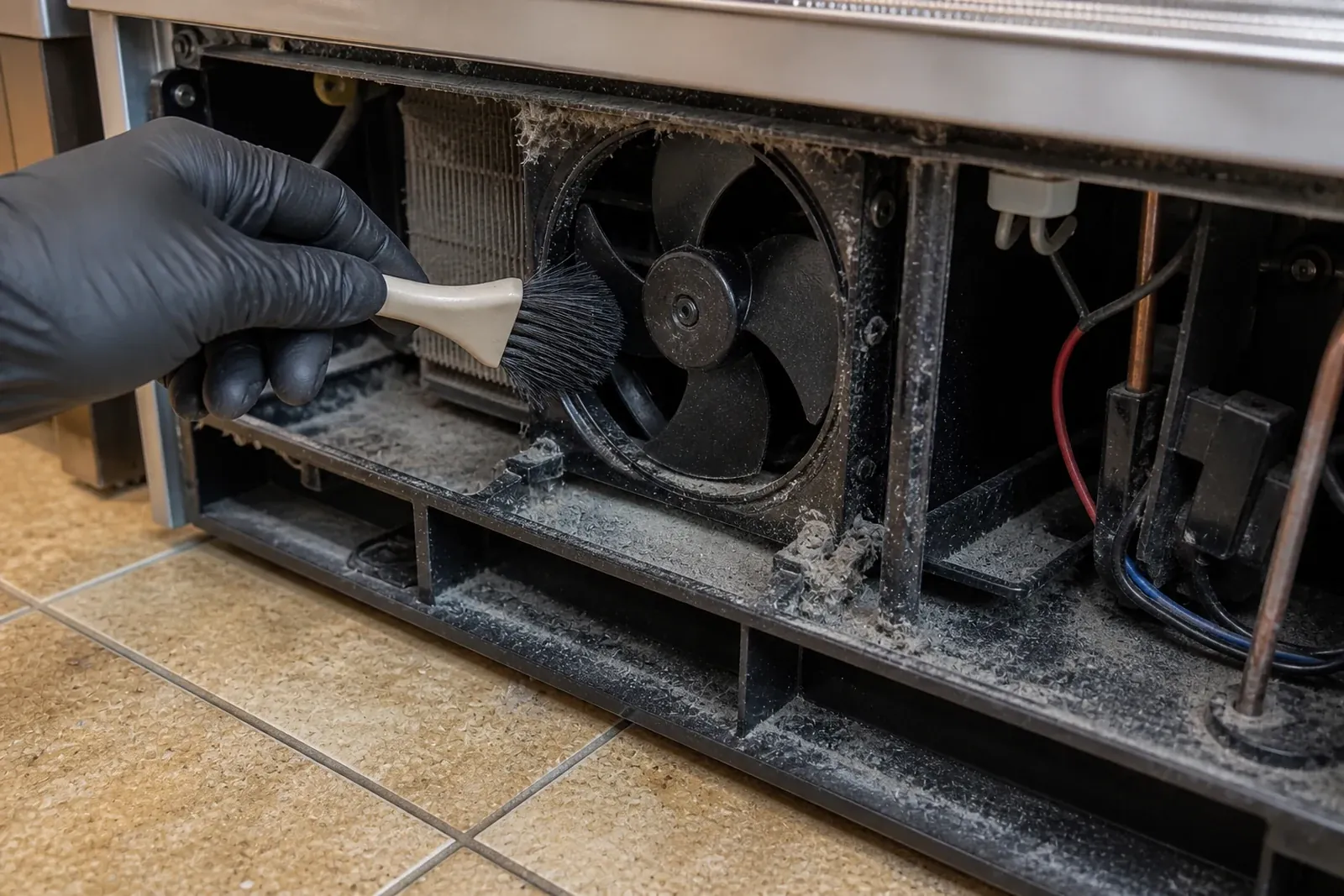
Direct answer
In Dougherty Valley, a Sub-Zero that warms in summer is usually rejecting heat through a condenser packed with hillside dust. The newer 94582 builds bake in afternoon sun while Diablo winds load grit onto the coil in weeks. A clogged condenser can't shed heat, so the fresh-food side drifts up first. Clean it every 3-6 months here, or call (925) 940-3576.
The local pattern
Why Dougherty Valley is harder on a condenser than most of San Ramon
Dougherty Valley is the master-planned east side of San Ramon — 94582 — and it sits higher and drier than the older tracts down in the valley floor. That elevation and exposure change how a Sub-Zero lives. Three things stack up against the condenser:
- Afternoon heat load. Inland summer days here run 90-100°F and heat waves push toward 105°F. A Sub-Zero's job is to pump kitchen heat out through its condenser, and the hotter the room and the wall cavity, the harder and longer the compressor runs to do it.
- Hillside dust on the Diablo wind. Windemere and Gale Ranch back up to open hillsides and graded slopes. Offshore Diablo winds — the same dry northeast flow that drives fire weather off the Diablo Range — carry fine grit straight onto the lower grille. That dust felts over the coil in weeks.
- Tight, panel-ready built-ins. The newer builds favor uniform panel-ready columns and built-ins set into framed cabinetry. They look seamless, but they also trap heat against the back of the unit and hide the condenser behind a flush grille most owners never open.
Put those together and the result is predictable: the coil that should stay clean for a year clogs in a season, the unit can't reject heat, and the fresh-food compartment is the first to drift warm.
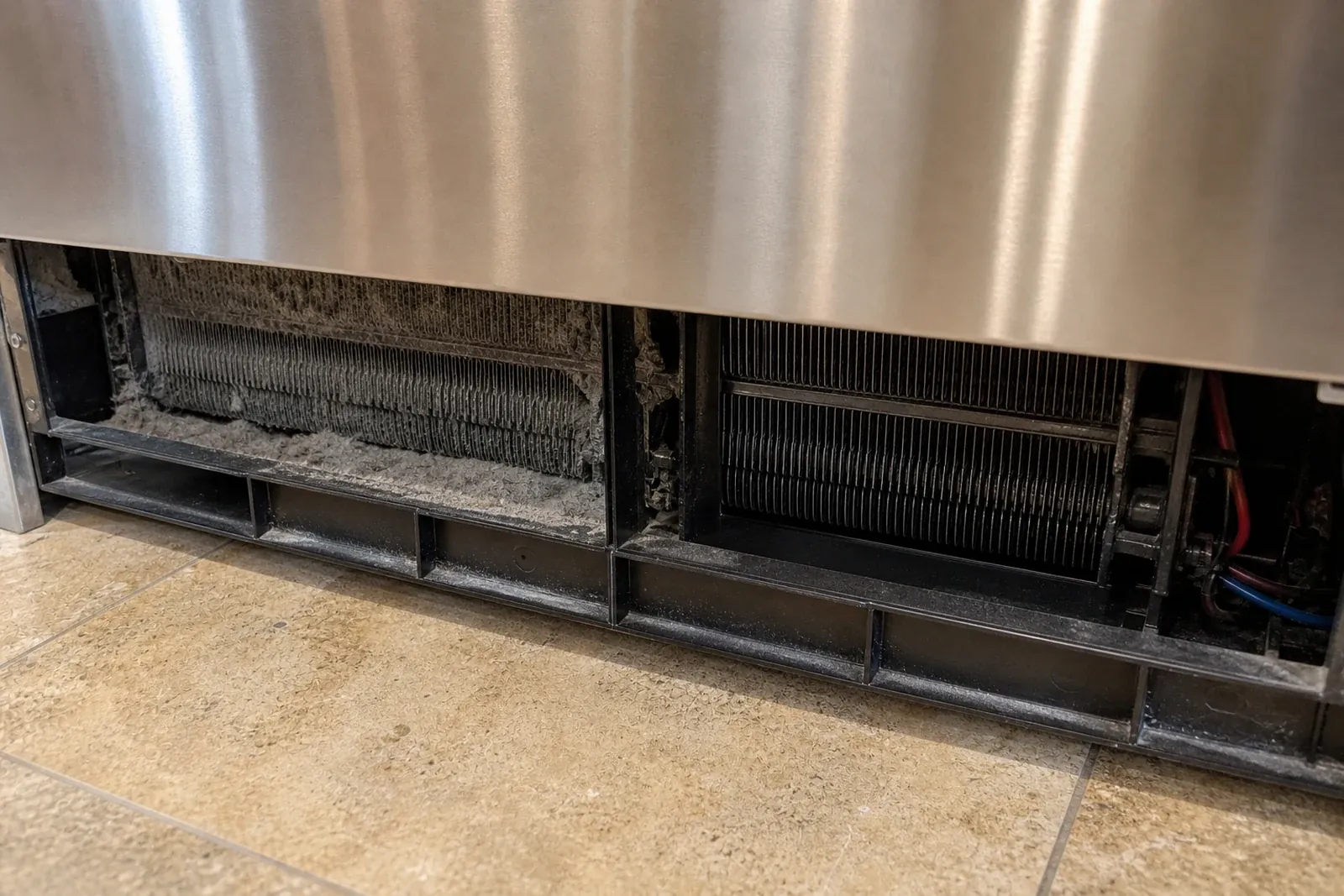
Read the symptom
How a heat-and-dust problem shows up
A choked condenser doesn't fail all at once. It announces itself in stages, and the stage you're at tells us how urgent the visit is. Match what you're seeing to the table below — these are the exact patterns we work across Dougherty Valley, Windemere, and Gale Ranch.
The key tell is the symptom split: when the freezer is still hard-frozen but the fresh food is warming, the sealed system is fine and you're almost certainly looking at airflow and heat rejection — the condenser. When both sides go warm and the unit runs nonstop, that's a different, costlier conversation covered on our sealed-system page.
| What you notice | Most likely cause | What we do |
|---|---|---|
| Fresh food warming, freezer still cold | Condenser can't shed heat; coil packed with hillside dust | Clean the condenser, re-measure, check the fan |
| Unit runs almost constantly on hot afternoons | Heat load plus a clogged coil; long cycles to hit setpoint | Clean coil first, then verify compressor amp draw |
| "Vacuum Condenser" or Service light flashing | Compressor ran long/inefficient — classic clogged-coil flag on 600-series | Clean condenser, then clear the bell key only if temps are near normal |
| Warm in summer, recovers in cooler months | Marginal coil unmasked by Diablo heat and afternoon sun | Bring the cleaning interval down to every 3-6 months |
| New build, never cleaned, two-plus summers in | First dust load packed solid behind a flush panel grille | Full coil clean and a maintenance schedule |
The interval
Why 3-6 months, not the 12 the manual quotes
Sub-Zero's own guidance is to clean the condenser every 6 to 12 months. That number assumes a sealed, climate-controlled kitchen in a mild, low-dust environment. Dougherty Valley is neither. Between the inland heat, the hillside grit, and wildfire-season ash blowing off the Diablo Range during a dry SCU-type fire year, the coils up here load several times faster than the manual ever anticipated.
So our standard for 94582 hillside homes — Windemere, Gale Ranch, the Norris Canyon-adjacent slopes — is to clean the condenser every 3 to 6 months, and to do it heading into summer rather than after the first warm spell has already cost you a fridge full of food. A clean coil is the single cheapest insurance against a warm Sub-Zero, and it's the first thing we check on every non-cooling call.
Two local details push the interval to the shorter end. The big estate kitchens common in these tracts often run a built-in fridge plus a dual-zone wine column and sometimes an outdoor or island unit baking on a patio — every one of those has a condenser pulling dusty San Ramon air, and the patio units load fastest of all. And homes that sit closest to open, ungraded hillside catch more grit on the Diablo wind than a lot two streets in. If that's your kitchen, plan on the quarterly end of the range. See the full schedule on our maintenance calendar, and if your unit is already warming, start with the not-cooling diagnostic.
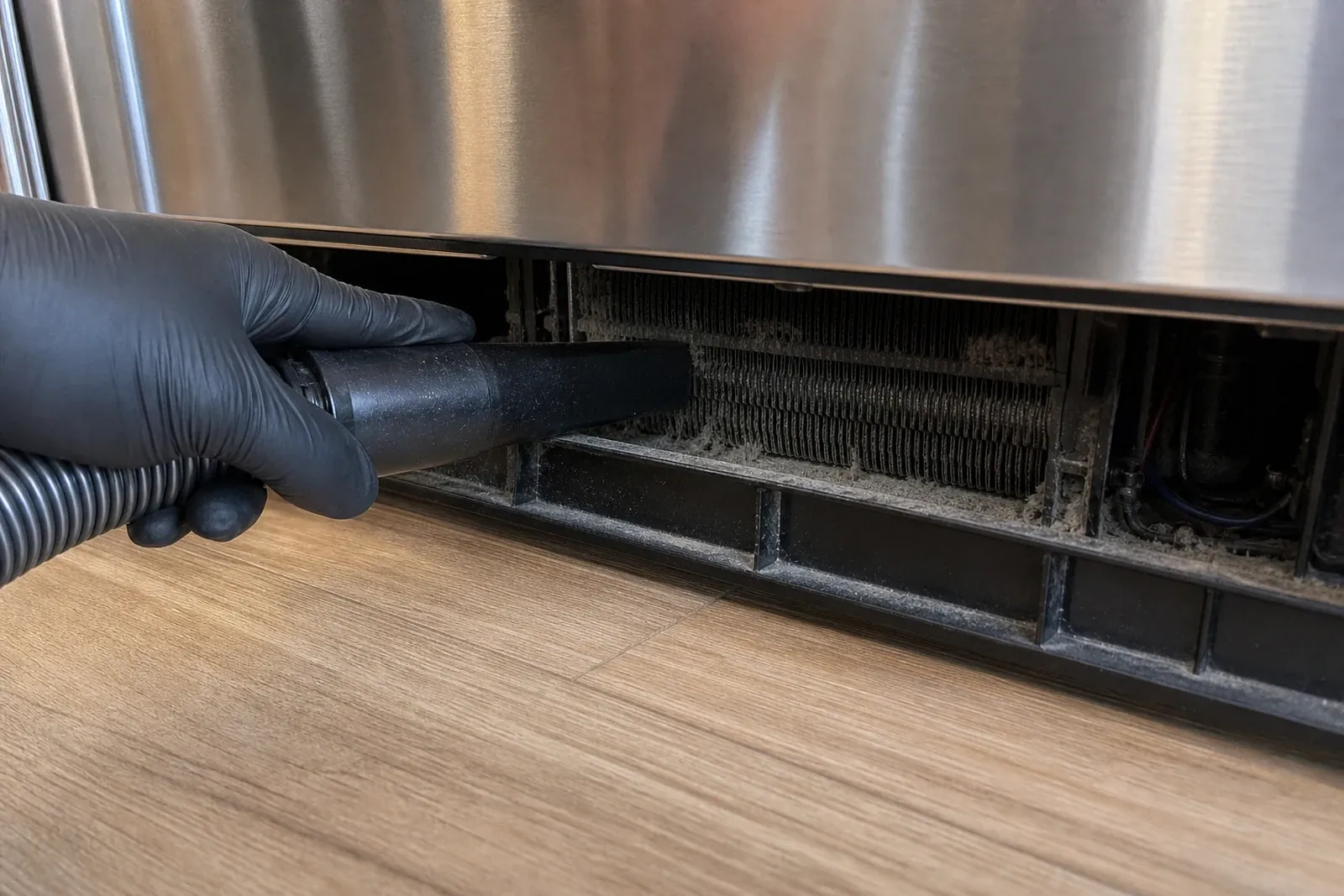
Getting to you
Access on the Dougherty Valley hillside
The build style up here also shapes how a visit goes, and a few details up front keep things smooth:
- Long, steep driveways. Many Windemere and Gale Ranch lots sit up a long approach. It's no obstacle — we just like to know so we stage tools and floor protection once, rather than making trips up and down a grade.
- Panel-ready built-ins. The uniform flush-front columns and built-ins common in these tracts need a careful pull to service the coil and the back of the unit without marking the custom cabinetry. That's deliberate cabinet-safe work, and we lay down floor protection before anything moves.
- HOA and gate access. If your stretch of Dougherty Valley or a nearby gated community needs a gate code or HOA check-in, tell us when you book so we aren't held at the call box.
From the Bishop Ranch and Crow Canyon corridor we reach the whole east side of San Ramon quickly, along with Danville, Dublin, and Pleasanton. See how a visit works and the areas we cover.
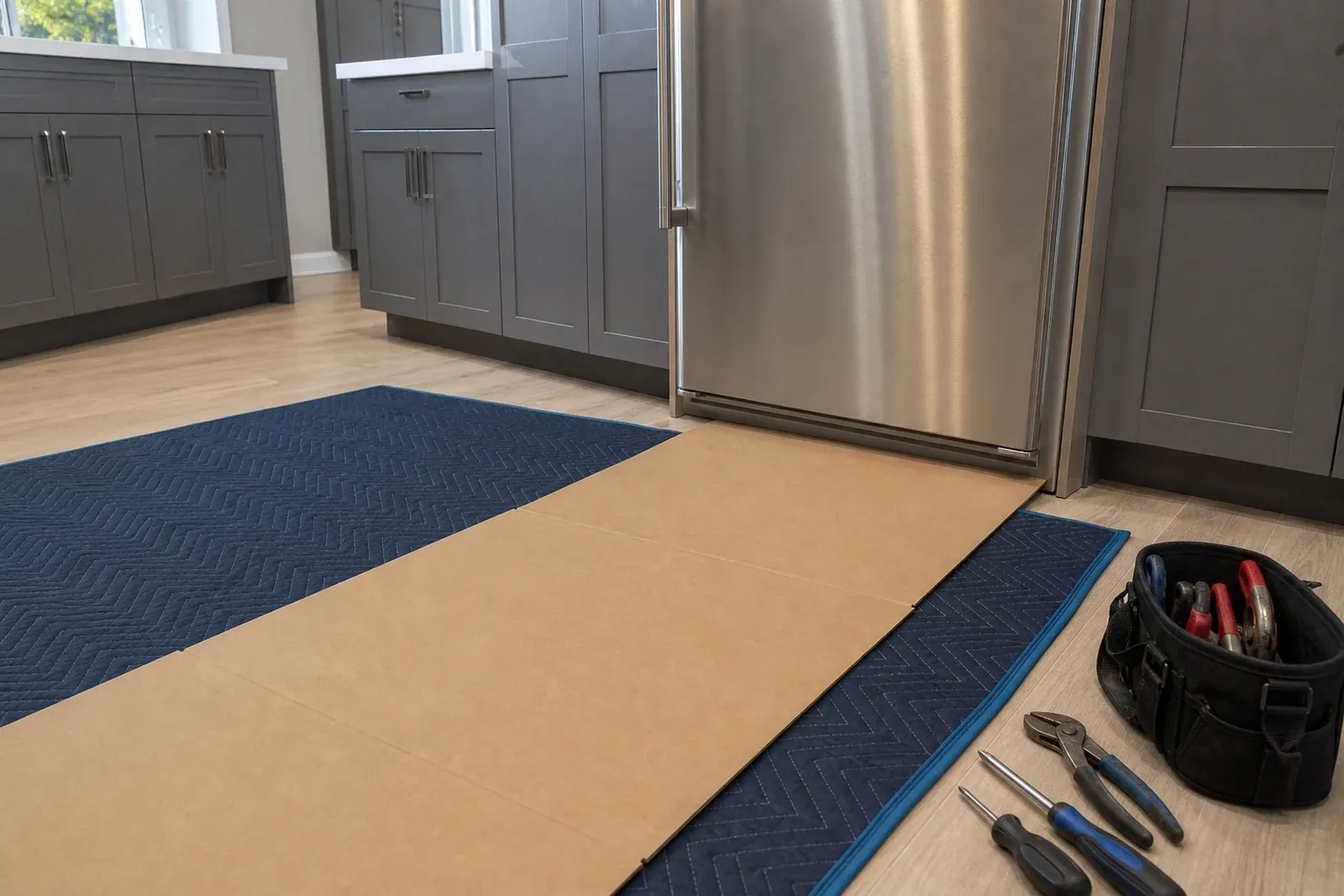
Before we arrive
Two checks that confirm it's the coil
You can confirm the most likely cause in a few minutes, and what you find genuinely shortens the visit:
- Open the grille and look at the condenser. On most built-ins it's behind the upper grille. If you see a gray felt of dust over the coil fins, that alone can explain a warm fresh-food side. Don't force anything or poke metal into the coil — just note what you see.
- Hold a hand near the lower grille on a hot afternoon. You should feel the condenser fan moving warm air out. Weak or no airflow, or a fan you can't hear, is a real clue we'll want to know about.
It helps to jot down your compartment temperatures and the time of day. A short temperature log turns "it feels warm" into a number we can diagnose. And if a code is flashing, leave it — on 600-series units a "Vacuum Condenser" or Service light is part of the picture; clear it only once temperatures are back near normal.
What it costs
Honest pricing on a heat-and-dust call
Most Dougherty Valley warm-fridge calls are not expensive, because most of them are airflow and heat rejection, not the sealed system. We diagnose the unit in your kitchen and quote a flat price before any work starts — the $95-$150 service call is credited toward the repair. A condenser clean and the common follow-on parts (a tired evaporator fan, a slack door gasket letting warm kitchen air in) typically land in the $200-$650 band. Only a genuine sealed-system or compressor fault reaches the $900-$1,800 range, and on those we check Sub-Zero's 12-year sealed-system warranty by model and date code before you pay a cent.
If your unit is warming, the cheapest move is almost always the first one: clean the coil and re-measure. See local repair costs and our diagnostic and pricing detail. Book online or call (925) 940-3576.
Next step
Call with the Sub-Zero model number
Have the model-tag photo, current fresh-food and freezer temperatures, and the symptom timeline ready. That lets the San Ramon intake route the visit around the likely Sub-Zero part family instead of a generic appliance script.
FAQ
Questions San Ramon homeowners ask before scheduling
Why does my Dougherty Valley Sub-Zero keep warming in summer?
Almost always because the condenser can't shed heat. Inland summer afternoons here run 90-100°F-plus, and offshore Diablo winds load hillside dust onto the coil in weeks. A packed condenser can't reject the heat the compressor is pumping, so the fresh-food side drifts warm first while the freezer stays cold. On 94582 hillside builds we clean the coil every 3-6 months to stop exactly this.
How often should I clean my Sub-Zero condenser in Dougherty Valley?
Every 3 to 6 months up here, not the 6-to-12 the manual quotes. That broader interval assumes a low-dust, mild climate. Dougherty Valley has hot inland summers, hillside grit on the Diablo wind, and wildfire-season ash off the Diablo Range, so coils load several times faster. Clean it heading into summer rather than after the first warm spell costs you a fridge of food.
Do you service Windemere and Gale Ranch?
Yes — Windemere and Gale Ranch are core Dougherty Valley territory for us, along with the rest of east San Ramon's 94582 hillside builds. We run from the Bishop Ranch and Crow Canyon corridor, so we reach the whole area quickly. If your lot has a long steep driveway, a gate code, or an HOA check-in, just tell us when you book at (925) 940-3576 so there's no delay getting to your door.
Why is my Sub-Zero running constantly on hot days?
A Sub-Zero rejects kitchen heat through its condenser, and on a Dougherty Valley afternoon it has more heat to move and a dust-clogged coil fighting it. The result is long, near-constant run cycles as it struggles to reach setpoint. We clean the coil and re-measure first; if it still runs long with a clean condenser, we verify the compressor's amp draw before pointing at the sealed system.
Can wildfire-season ash clog a Sub-Zero condenser that fast?
It can. During a dry SCU-type fire year, smoke and fine ash blowing off the Diablo Range settle onto everything, and a flush-front built-in pulls that air right across its coil through the lower grille. We've seen condensers in Gale Ranch and Windemere felt over in a single bad fire season. If the air outside has been smoky, move your next coil cleaning up — it's the cheapest protection there is.
My new build's Sub-Zero has never been cleaned — is that a problem?
Often, yes. Two or three summers into a new Dougherty Valley build, the first dust load has usually packed solid behind a panel-ready grille most owners never open. The unit may still cool, but it's working harder and running longer than it should. A full coil clean and a 3-6 month schedule from there will keep it cooling efficiently. Call (925) 940-3576 to get on the calendar.
Related