San Ramon · Tri-Valley · Diagnose before you call
Logging Your Sub-Zero Over 24 Hours: What the Temperature Pattern Tells You
A single thermometer reading tells you almost nothing about why a Sub-Zero is drifting warm. A 24-hour log — both compartments plus the setpoint, read every three to four hours — turns a vague "it's not cold" into a pattern, and the shape of that pattern usually names the failed system before a technician ever opens the grille.
Direct answer
Put an independent thermometer in each compartment, write down both temperatures, the setpoint, the time, and whether the compressor is running, every 3-4 hours for a full day. A steady climb points at the condenser or sealed system, a sawtooth at the control or fans, and a normal display over warm food at the thermistor. Bring that log to the visit: (925) 940-3576.
Why a log beats a glance
One reading is a guess; a day of readings is a diagnosis
Sub-Zero compartments don't sit at a flat number. They cycle: the compressor runs the box down a few degrees, idles, and lets it drift back up before the next call for cooling. Open the door during a Tri-Valley summer and you've just added a slug of 90-100°F kitchen air the system has to chase back down. So the temperature you read at any one instant depends on where you caught the cycle and what you were doing a minute earlier — which is exactly why a single check sends so many San Ramon owners down the wrong path.
A 24-hour log smooths all of that out. Read the same two compartments at the same handful of times across a day and the noise averages away, leaving the trend: is the box holding, slowly losing ground, or swinging wildly? That trend is the single most useful thing you can hand a technician, and it costs you nothing but a notepad. It also catches the intermittent faults — a damper that sticks only at night, a fan that stalls when the kitchen warms — that a quick spot-check will always miss. If your unit is flatly warm on both sides right now, skip the log and start with the not-cooling diagnostic; the log is for the drifting, intermittent, or "display says it's fine" cases.
The method
How to log a Sub-Zero over 24 hours
You don't need anything fancy. A cheap independent fridge/freezer thermometer (or two) beats the built-in display for this, because the display reports what the unit's own sensor thinks — and a lying sensor is one of the patterns we're trying to catch. Put one thermometer on a middle shelf in the fresh-food side, one in the freezer, and leave them in place so the readings stay comparable.
Then, every three to four hours across a full day and night, jot down six things in a single row:
- Time — so the gaps are roughly even.
- Fresh-food temp (target around 38°F) and freezer temp (target around 0°F).
- Setpoint — the number you've actually dialed in, so we know what the unit is being asked to do.
- Compressor running? — put a hand near the lower grille or listen; note running, idle, or "seems to never stop."
- Kitchen ambient — even a rough number matters on a 100°F San Ramon afternoon; outdoor and island units on a baking patio matter even more.
- What just happened — "opened for groceries," "after dinner," "overnight, untouched." Door traffic explains a lot of bumps.
Two practical notes. Don't change the setpoint mid-log — chasing it colder just hides the symptom and ruins the trend. And get at least one overnight, untouched reading, because a box that holds fine when nobody's home but drifts during a busy evening is telling you something a daytime-only log would hide.
Read the shape
What the three classic patterns mean
Plot your numbers in your head as a line over the day and almost every not-cooling case falls into one of three shapes. Each shape points at a different system, which is why the pattern — not the worst single number — is what actually narrows the fault.
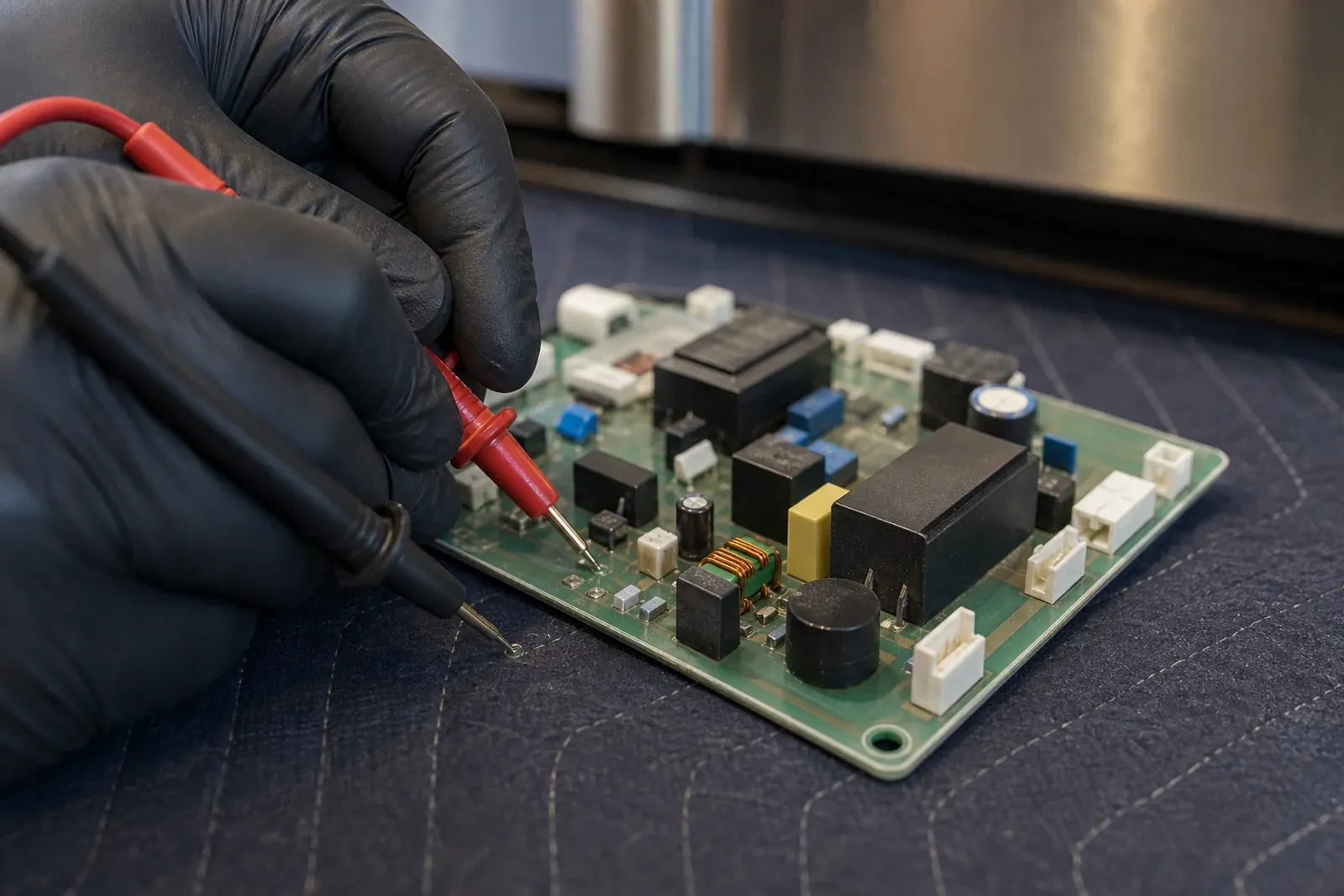
- Steady climb. Both compartments creep up hour after hour and the compressor runs long or never idles. The system is making cold but can't make enough — classic for a heat-choked condenser (the San Ramon default), a refrigerant loss, or a weak compressor.
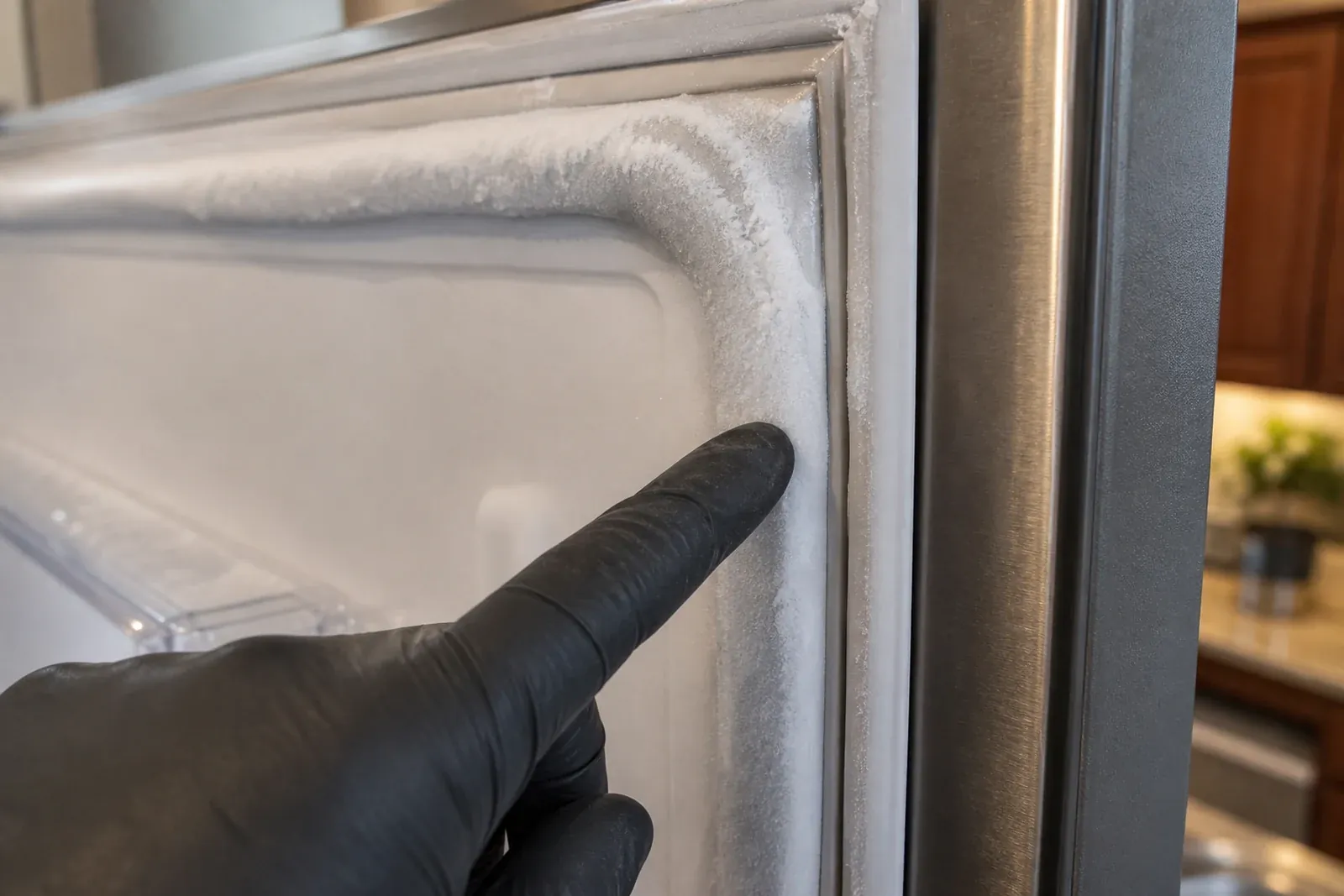
- Sawtooth. Temps swing up and down in a wider, jaggeder band than normal cycling, often worse at certain hours. Cold is being made but delivered erratically — a stuck damper, a stalling evaporator fan, an iced-up defrost cycle, or a control-board fault.
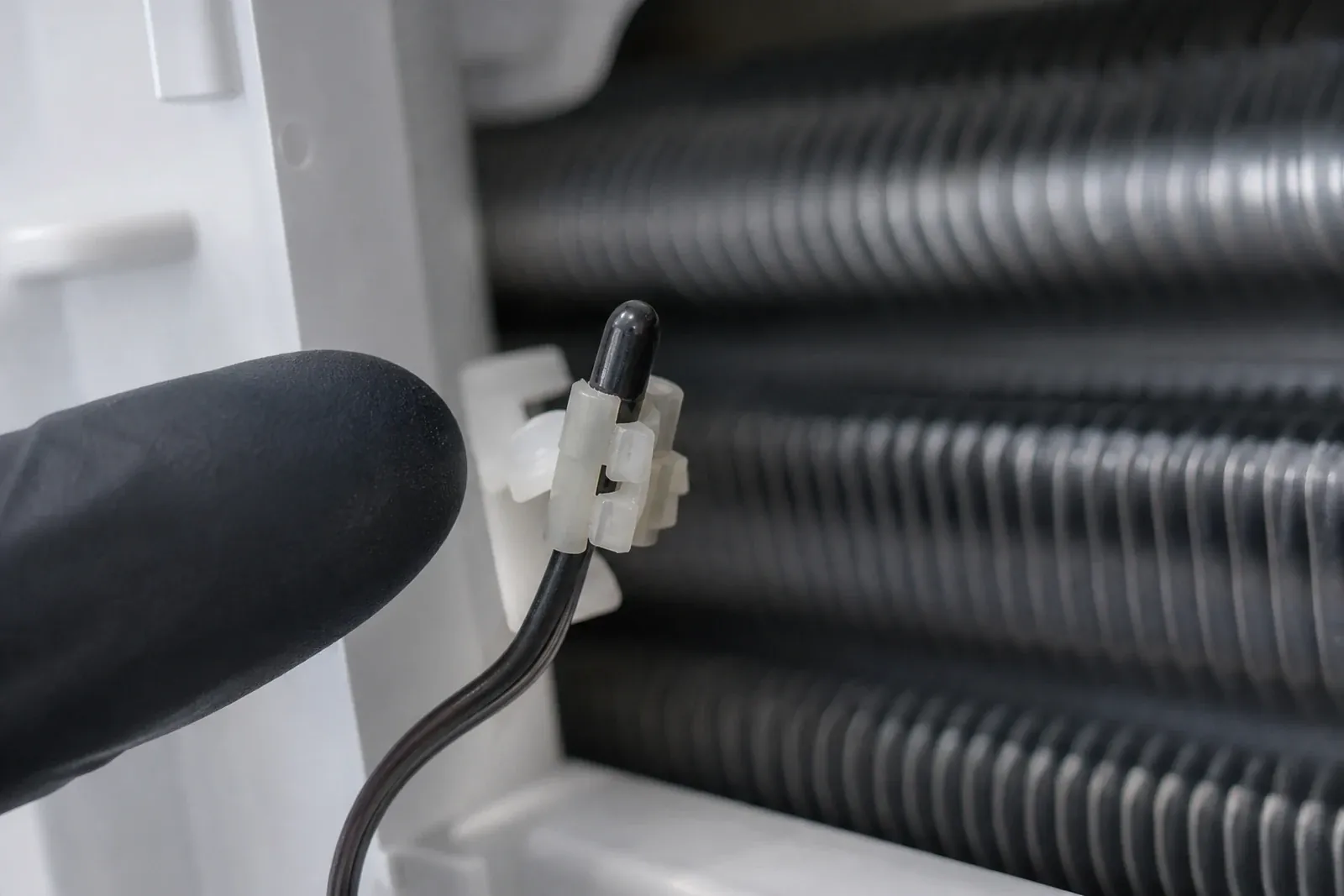
- Display right, food warm. The Sub-Zero's own readout looks normal but your independent thermometer and your butter disagree. The sensor the board trusts is reading wrong — a drifted thermistor — so the unit stops cooling early thinking it's done.
| Pattern you logged | Compressor behavior | Likely failed system | What it usually takes | Read more |
|---|---|---|---|---|
| Steady climb, both sides | Compressor runs long / never idles | Condenser, refrigerant, or compressor | Clean condenser first; gauges + amp draw if no change | /sub-zero-sealed-system-compressor |
| Sawtooth swings | Cycles wide, sometimes only at night | Damper, evaporator fan, defrost, or board | Check frost line and fan; part swap, not the sealed system | /sub-zero-not-cooling-diagnostic |
| Display normal, food warm | Independent thermometer reads higher than display | Thermistor / temperature sensor drift | Replace the sensor; verify against the log | /sub-zero-error-codes-alarms |
| Flat warm both sides now | No cycling, runs constant or not at all | Sealed system or power/control failure | Don't wait on a log; diagnose now | /same-day-emergency-service |
The trickiest case
Thermistor vs. compressor: how the log tells them apart
These two get confused constantly, and they cost very different amounts, so it's worth being precise. A compressor or sealed-system problem is a capacity problem: the unit is genuinely struggling, so its own display drifts warm right alongside your independent thermometer, and the compressor runs long or constantly trying to keep up. A thermistor problem is a measurement problem: the sensor tells the board the box is colder than it really is, so the board shuts cooling off early — the display looks fine while your independent thermometer climbs, and the compressor cycles off sooner than it should rather than running forever.
So the deciding column in your log is the gap between the Sub-Zero's own readout and your independent thermometer:
- Display and thermometer agree, both warm, long runs → capacity. Think sealed system or condenser — the expensive, gauge-and-amp-draw end (sealed-system/compressor work runs $900-$1,800, often under the 12-year sealed-system warranty).
- Display normal, thermometer warm, short runs → the board is being lied to. Think thermistor — a far smaller repair in the $200-$650 band.
That one comparison routinely saves San Ramon owners from quoting themselves a compressor when a $200-range sensor was the whole story. We still confirm it on the truck, but your log gets us to the right part on the first trip. The full warm-fridge tree lives on the not-cooling diagnostic page.
San Ramon context
Why the local heat changes how you read the log
The same pattern reads differently in San Ramon than it would in a mild coastal kitchen, so log the ambient honestly. On a 100°F-plus Diablo Valley afternoon a healthy Sub-Zero will run longer and drift up a degree or two — that's heat load, not failure, and your overnight readings are where the truth shows. If the box recovers to target once the kitchen cools after dark, the unit is fine and you've just learned how hard summer is working it. If it stays warm overnight in a cool kitchen, that's a real fault.
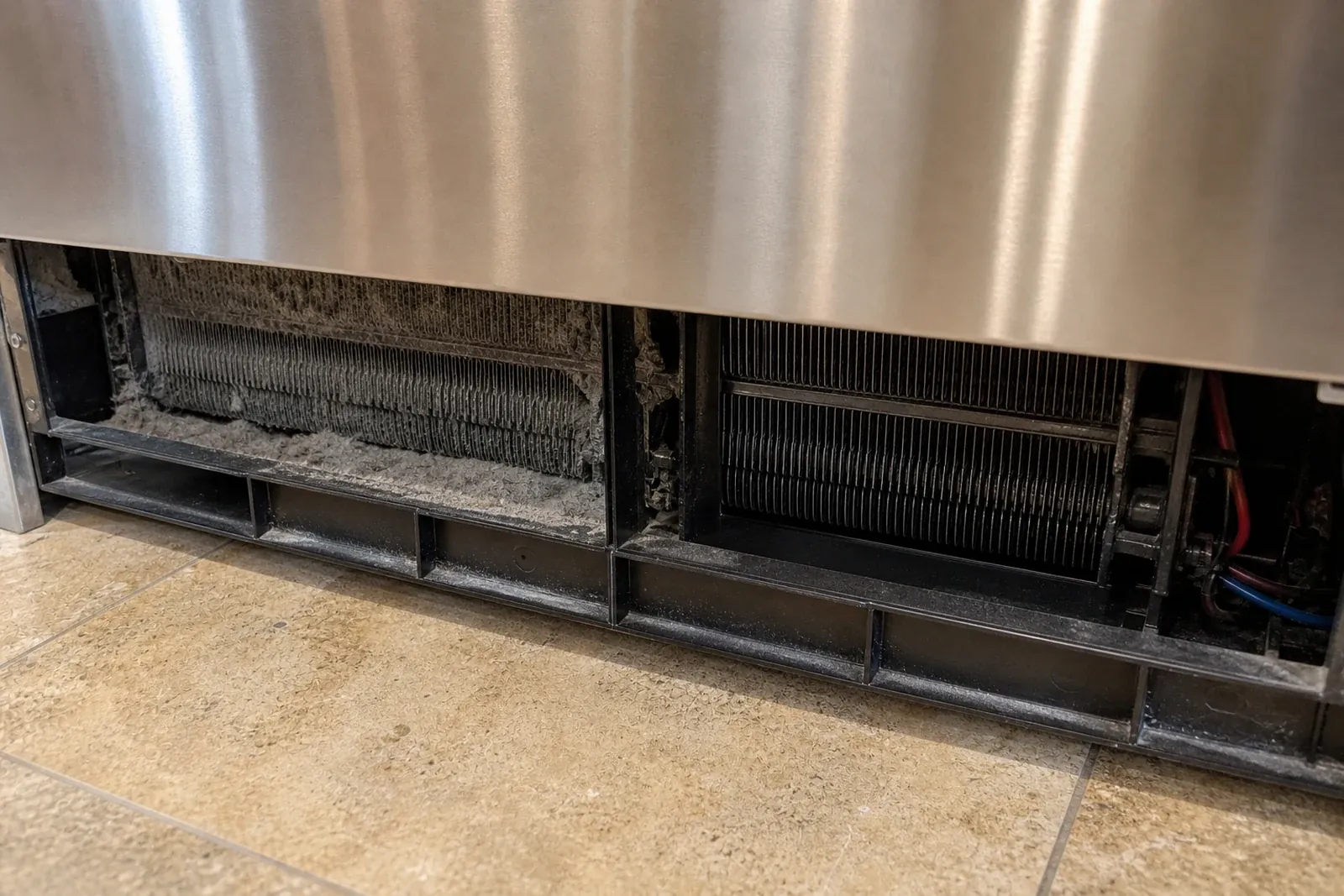
The local catch is the condenser. Offshore Diablo winds drag hillside dust off Dougherty Valley, Gale Ranch, and Norris Canyon, and wildfire-season ash off the Diablo Range, packing a condenser coil in days rather than months. A felted coil is the number-one cause of a "steady climb" log here, which is why we tell San Ramon owners to clean the condenser every 3-6 months, not the usual 6-12 — see the Dougherty Valley dust-and-heat page and the summer-heat guide. Outdoor and island refrigeration baking on an estate patio in Blackhawk or Canyon Lakes earns its own line in the log; those units fight ambient and sun load at once. Before you call, a quick look behind the grille for a gray felt of dust often explains the whole climb on its own.
Hand it over
Should you log before a repair visit? Yes — and bring it
A log is the most useful thing a San Ramon owner can do before we arrive, for two reasons. First, it catches faults that hide during a 30-minute visit — an intermittent damper, a fan that only stalls when the kitchen warms, a thermistor whose drift you can only see across hours. Second, it lets us load the truck for the actual fault: a sensor and a fan motor for a sawtooth log, gauges and a recovery setup for a steady climb. That's the difference between a one-trip fix and a "we'll order the part" callback.
When you book, have the log handy and tell us your unit's model from the tag — the model-number guide shows where it hides, and a quick photo checklist beats reading numbers aloud. We diagnose in your kitchen, confirm the pattern against the gauges, and quote a flat price before any work; the $95-$150 service call is credited toward the repair. A few more prep steps live on the preparation checklist. Yes — we service the whole Tri-Valley: book online or call (925) 940-3576.
Next step
Call with the Sub-Zero model number
Have the model-tag photo, current fresh-food and freezer temperatures, and the symptom timeline ready. That lets the San Ramon intake route the visit around the likely Sub-Zero part family instead of a generic appliance script.
FAQ
Questions San Ramon homeowners ask before scheduling
How do I log my Sub-Zero's temperature?
Put an independent thermometer on a middle shelf in the fresh-food side and one in the freezer, then every three to four hours for a full day write down the time, both temperatures, the setpoint, whether the compressor is running, and the kitchen ambient. Don't change the setpoint mid-log, and capture at least one overnight reading. In San Ramon's summer heat the overnight numbers matter most. Call (925) 940-3576 to go over it.
What does it mean if my Sub-Zero display is right but the food is warm?
That gap almost always means a drifted thermistor — the sensor tells the control board the box is colder than it really is, so the board shuts cooling off early while your food slowly warms. Your independent thermometer reading higher than the display is the giveaway. It's a measurement fault, not a capacity fault, so it's typically a $200-$650 sensor repair, not a compressor. We confirm it against your log on the visit.
How do I tell a thermistor problem from a compressor problem?
Compare the Sub-Zero's own display to an independent thermometer in your log. If both read warm and the compressor runs long or constantly, it's a capacity problem — the condenser or sealed system. If the display looks normal but your thermometer climbs and the compressor cycles off early, the board is being misinformed by a bad thermistor. One is a $900-$1,800 sealed-system job; the other is a far smaller sensor swap. Call (925) 940-3576.
Should I log temperatures before a repair visit?
Yes — it's the single most useful prep step. A 24-hour log catches intermittent faults that hide during a short visit and tells us which part to bring, which is the difference between a one-trip fix and a callback. Note both compartments, the setpoint, and the compressor behavior, plus your Tri-Valley kitchen ambient. Bring it when we arrive, along with a photo of your model tag. Book online or call (925) 940-3576.
My Sub-Zero temperature keeps swinging up and down — what does a sawtooth pattern mean?
A wide sawtooth — temps swinging higher and lower than normal cycling, sometimes worse at night — means cold is being made but delivered erratically. Common causes are a stuck air damper, a stalling evaporator fan, an iced-up defrost cycle, or a control-board fault. The sealed system is usually fine, so these are typically $200-$650 repairs. Check the freezer's frost line; heavy ice points at defrost. We diagnose either way at (925) 940-3576.
Is it normal for my Sub-Zero to run warmer on a hot San Ramon day?
A degree or two of daytime drift on a 100°F-plus Diablo Valley afternoon is normal heat load, especially with a Diablo-wind-dusted condenser coil. The test is the overnight reading: if the box recovers to target once the kitchen cools, it's fine. If it stays warm overnight in a cool kitchen, that's a real fault. Cleaning the condenser every 3-6 months here often ends the drift. Call (925) 940-3576 if it persists.
Related