San Ramon · Published field notes
San Ramon Sub-Zero Case Notes: What Our Repairs Actually Look Like
These are representative, anonymized field notes in our house style — real-world San Ramon symptoms, the diagnostic proof we gathered, what we replaced, and the temperature the box held afterward. No named customers, no invented reviews.
Direct answer
Our Sub-Zero repairs follow a measured pattern: read the model tag, log the actual cabinet and freezer temperatures, find the failed part with instruments, quote a flat price, then fix it and verify recovery. The case notes below are anonymized San Ramon examples of that work. Questions? Call (925) 940-3576.
Why publish notes
Why we publish case notes instead of star ratings
A five-star average tells you nothing about whether someone can fix your Sub-Zero. A field note does. So instead of collecting reviews, we publish anonymized case notes that show the actual chain of reasoning on a repair: the symptom a San Ramon homeowner described, the temperatures we measured, the instrument readings that pointed to one part, the repair we performed, and where the cabinet settled afterward.
Every note below is representative and de-identified — no customer names, no addresses, no fabricated quotes. We name the general neighborhood and the model family only so you can recognize whether your situation rhymes with one of ours. This is evidence in our network house style, written the way a careful technician writes up a job, not marketing copy dressed as testimony.
If you want the underlying method rather than the examples, our technician process and not-cooling diagnostic pages walk through it step by step.
Note 01
Dougherty Valley — BI-48 warm on the fresh-food side, freezer fine
Symptom (homeowner): "Fridge half is getting warm, ice cream is still rock hard." A classic split-temperature complaint on a hillside Dougherty Valley built-in.
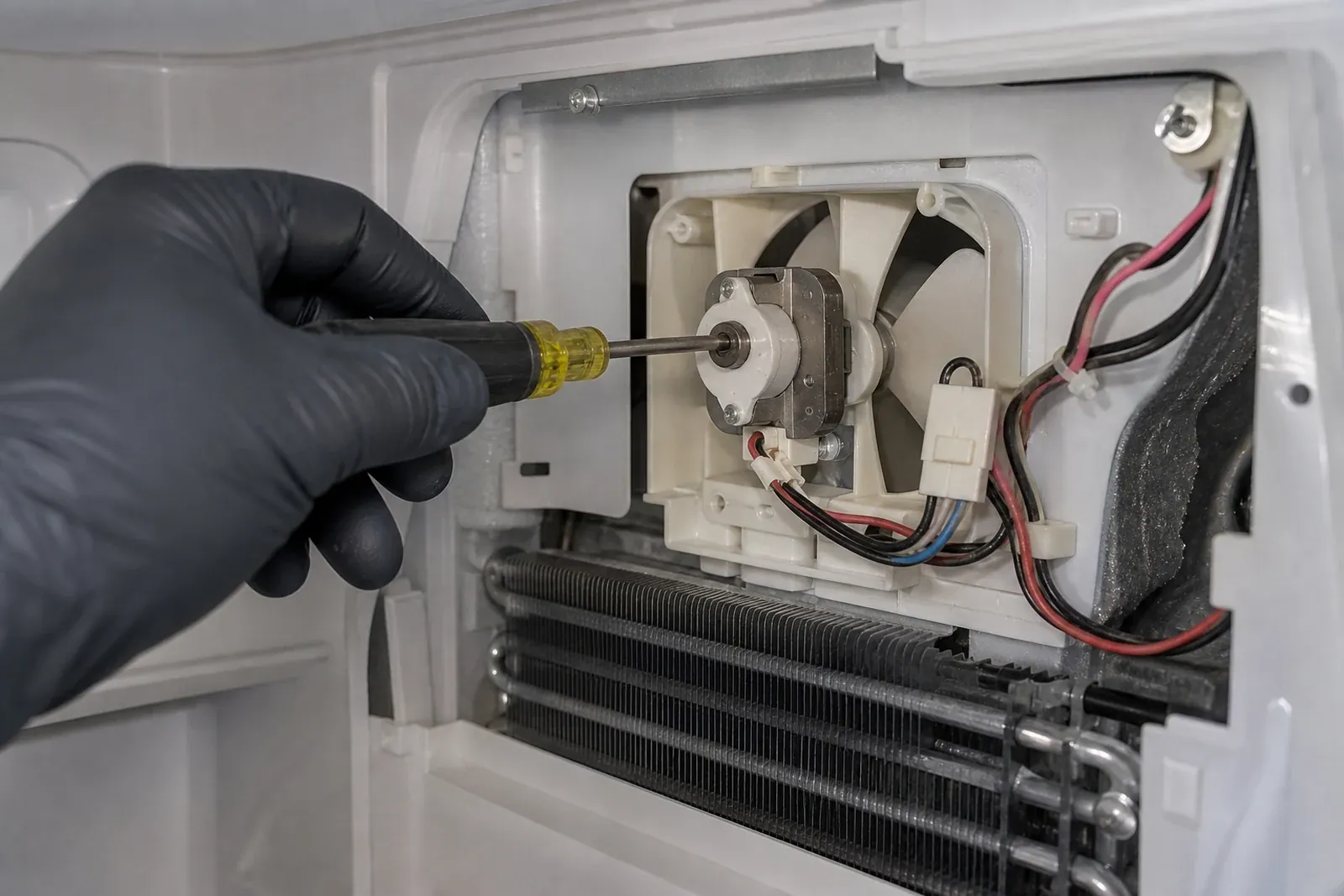
Diagnostic proof: Fresh-food compartment logged at 52°F, freezer at a correct 0°F. A warm fridge over a cold freezer almost always means air isn't moving, not that the system is low on charge. We pulled the rear evaporator panel and found a frost build-up and an evaporator fan that wouldn't spin freely — motor amp draw out of range, blades stalling. The sealed system was healthy.
Repair action: Replaced the OEM evaporator fan motor, cleared the frost, confirmed the defrost cycle completed.
Time on site: about 90 minutes. Outcome: fresh-food pulled down to 38°F within the hold-and-verify window before we left, freezer steady at 0°F.
The full reasoning lives on our warm-fridge diagnostic page.
Note 02
Canyon Lakes — 600-series "Vacuum Condenser" light, both sides drifting warm
Symptom (homeowner): "The Vacuum Condenser light is flashing and the whole thing feels warmer than usual." A late-1990s panel-ready unit in the Canyon Lakes golf community.
Diagnostic proof: Both compartments were warm and the compressor was running nearly nonstop — the message means the compressor ran long and inefficiently, most often because the condenser is choked. We pulled the grille and found a coil packed with dust and wildfire-season ash carried on the Diablo wind. Amp draw was elevated; sealed-system pressures, once the coil could breathe, came back normal. We deliberately did not clear the code while temperatures were still high, because the code was helping confirm the diagnosis.
Repair action: Deep-cleaned the condenser, verified airflow, then held the door (bell) key ~15 seconds to clear the message once temperatures were near normal.
Time on site: about 75 minutes. Outcome: run time dropped sharply; box recovered to spec. See error codes & alarms.
Note 03
Norris Canyon Estates — wine column drifting to room temperature
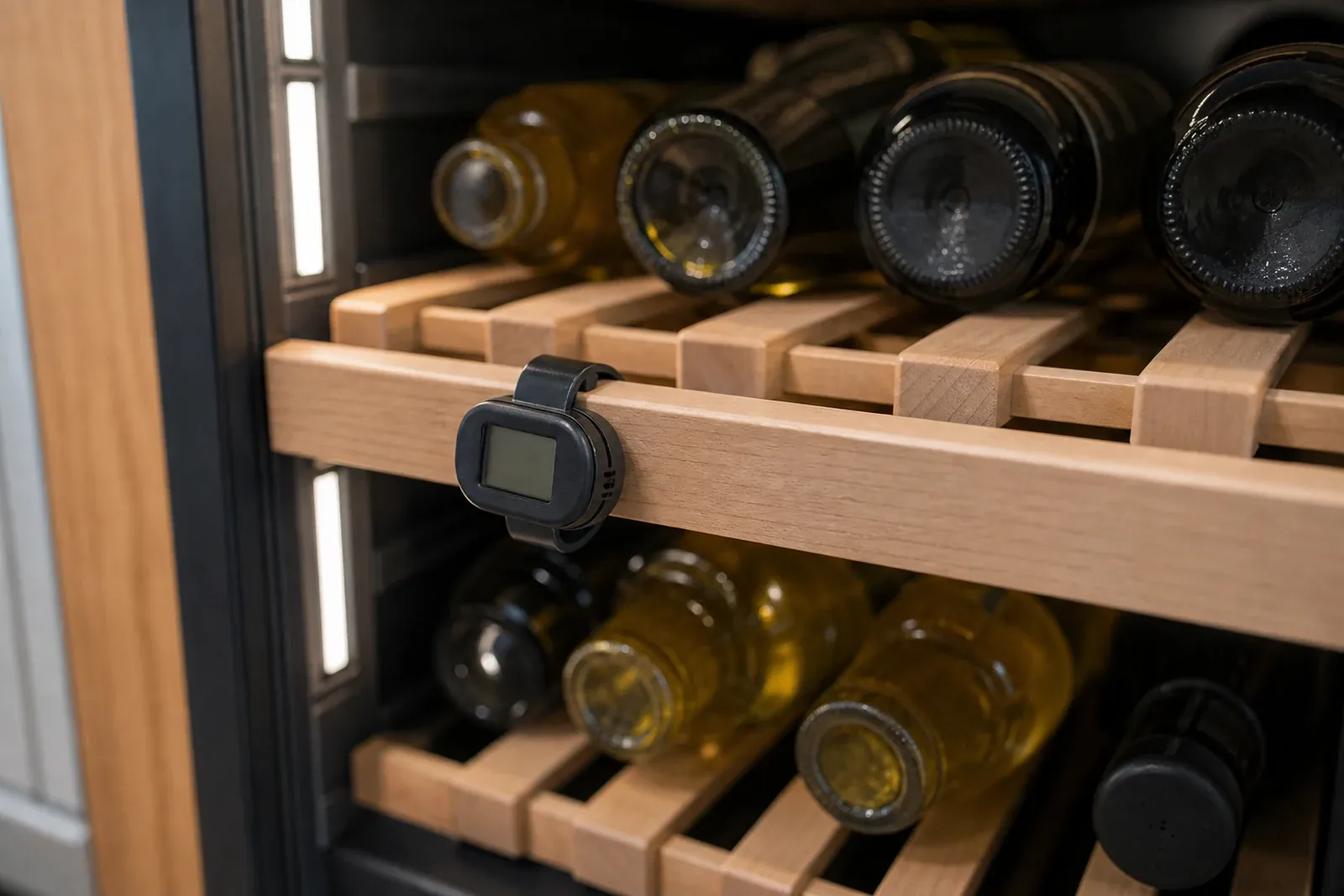
Symptom (homeowner): "My wine column won't hold 55 — it's reading near the room." A dual-zone column in a gated Norris Canyon estate kitchen.
Diagnostic proof: Set point was a correct 55°F storage temperature, but the cabinet logged 68°F. The condenser fan was seized; with no airflow across the coil the system can't reject heat, so the zone slowly climbs to ambient — and a hot summer estate kitchen makes it worse. We also ran the dollar-bill seal test on the door gasket; it passed, so the seal wasn't the culprit here.
Repair action: Replaced the OEM condenser fan motor, cleaned the coil, and confirmed the gasket and door swing.
Time on site: about 80 minutes. Outcome: the zone walked back to 55°F over the following hours; we left a logging note so the homeowner could confirm the drift was gone after a full day. More on this in wine storage temperature.
Note 04
Gale Ranch — ice maker stopped, freezer still cold
Symptom (homeowner): "Ice bin is empty, but the freezer is freezing fine." A newer Gale Ranch built-in on DSRSD water.
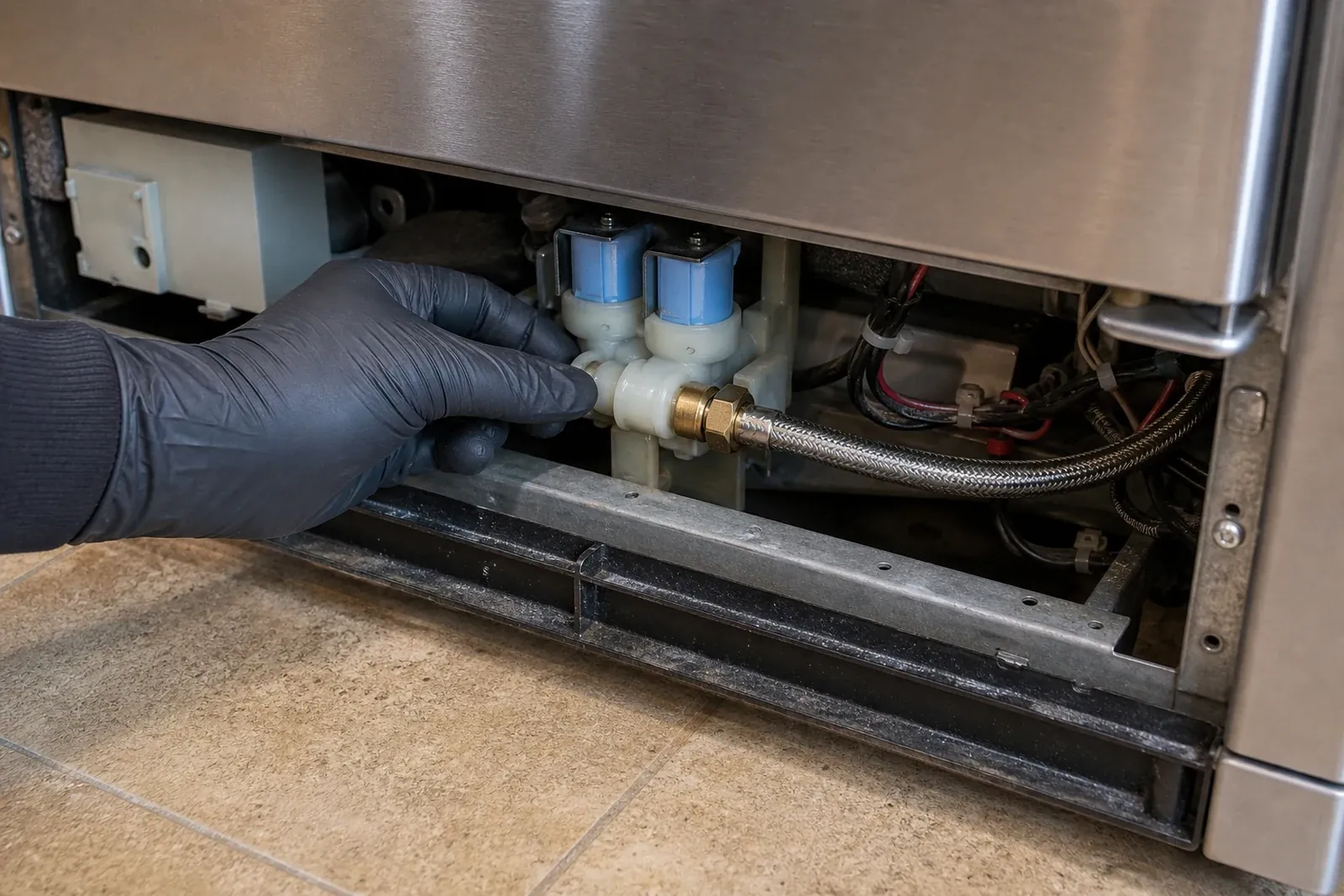
Diagnostic proof: Freezer held a correct 0°F, the ice maker was switched on and the shut-off arm was down — so the freeze side was fine and the fault was upstream at the water side. We found the fill/inlet valve scaled and weeping; San Ramon's moderately hard water from the Dublin San Ramon Services District (via Zone 7) leaves mineral build-up on inlet valves and shortens filter life. The harvest mechanism itself was healthy.
Repair action: Replaced the OEM water inlet valve, flushed the line, and installed a fresh filter, advising a 3–6 month filter interval on this water rather than the longer schedule a softer-water home might run.
Time on site: about 60 minutes. Outcome: first full harvest produced clear, solid cubes within the day. Full checklist on our ice maker & water line page; local water detail at San Ramon hard-water guide.
At a glance
The four notes, side by side
Same method, four different failure points. Notice that in every case the diagnosis came from a measured temperature plus an instrument reading — never a guess over the phone. Your symptom may match one of these closely, but we still verify on site before quoting a flat price.
The geographic spread also matters. These four notes run from the newer 94582 hillside tracts of Dougherty Valley and Gale Ranch to the older 94583 side around Canyon Lakes, and out to the gated estates of Norris Canyon. Different homes, different build eras, different model families — yet the same disciplined sequence finds the fault every time. None of the four needed sealed-system work; three were airflow or component faults and one was on the water side, which is exactly the spread we see in San Ramon when a freezer is still holding 0°F.
| Neighborhood | Model family | Symptom | Repair action | Temperature outcome |
|---|---|---|---|---|
| Dougherty Valley | BI-48 built-in | Warm fridge / cold freezer | Evaporator fan motor | 52°F → 38°F fresh food |
| Canyon Lakes | 600-series built-in | "Vacuum Condenser" / both warm | Condenser clean (ash/dust) | Long run → recovered to spec |
| Norris Canyon Estates | Wine column | Drifting to room temp | Condenser fan motor | 68°F → 55°F zone |
| Gale Ranch | Built-in w/ ice maker | No ice, freezer cold | Water inlet valve + filter | Full clear-cube harvest |
How to read them
What these notes tell you before you call
Three things to take from the notes above. First, the freezer-still-cold clue matters: when one compartment is fine and the other is warm, the sealed system is usually healthy and the fault is an airflow or water-side part — a far smaller repair than a compressor. Second, San Ramon's environment shows up repeatedly: Diablo-wind dust and wildfire-season ash on condensers, hard-water scale on inlet valves, and estate kitchens that run hot in summer. Third, we verify recovery before we leave and tell you what to log over the next 24 hours, because a Sub-Zero needs time to settle after a fix.
- Compare your symptom to the table, then call so we can confirm with real readings — see repair cost and diagnostic fees for what a visit runs.
- Have your model number ready from the tag; our model number guide shows exactly where to look.
- For a heat- or dust-driven non-cooling problem, the Dougherty Valley dust & heat and summer-heat notes go deeper.
Next step
Call with the Sub-Zero model number
Have the model-tag photo, current fresh-food and freezer temperatures, and the symptom timeline ready. That lets the San Ramon intake route the visit around the likely Sub-Zero part family instead of a generic appliance script.
FAQ
Questions San Ramon homeowners ask before scheduling
What do your Sub-Zero repairs actually look like?
They follow a fixed pattern: we read the model tag, log the real cabinet and freezer temperatures, isolate the failed part with instruments instead of guessing, quote a flat price before any work, then repair and verify the box recovers. The four anonymized San Ramon case notes on this page show that method on a built-in, a 600-series, a wine column, and an ice maker. Call (925) 940-3576.
How do you diagnose a warm Sub-Zero?
We measure before we touch anything. If the freezer is cold but the fresh-food side is warm — like the Dougherty Valley BI-48 above — the sealed system is usually fine and the fault is airflow: a frosted evaporator, a stalled fan motor, a stuck damper, or a choked condenser. We confirm with temperature logs and amp readings, then replace only the failed OEM part. Our not-cooling diagnostic page details every check.
What was wrong with a Sub-Zero that ran constantly?
In the Canyon Lakes note, a 600-series flashing "Vacuum Condenser" ran almost nonstop because the condenser was packed with Diablo-wind dust and wildfire-season ash, so the compressor couldn't reject heat efficiently. A deep coil cleaning restored airflow and dropped run time. A unit that runs constantly with both sides warm and a loud compressor can instead point to the sealed system — see sealed system & compressor.
Are these real San Ramon repairs?
Yes — they are representative, anonymized field notes from work across San Ramon and the Tri-Valley, written in our network house style. We remove names, addresses, and any identifying detail and name only the general neighborhood and model family. They are evidence of how we work, not invented testimonials or fake reviews; we never publish customer names or fabricated quotes.
Why publish case notes instead of customer reviews?
Because a star rating can't show whether someone can fix your Sub-Zero, and a field note can. The notes expose the actual reasoning — symptom, measured temperatures, instrument readings, the part replaced, and the recovery — so you can judge competence on evidence. It also keeps us honest: we won't dress up marketing as testimony or invent customers we never served.
Will my repair match one of these case notes exactly?
Possibly close, but we never assume. Your symptom might rhyme with the Gale Ranch ice-maker or Norris Canyon wine-column note, yet we still confirm on site with real temperature and electrical readings before quoting a flat price, because two boxes with the same complaint can have different failed parts. Bring your model number from the tag and call (925) 940-3576.
Related