San Ramon · Symptom-to-cause hub
The Sub-Zero Problems San Ramon Owners Report Most
Most Sub-Zero faults we see across the Tri-Valley fall into a short, recognizable set. Match your symptom below to its most likely cause, then follow the link to the deep page — and remember a built-in often needs 24 hours after any fix before you judge it.
Direct answer
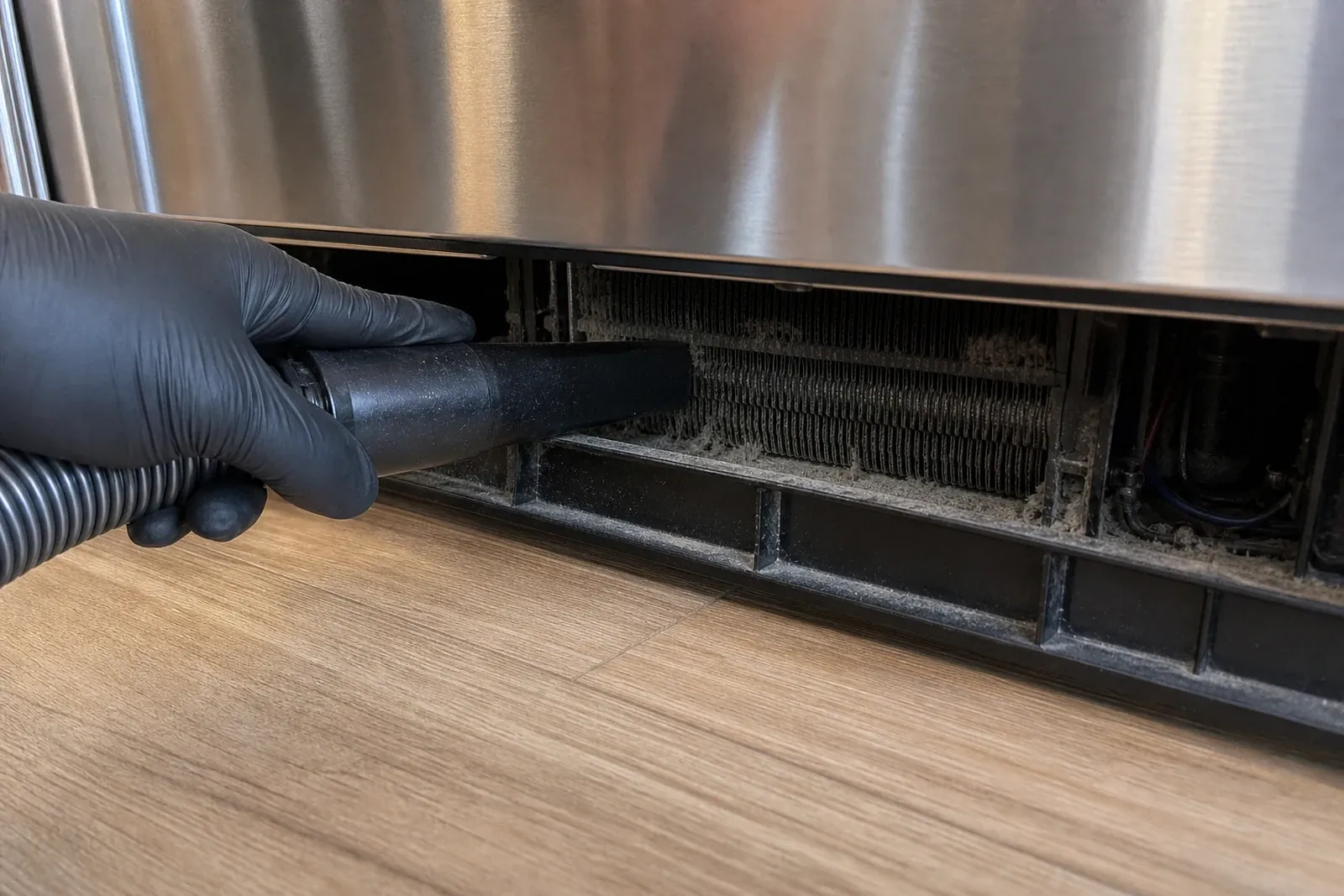
The Sub-Zero problems San Ramon owners report most are a warm fresh-food side with a cold freezer, both compartments warming, door condensation or frost, ice-maker trouble, control-board alarms, wine-zone temperature drift, a loud compressor, and water on the floor from a blocked defrost drain. Most trace to a dirty condenser, a worn seal, or a sealed-system fault. Call (925) 940-3576.
Start here
Find your symptom, get the likely cause
Sub-Zero refrigeration is built to last 25–30 years, so when something goes wrong it's usually one component aging out — not the whole machine. This table maps the eight problems we hear about most in San Ramon to their most common root cause and the page that walks it through. It's a triage map, not a final diagnosis: confirming the fault still takes gauges, amp readings, and a look inside, but it tells you where to start and how urgent it is.
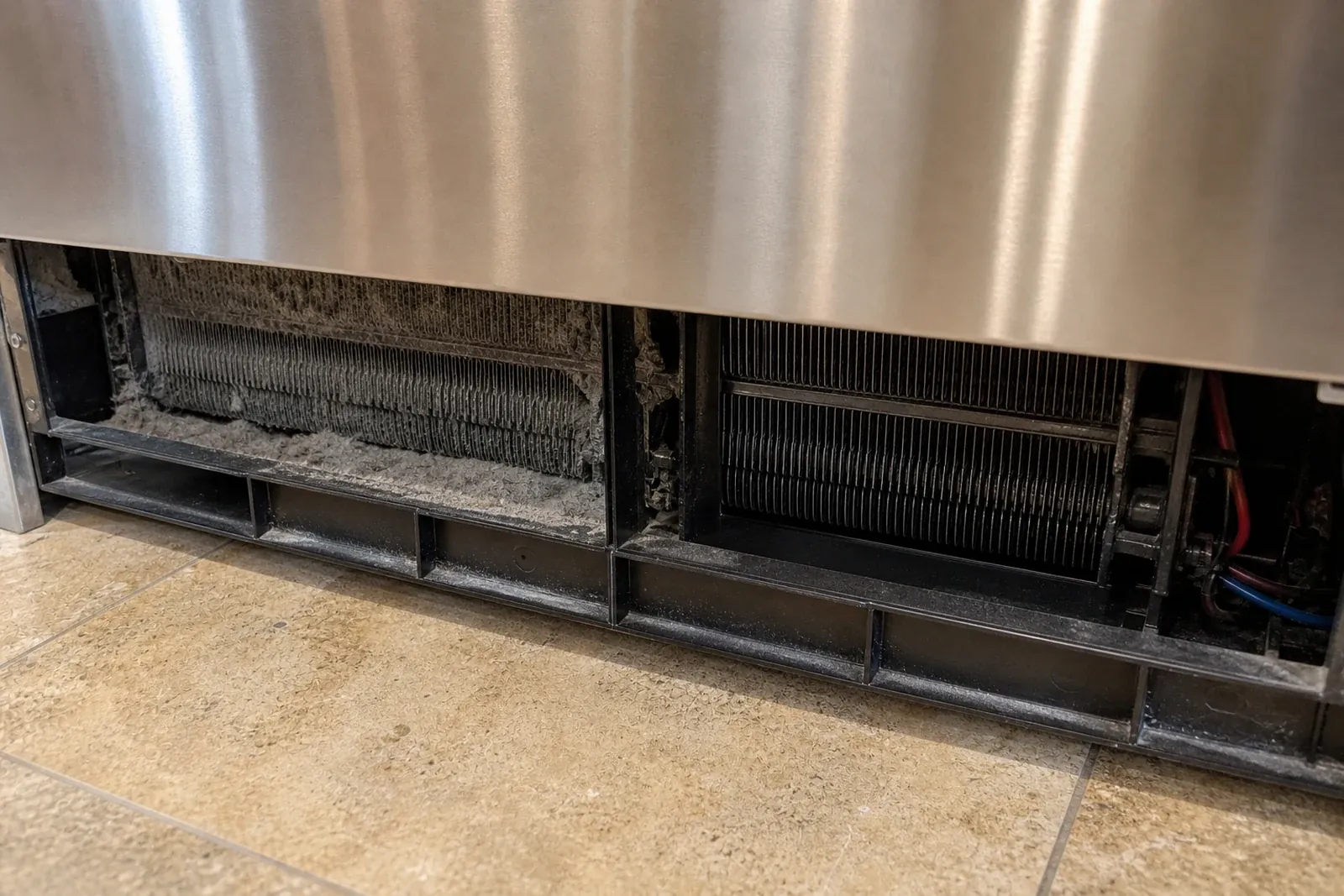
One pattern runs through nearly every row below — the inland environment. Diablo Valley summers push past 100°F, offshore Diablo winds and wildfire-season ash blanket condenser intakes in days, and moderately hard DSRSD water scales ice-maker valves. A condenser that should be cleaned every 6–12 months often needs it every 3–6 here.
| Symptom you see | Most likely cause | Deep page |
|---|---|---|
| Fresh food warm, freezer still cold | Dirty condenser, defrost fault, evaporator fan, or damper | /sub-zero-not-cooling-diagnostic |
| Freezer warm or soft, fridge still cold | Defrost fault, evaporator fan, or a dual-evaporator issue | /san-ramon-sub-zero-freezer-not-freezing |
| Both compartments warming, unit runs constantly | Sealed-system / compressor problem | /sub-zero-sealed-system-compressor |
| Condensation, sweating, or frost around the door | Worn or distorted door gasket | /sub-zero-door-gasket-seal-repair |
| No ice, slow ice, or hollow cubes | Clogged water line, scaled inlet valve, freezer too warm | /sub-zero-ice-maker-water-line |
| Alarm tone, 'Service' or 'Vacuum Condenser' flashing | Long compressor run, sensor, or board code | /sub-zero-error-codes-alarms |
| Wine zone drifting off its setpoint | Condenser, condenser fan, seal, or Showroom Mode | /sub-zero-wine-storage-temperature |
| Loud hum, buzz, rattle, or clicking | Dust-loaded condenser fan, evaporator fan, or compressor | /sub-zero-refrigerator-noisy-san-ramon |
| Water pooling on the floor | Scaled defrost drain, weeping fill valve, or split water line | /sub-zero-leaking-water-san-ramon |
The big two
Warm fridge vs. both sides warm — they're not the same
The single most common call we get is warm fresh-food, cold freezer. Because the freezer still works, the sealed system is usually fine — the issue is moving cold from the freezer into the fridge. The usual suspects, in order, are a condenser choked with Dougherty Valley hillside dust or wildfire ash, a defrost fault frosting the evaporator, a tired evaporator fan motor, a stuck air damper, or a drifting thermistor. Start with the not-cooling diagnostic; in San Ramon's heat the condenser is the first thing we check. If instead the freezer has gone soft while the fresh-food side stays cold, that is the freezer-not-freezing pattern, a separate dual-evaporator story.
Both compartments warm is a different, more serious story. When the whole box won't hold temperature and the unit runs nonstop — often with a new hum or buzz — it points at the sealed system or compressor. That's never a phone quote: it needs refrigerant gauges and amp-draw readings under EPA Section 608 handling. The upside — Sub-Zero's sealed system carries a 12-year manufacturer warranty on the compressor, condenser, evaporator, drier, and tubing, which we check before you pay a cent.
Seals, frost & leaks
Condensation, frost, and water on the floor
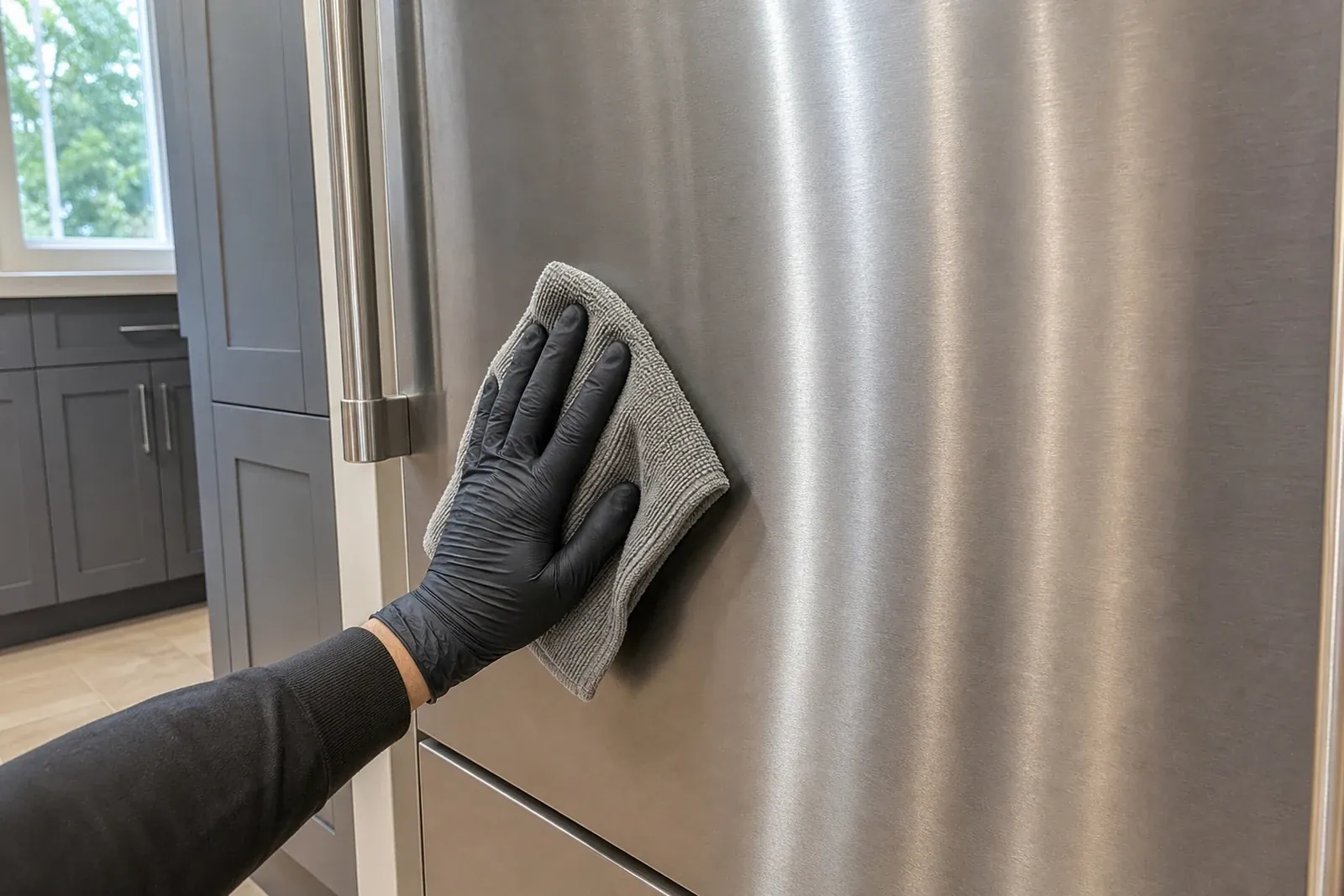
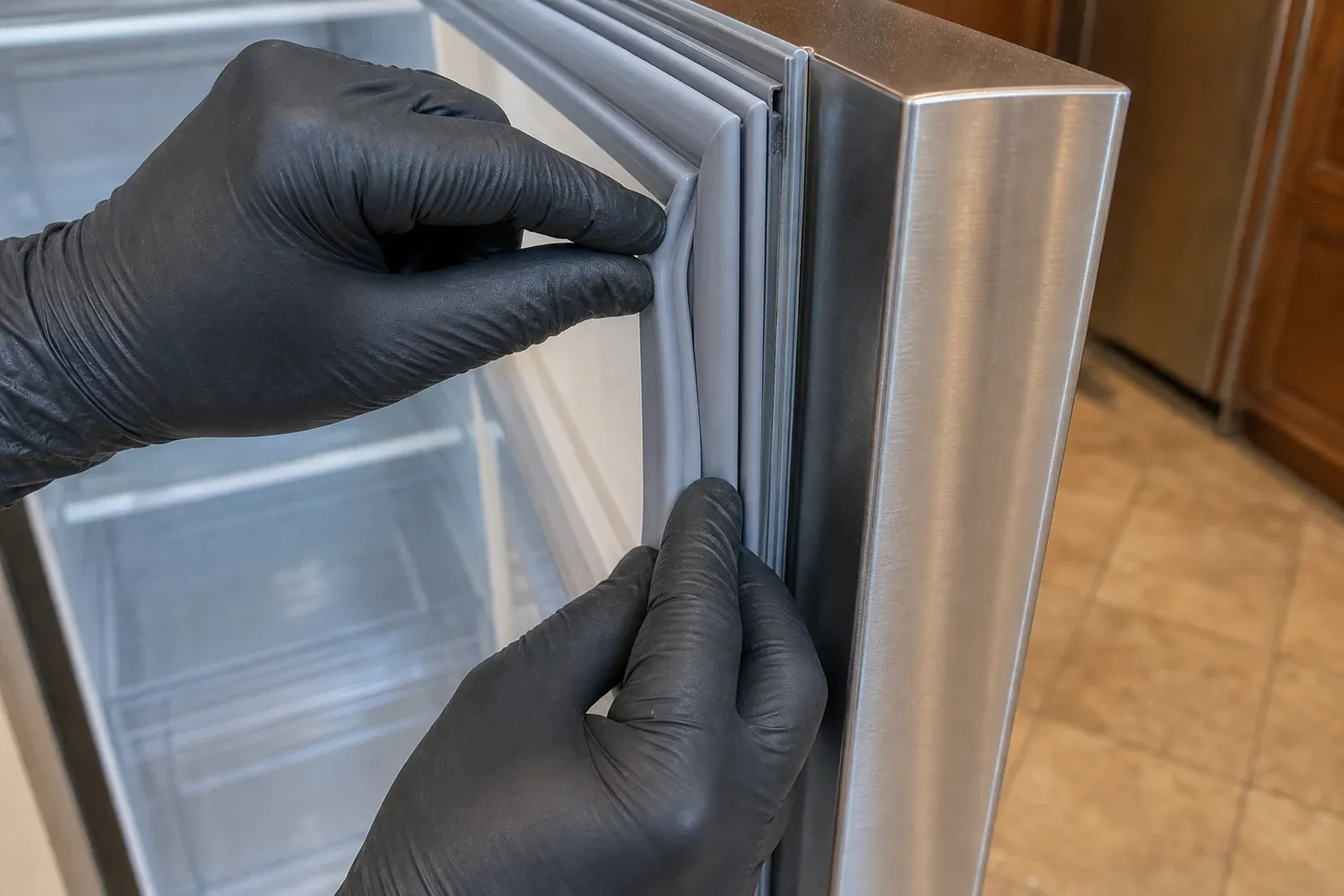
Three different-looking problems often share one cause: a failed door seal. When a gasket hardens or distorts, humid Tri-Valley air sneaks in, and you get sweating around the door, mold at the seal, or a frost line creeping along the gasket. The quick home test is the dollar-bill check: close the door on a bill and tug — if it slides out with no resistance, the gasket has lost its grip. Sub-Zero advises a technician seat a replacement, since the new gasket needs warming to sit correctly. Full detail is on gasket and seal repair.
Water on the floor usually isn't a seal at all. The two common sources are a blocked defrost drain backing up and overflowing, or a split fill line / failed water-inlet valve feeding the ice maker — and San Ramon's hard water accelerates valve scaling. Either one can puddle onto hardwood or stone in an estate kitchen, so it's worth treating quickly. See the water-leak trace page for the five-minute step-by-step, or the ice-maker and water-line page for the supply side.
Ice, alarms & wine
Ice trouble, control-board alarms, and wine drift
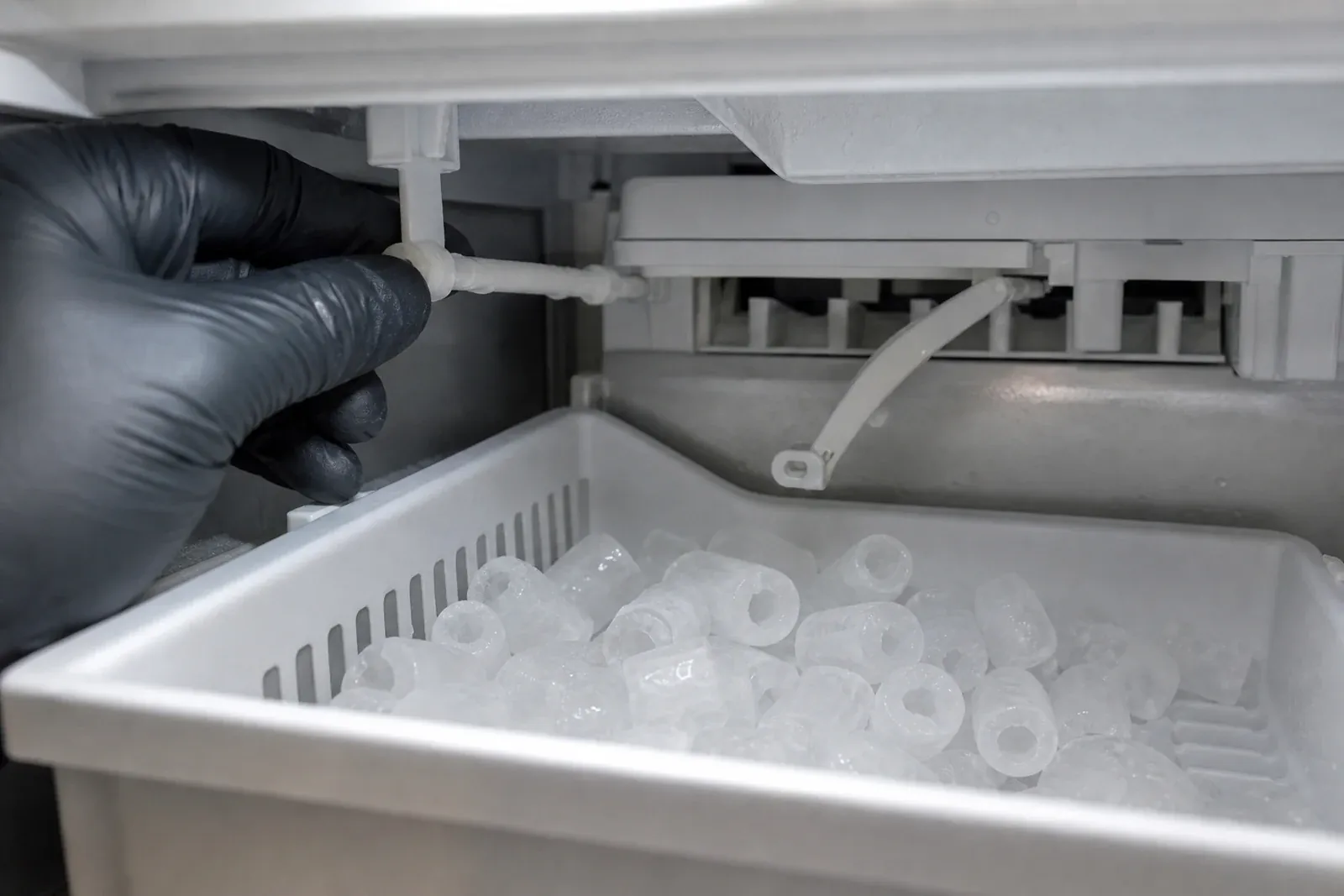
Ice problems — no ice, slow production, or hollow cubes — have a short checklist before anything gets replaced: ice maker switched on, the shut-off arm down, the bin seated, and the freezer at or below 5°F (target 0°F). Then look at the water side: a kinked fill tube, an inlet valve scaled by DSRSD hard water, or a filter overdue for its 3–6-month swap. A power-cycle and a 24-hour wait resolves more of these than people expect. Undercounter ice makers (the 315I) follow the same logic in a tighter cabinet — full steps on the ice-maker page.
- Alarms and codes: a flashing "Vacuum Condenser" or "Service" light usually means the compressor ran long — often a 1998–2002 600-series with a dirty condenser. Clean the coil, and only hold the door-ajar (bell) key ~15 seconds to clear it if temperatures are near normal. Don't clear a code while temps are still rising — it helps the diagnosis. See error codes and alarms.
- Wine drift: a column climbing off its ~55°F storage setpoint usually means a dirty condenser, a failing condenser fan, a tired seal, or Showroom Mode left on after a power outage. Log readings for a day before judging — details on wine storage temperature.
Why San Ramon
Why these faults cluster here — and what prevents them
The same conditions that make San Ramon a great place to live are hard on a Sub-Zero. Heavy summer heat loads the condenser; Diablo winds and wildfire ash clog it; hard water scales the ice system; and estate kitchens pack high-output built-ins, dual-zone wine columns, and outdoor or island refrigeration that bakes on a patio all afternoon. Outdoor and undercounter units run hottest of all because their condensers sit in tight, warm cabinets — see outdoor refrigerator repair and undercounter repair.
Two habits prevent most of the table above: clean the condenser every 3–6 months in our dust-and-heat climate, and change the water filter every 3–6 months to stay ahead of hard-water scaling. Our maintenance calendar lays out the schedule, and the model-number guide helps you read your tag so parts are staged before we arrive. When a repair does get into 25–30-year-old territory with several failing parts, we give an honest repair-vs-replace read. Ready now? Book online or call (925) 940-3576.
Next step
Call with the Sub-Zero model number
Have the model-tag photo, current fresh-food and freezer temperatures, and the symptom timeline ready. That lets the San Ramon intake route the visit around the likely Sub-Zero part family instead of a generic appliance script.
FAQ
Questions San Ramon homeowners ask before scheduling
What are the most common Sub-Zero problems?
The ones we see most in San Ramon are a warm fresh-food side with a cold freezer, both compartments warming, condensation or frost at the door, ice-maker trouble, control-board alarms, wine-zone temperature drift, a loud compressor, and water on the floor. The biggest single culprit is a condenser clogged by Tri-Valley dust and wildfire ash, which is why we clean it first. Call (925) 940-3576.
Why is my Sub-Zero leaking water onto the floor?
Usually one of two things: a blocked defrost drain that backs up and overflows, or a split fill line or failed water-inlet valve on the ice maker — and San Ramon's hard DSRSD water speeds up valve scaling. A worn door gasket causes sweat and frost, not a floor puddle. Because it can reach hardwood or stone in an estate kitchen, it's worth tracing quickly. We'll find the source and give a flat quote first.
Why is my Sub-Zero so loud all of a sudden?
A new hum, buzz, or rattle most often comes from a failing compressor or a worn condenser fan motor, especially if both compartments are warming and the unit runs nonstop. Noise frequently precedes a sealed-system failure, so it's worth diagnosing before it quits entirely. It needs refrigerant gauges and amp-draw readings — never a phone quote — and may fall under Sub-Zero's 12-year sealed-system warranty, which we check first.
Why is my Sub-Zero freezer frosting up?
Frost building in the freezer or along the door usually means humid Tri-Valley air is getting in past a worn gasket, or the automatic defrost system has faulted and ice is accumulating on the evaporator. Try the dollar-bill seal test on the door first. If the seal holds but frost keeps returning, the defrost heater, thermistor, or timer is the likely cause and needs a technician. Call (925) 940-3576.
Why is my Sub-Zero fridge warm but the freezer still cold?
Because the freezer works, the sealed system is usually fine — the cold just isn't reaching the fresh-food side. In San Ramon the top causes are a condenser choked with hillside dust or ash, a defrost fault frosting the evaporator, a tired evaporator fan, a stuck damper, or a drifting thermistor. We start at the condenser, then work inward. Wait 24 hours after any fix before judging the result.
How do I know if a problem is an emergency or can wait?
A unit that's totally dead with food at risk, water pooling on the floor, or both sides warming with a constantly running compressor is an emergency and jumps our queue. A single error code with temperatures still near normal, slow ice, or a gasket that sweats can usually wait a day or two. See same-day and emergency service for how we triage, or call (925) 940-3576 to check.
Related