San Ramon · Control Boards & Alarms
Reading Sub-Zero Alarms & Error Codes in San Ramon
A Sub-Zero alarm is a symptom report, not a diagnosis. The same flashing light can mean a coil caked with Diablo-wind dust, a tired compressor, or a failed sensor — and the message is model-specific, so there is no universal code chart that fits every San Ramon kitchen.
Direct answer
Sub-Zero alarms are model-specific, not a universal chart. On 1998–2002 600-series units, flashing ‘Vacuum Condenser’ or ‘Service’ means the compressor ran long — usually a dirty condenser. Newer boards show EC codes like EC50. Clear by holding the door-ajar key ~15 seconds, but only when temperatures are normal. Call (925) 940-3576.
Quick reference
Sub-Zero error codes & alarms list (San Ramon)
| Alarm / display behavior | What it usually points to | What to do |
|---|---|---|
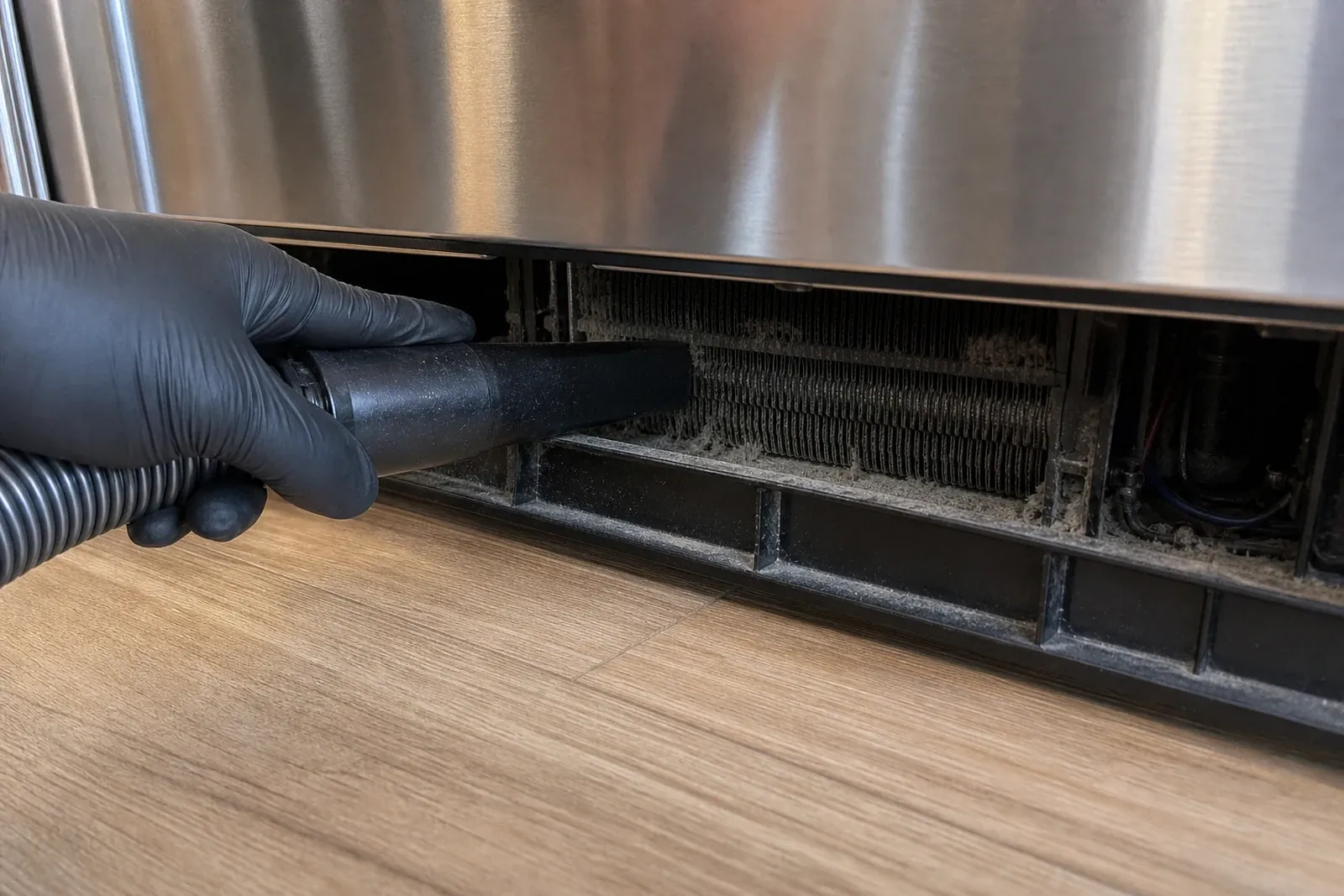
| Flashing 'Vacuum Condenser' or 'Service' (600-series) | Compressor ran long against a condenser caked with Diablo-wind dust or wildfire-season ash | Clean the condenser, confirm the fan spins, re-probe; clear by holding the door-ajar key ~15s only when temps are normal |
| EC-style code on newer boards (e.g. EC50) | A model-specific electronic fault — meaning varies by series | Read it against your model and serial; do not apply a chart from another model |
| Temperature / high-temp alarm, fresh-food warm | Dirty condenser, a stalled evaporator fan, or a thermistor reading wrong | Clean and reset once; if it returns, the fan or sensor is measured and replaced |
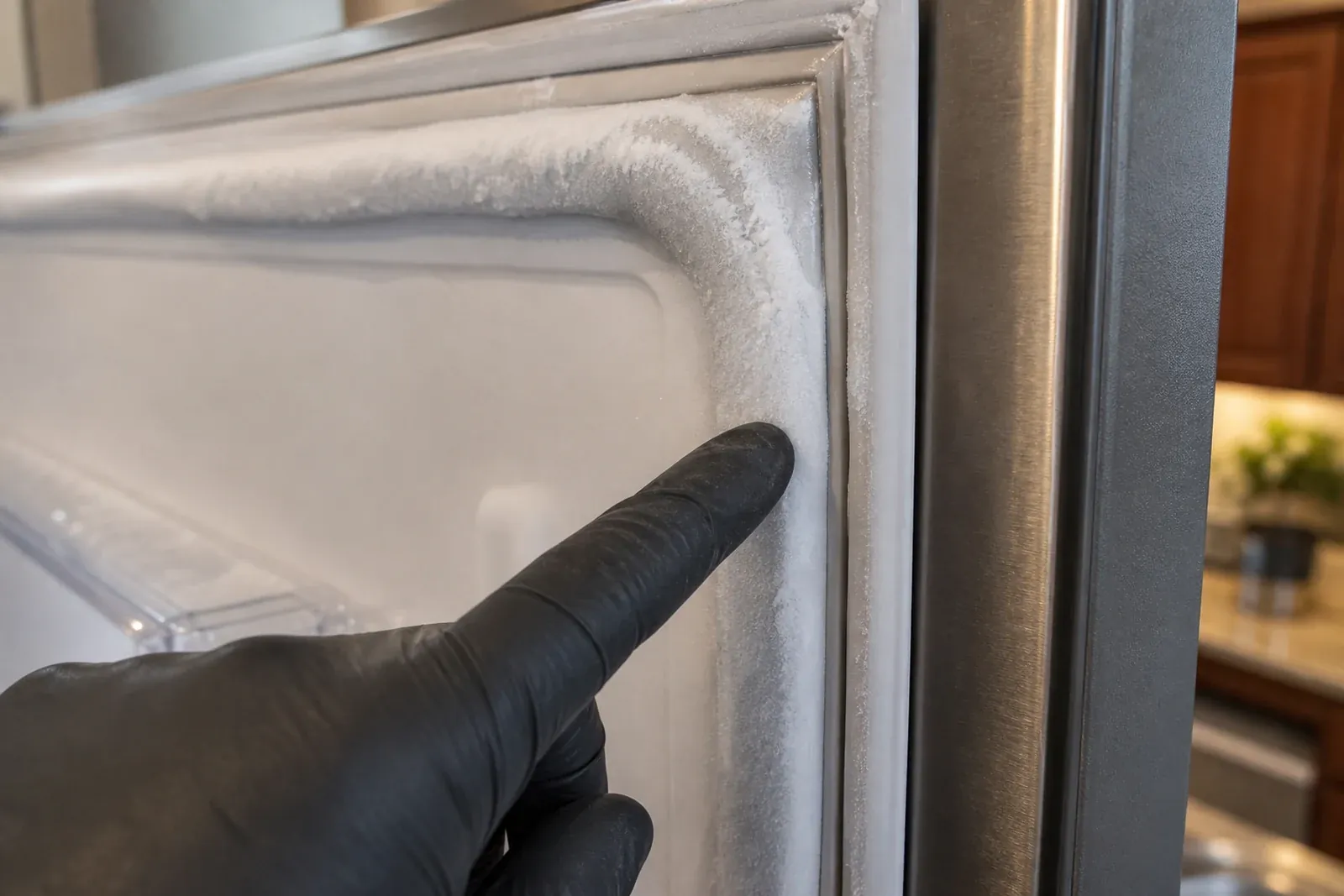
| Door-ajar alarm | Gasket not sealing, a dropped hinge, or the door switch | Close firmly, run a paper-drag test on the seal; reseat or inspect the hinge/switch |
| Over-temp after a restock or a 90–105°F Diablo heat wave | Normal recovery, or a marginal temperature sensor | Allow a full recovery cycle, then re-probe before replacing a thermistor |
| Blank, frozen or unresponsive display | Control board, a ribbon connector, or the power supply | Confirm incoming power and reseat connectors; verify before ordering a board |
A reasoning list, not a code dictionary — Sub-Zero meaning is model-specific, so verify against your model and serial. San Ramon's Diablo dust and moderately hard DSRSD water make condenser and ice-maker alarms especially common. Call (925) 940-3576 before resetting.
First principle
Why there is no universal Sub-Zero code chart
Homeowners search for a master list of Sub-Zero codes and come up empty for a reason: Sub-Zero changed its control hardware several times over a 25–30 year service life. A 1999 632 in an older San Ramon Village ranch home shows a word on a small panel — ‘Vacuum Condenser’ or ‘Service’ — while a current BI-36 or panel-ready column in Gale Ranch shows a two-character code like EC50 on a different board entirely.
That means the same words can mean different things on different models, and a code copied off a forum for one series can send you chasing the wrong part. The reliable read is always: which model is this, what is the board reporting, and — most importantly — what are the actual temperatures doing right now. The alarm narrows the field; the temperatures and gauges close the case.
It helps to think of three broad families. The oldest 500/600-series units use plain-language word alarms on a simple panel. Mid-era built-ins and Classic models added more electronics but still surfaced human-readable messages. Current built-ins, Designer columns, and 700-series drawers report compact EC-style codes on a logic board that monitors several sensors at once. Knowing which family you have — from the model and serial tag inside the door or beside the upper drawer — tells us instantly whether you’re looking at a maintenance nudge or a board-detected fault, before anyone touches a tool.
The classic alarm
'Vacuum Condenser' and a flashing Service light
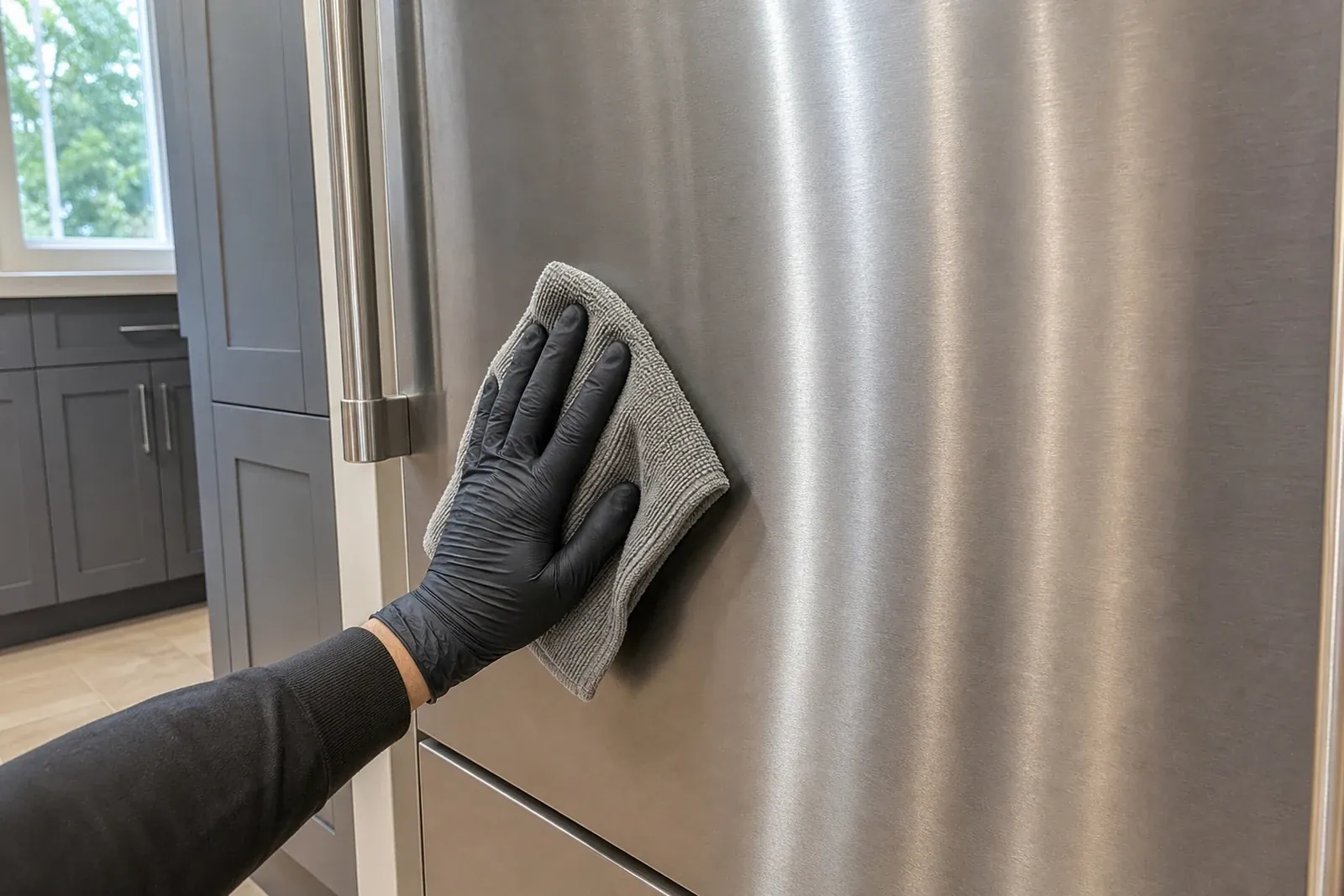
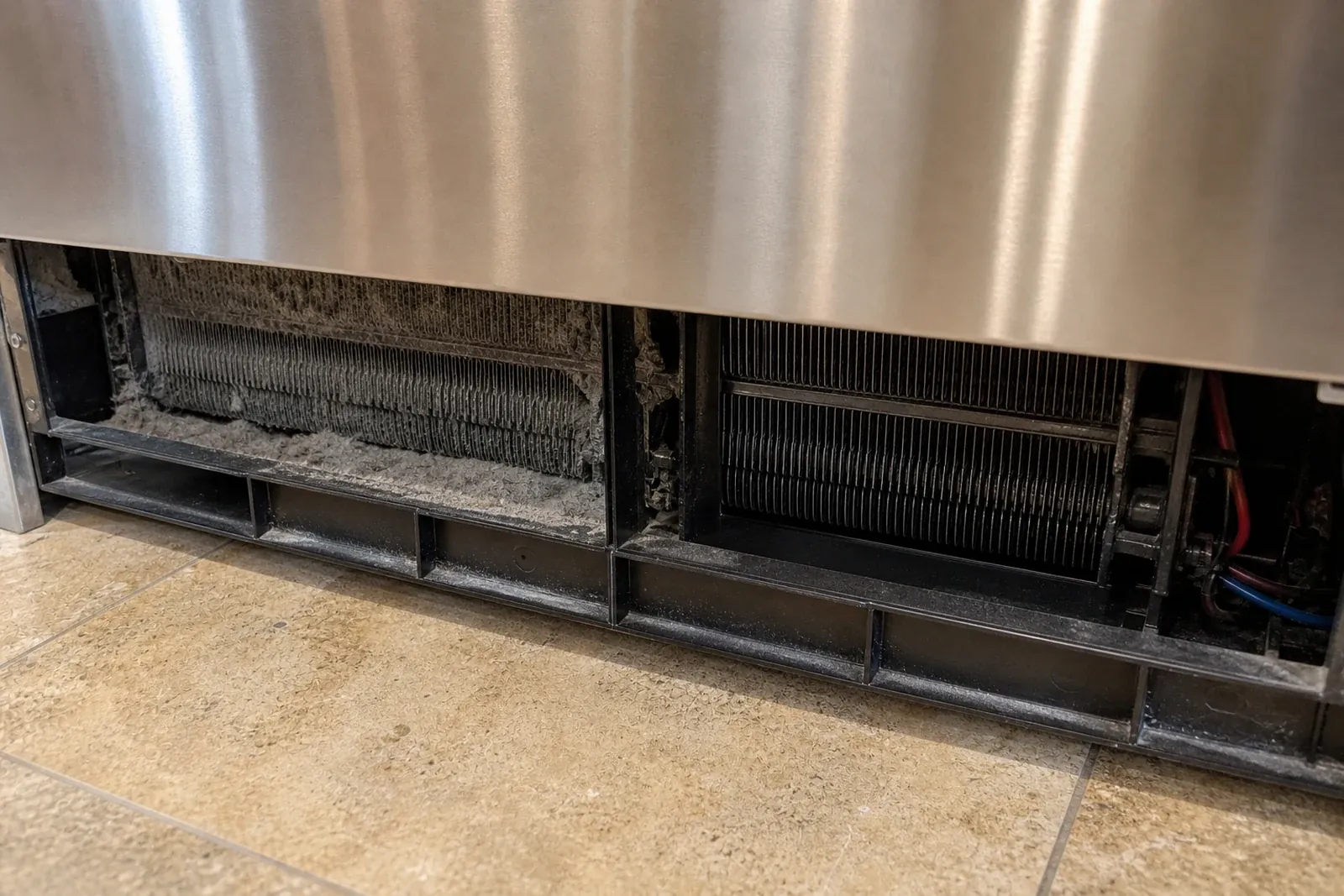
On 1998–2002 600-series units — common in established Twin Creeks, Canyon Lakes, and San Ramon Village kitchens — a flashing ‘Vacuum Condenser’ or ‘Service’ message almost always means the compressor has been running long and inefficiently. The board is flagging that the unit worked harder than expected, and in San Ramon the leading cause is a condenser coil choked with dust and wildfire-season ash.
Our hot, dry inland summers push the compressor hard, and offshore Diablo winds blow fine Diablo Range dust and SCU-fire ash onto the coil in a matter of days — far faster than the once-a-year cleaning most owners assume. Hillside homes in Dougherty Valley and Norris Canyon collect it even quicker. The fix is usually a thorough condenser cleaning, after which the alarm can be cleared. If the message returns within days after a clean coil, the cause is deeper — a fan, a sensor, or the sealed system itself.
| What you see | What it usually means in San Ramon | First step |
|---|---|---|
| Flashing 'Vacuum Condenser' / 'Service' (600-series) | Compressor ran long; usually a dust/ash-clogged coil | Clean condenser, verify temps, then clear |
| Same message returns within days of a cleaned coil | Condenser fan, sensor, or sealed-system inefficiency | Diagnostic with gauges + amp draw |
| EC50 / EC-series code (newer boards) | Board-detected fault — sensor, fan, or component | Model-specific; do not clear while temps rise |
| No code, but compartment slowly warming | Defrost, evaporator fan, or thermistor | Read temps first; see not-cooling diagnostic |
Newer boards
EC50 and other EC codes
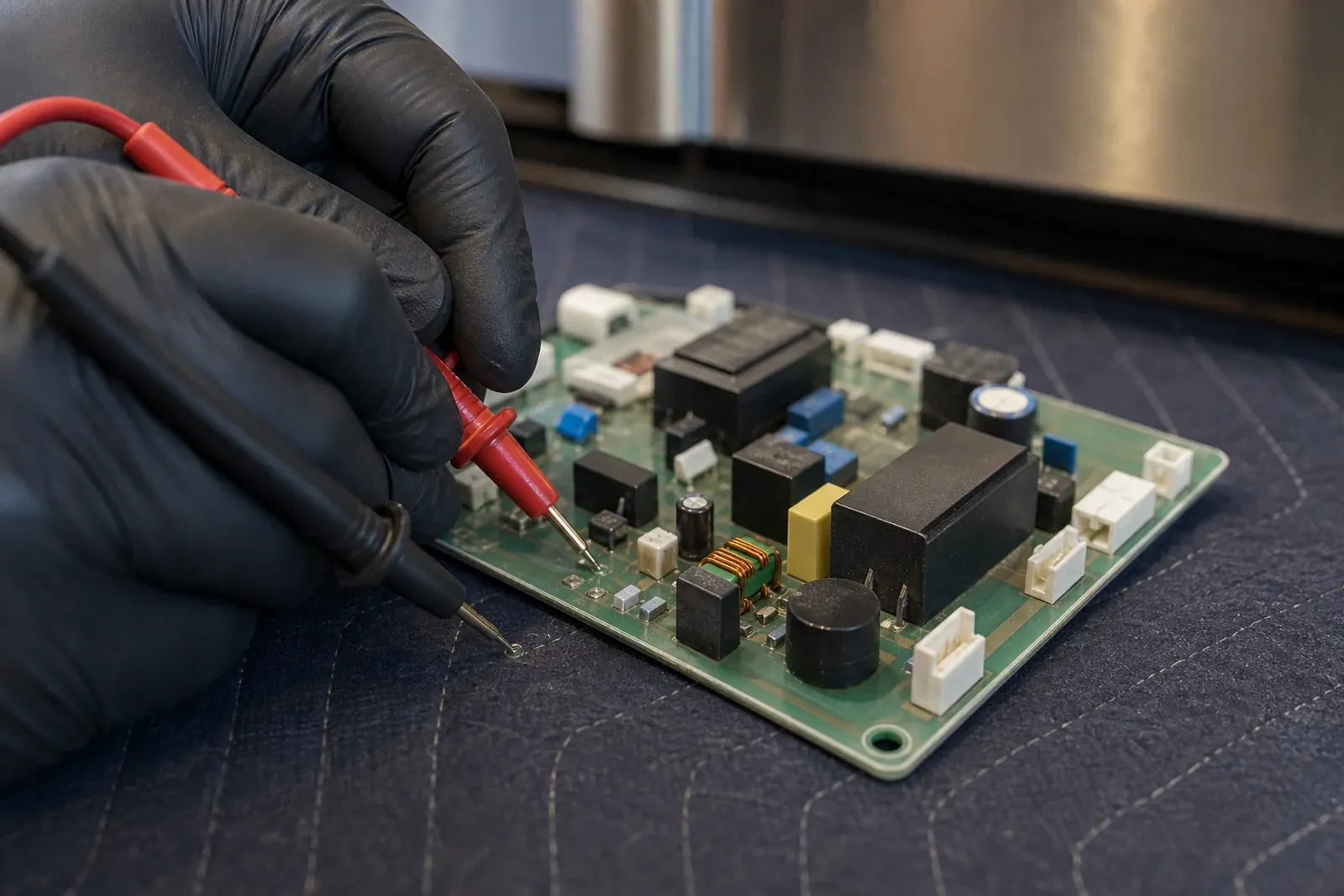
On newer Sub-Zero control boards — the kind in current built-ins and Designer columns across Windemere and the newer Dougherty Valley tracts — faults appear as EC codes such as EC50. These are internal diagnostic codes the board sets when it detects something out of range: a sensor reading that doesn’t make sense, a fan that isn’t turning, or a component the board can’t talk to.
Unlike the older word alarms, an EC code does not map to a single home fix you can look up. The number points a trained technician toward a subsystem, but confirming it still requires putting a meter on the suspected part. We treat an EC code as a starting clue, then verify with live readings before replacing anything — because the wrong board guess on a Sub-Zero is an expensive part. If your unit is still inside its 12-year sealed-system warranty and the code points at the compressor or evaporator, that’s worth knowing before any work begins.
There’s also a practical reason not to panic when an EC code first appears: many are triggered by a momentary condition — a brief voltage sag during a summer heat-wave brownout, a door left ajar on a busy Bishop Ranch morning, or a sensor reading skewed while the cabinet recovers from a defrost cycle. A single EC event that clears and never returns is different from one that keeps reappearing. That’s why we ask you to write down the code and roughly how often it shows up. A code that flashes once is a note; a code that returns every few hours is a fault we can chase to a specific part. Either way, the answer is the same: read it in context, don’t replace on a guess.
Do this carefully
How to reset — and when NOT to
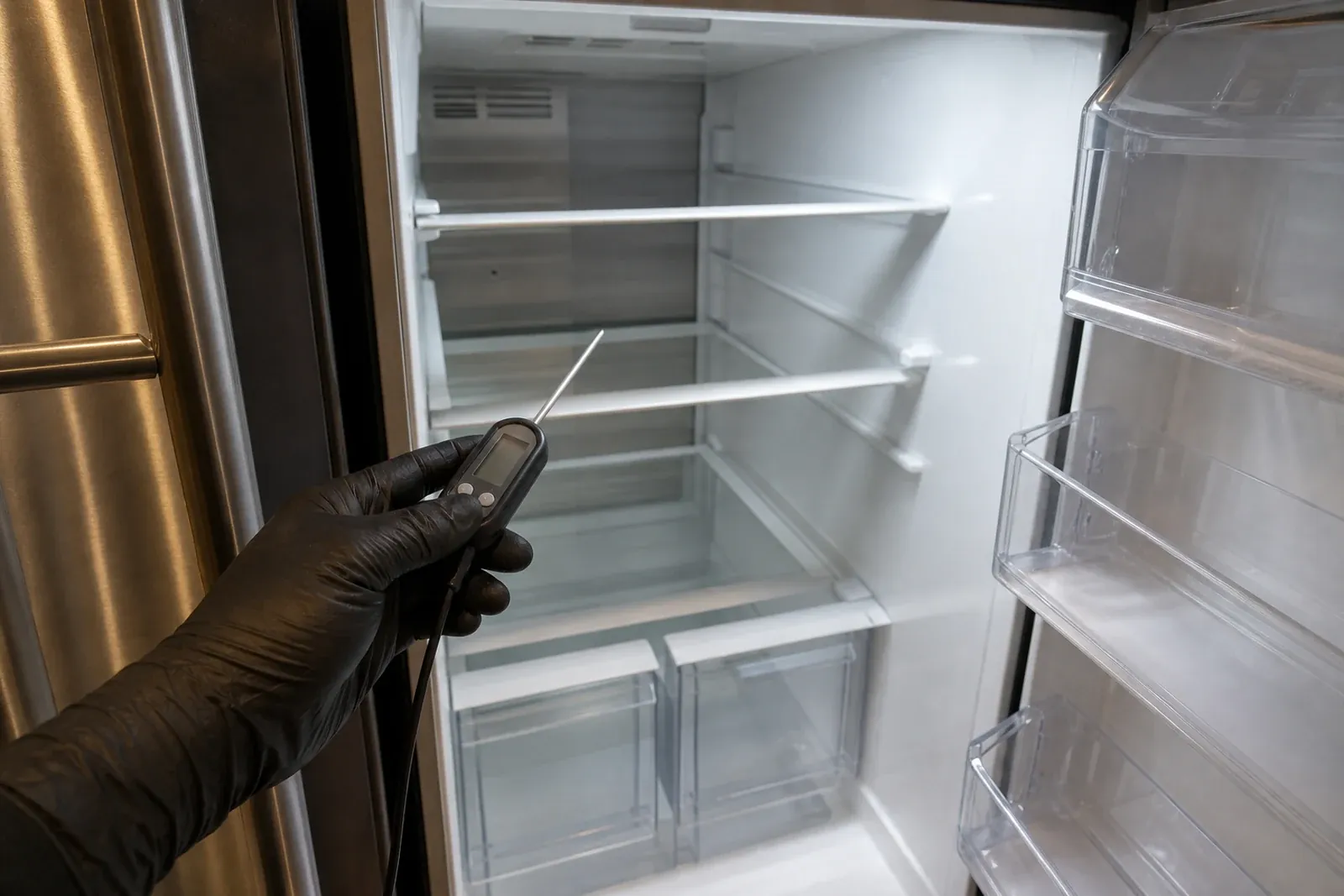
Resetting a Sub-Zero alarm is simple, but the timing matters more than the steps. The honest rule: only clear a code once temperatures are back to normal. If the fresh-food side is still climbing or the freezer is drifting warm, leave the alarm alone — an active code is diagnostic evidence, and clearing it erases the trail a technician would use to find the real fault fast.
- Step 1 — verify temps. Confirm the fresh-food compartment is near 38°F and the freezer near 0°F. If they aren’t, stop here and book a diagnostic instead of resetting.
- Step 2 — clean the cause. If it’s the 600-series long-run alarm, clean the condenser coil first so you’re not clearing a code that will instantly return.
- Step 3 — clear it. Hold the door-ajar (bell) key for about 15 seconds until the alarm clears.
- Step 4 — wait and watch. Give the unit 24 hours. If the alarm comes back, the cause is unresolved — note the exact message and call us.
Power-cycling (unplugging 5 minutes) is a different action and won’t fix a coil or a failing part; it only restarts the board. If you’re unsure what your screen is showing, snap a photo and have your model number ready when you call.
Knowing the difference
Clean-the-condenser vs. a real board or sensor fault
The most useful question an alarm answers is: is this maintenance, or is this a failure? The two look identical on the panel but cost very different amounts to resolve. A long-run alarm that clears after a coil cleaning and stays clear was maintenance — routine in San Ramon’s dusty, hot, ash-prone summers. A code that returns, or an EC fault on a unit with normal-looking coils, is pointing at hardware.
Here is how we sort it on a service call:
- Coil condition. A visibly packed condenser plus a long-run alarm is maintenance until proven otherwise — we clean and re-test.
- Temperature behavior. Normal temps with a nuisance alarm differ entirely from a compartment that won’t hold — the latter is a not-cooling diagnostic.
- Sealed-system signs. Both compartments warm, constant running, or a noisy compressor point past the board — that needs gauges, amp draw, and an EPA-608 tech, never a phone quote.
- Warranty check. Before paying for compressor or evaporator work, we confirm the 12-year sealed-system warranty status.
If a code has you guessing, we’d rather read it in person than have you replace a part on a hunch. A flat quote is approved before any work begins — call (925) 940-3576 or book a Sub-Zero diagnostic.
Next step
Call with the Sub-Zero model number
Have the model-tag photo, current fresh-food and freezer temperatures, and the symptom timeline ready. That lets the San Ramon intake route the visit around the likely Sub-Zero part family instead of a generic appliance script.
FAQ
Questions San Ramon homeowners ask before scheduling
What does 'Vacuum Condenser' mean on a Sub-Zero?
On 1998–2002 600-series Sub-Zeros, a flashing ‘Vacuum Condenser’ means the compressor has been running long and inefficiently — the board’s way of saying the unit is working too hard. In San Ramon the usual culprit is a condenser coil packed with Diablo-wind dust and wildfire-season ash. Clean the coil, confirm temperatures are normal, then clear the alarm. If it returns within days, call (925) 940-3576 for a diagnostic.
Why is my Sub-Zero service light flashing?
A flashing Service light is an alert, not a specific failure. On older 600-series units it pairs with the long-run condenser message and usually means a dirty coil; on newer boards it accompanies an EC code pointing at a sensor, fan, or component. Don’t clear it while the compartment is still warming — the active alert helps us diagnose. Note the exact wording and have your model number ready.
How do I reset a Sub-Zero refrigerator?
First confirm temperatures are normal — fresh-food near 38°F, freezer near 0°F. If they are, hold the door-ajar (bell) key for about 15 seconds to clear the alarm, then wait 24 hours and watch for its return. Do not reset while temps are still rising; the code is evidence we use to find the fault. Power-cycling for 5 minutes only restarts the board, it won’t fix a clogged coil or a failed part.
What is EC50 on a Sub-Zero?
EC50 is one of the EC-series diagnostic codes on newer Sub-Zero control boards. The board sets it when it detects a fault — commonly a sensor or fan out of range. Unlike the older word alarms, EC codes don’t map to a single at-home fix; the number points a technician toward a subsystem that still has to be confirmed with a meter. If your unit is within its 12-year sealed-system warranty, check that before any part is replaced.
Is there a master list of Sub-Zero error codes?
No single chart covers every model. Sub-Zero changed control hardware across a 25–30 year service life, so a 1999 632 in San Ramon Village shows word alarms while a current Gale Ranch built-in shows EC codes — and identical words can mean different things on different series. That’s why we always pair the message with the model number and live temperatures rather than trusting a generic online code list.
Should I clear a Sub-Zero code before the technician arrives?
Only if temperatures are normal and you’ve addressed the cause — otherwise leave it. An active code is the fastest evidence we have to pinpoint the fault, and clearing one on a unit that’s still warming erases that trail and can lengthen the repair. If you want to help, photograph the screen, write down the exact message, and locate your model and serial tag before we arrive in the Tri-Valley.
Related