San Ramon · Wine columns & coolers
Sub-Zero Wine Column Not Holding Temperature in San Ramon
A Sub-Zero wine column reading a degree or two off is rarely the emergency it looks like. Before assuming a failed cooling system, set the storage target, log the readings for a day, and rule out the easy stuff — heat load, a tired gasket, or a power-outage hiccup that left the unit in Showroom Mode.
Direct answer
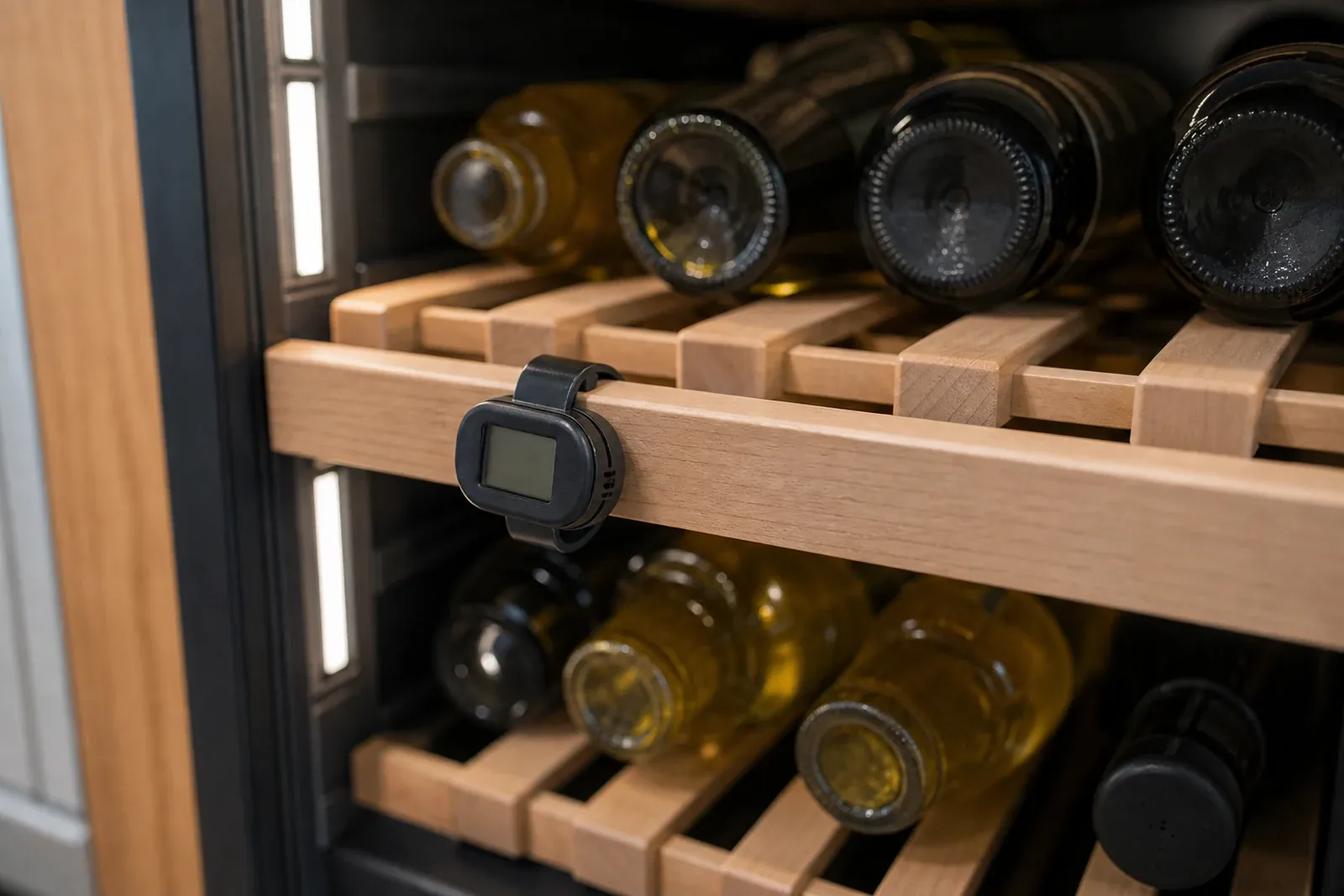
Set Sub-Zero wine storage near 55°F and log readings for a full day before judging — these cabinets swing a few degrees as the compressor cycles and the door opens. If it climbs steadily, clean the condenser, run a dollar-bill seal test, and confirm the condenser fan spins. Still warm? Call (925) 940-3576.
Set point first
What temperature should a Sub-Zero wine cabinet hold?
For long-term cellaring, set storage around 55°F — the classic temperature that keeps a collection stable without rushing aging. Serving temperatures differ from storage: reds show best near 60–65°F, whites near 45–50°F, sparkling colder still. A dual-zone column lets you split the difference; a single-zone unit holds one band, so most San Ramon owners pick 55°F and chill bottles separately before serving.
Sub-Zero wine cabinets are designed to swing a few degrees as the compressor cycles, the lights run, and the door opens — that is normal behavior, not drift. Judge the unit by the average over a day, not by one reading taken right after you pulled three bottles for a dinner on the patio.
| What you're setting | Range | Notes for San Ramon owners |
|---|---|---|
| Long-term storage (all wine) | 53–57°F | Target ~55°F; the safe set point for an aging collection |
| Serving — full-bodied reds | 60–65°F | Warmer zone or pull ahead of dinner |
| Serving — whites / rosé | 45–50°F | Cooler zone on a dual-zone column |
| Serving — sparkling | 40–45°F | Chill separately; below most storage zones |
| Humidity | ~50–70% | Keeps corks supple; built-in cabinets manage this |
Evidence, not panic
Log a day of readings before you judge drift
The single most useful thing you can do is measure. Drop an independent thermometer on a middle shelf, write down the cabinet's displayed temperature and the thermometer reading every few hours for 24 hours, and keep the door closed as much as possible. A column that reads 57°F at noon and 54°F at midnight is cycling normally. A column that climbs 55 → 58 → 61 and never recovers is a real cooling fault.
- Stable around the set point — leave it alone; the swing is the compressor doing its job.
- Slow steady climb — usually a heat-rejection problem: dirty condenser, blocked or failed condenser fan, or the cabinet baking near a heat source.
- Suddenly warm and not running — check for Showroom Mode after a San Ramon power blip, then look at the sealed system.
Bring that log to the visit. It turns a vague "it feels warm" into a pattern a technician can act on — and it is the backbone of our temperature-log diagnostic approach.
The quick wins
Seal, condenser, and fan: the three things to check first
Most wine-cabinet temperature complaints in the Tri-Valley trace back to one of three things you can inspect yourself.
- Door seal — run the dollar-bill test: close the door on a bill and tug. If it slides out with no resistance anywhere along the gasket, conditioned air is leaking and the unit will chase a moving target. Condensation, frost, or mold at the seal confirms it.
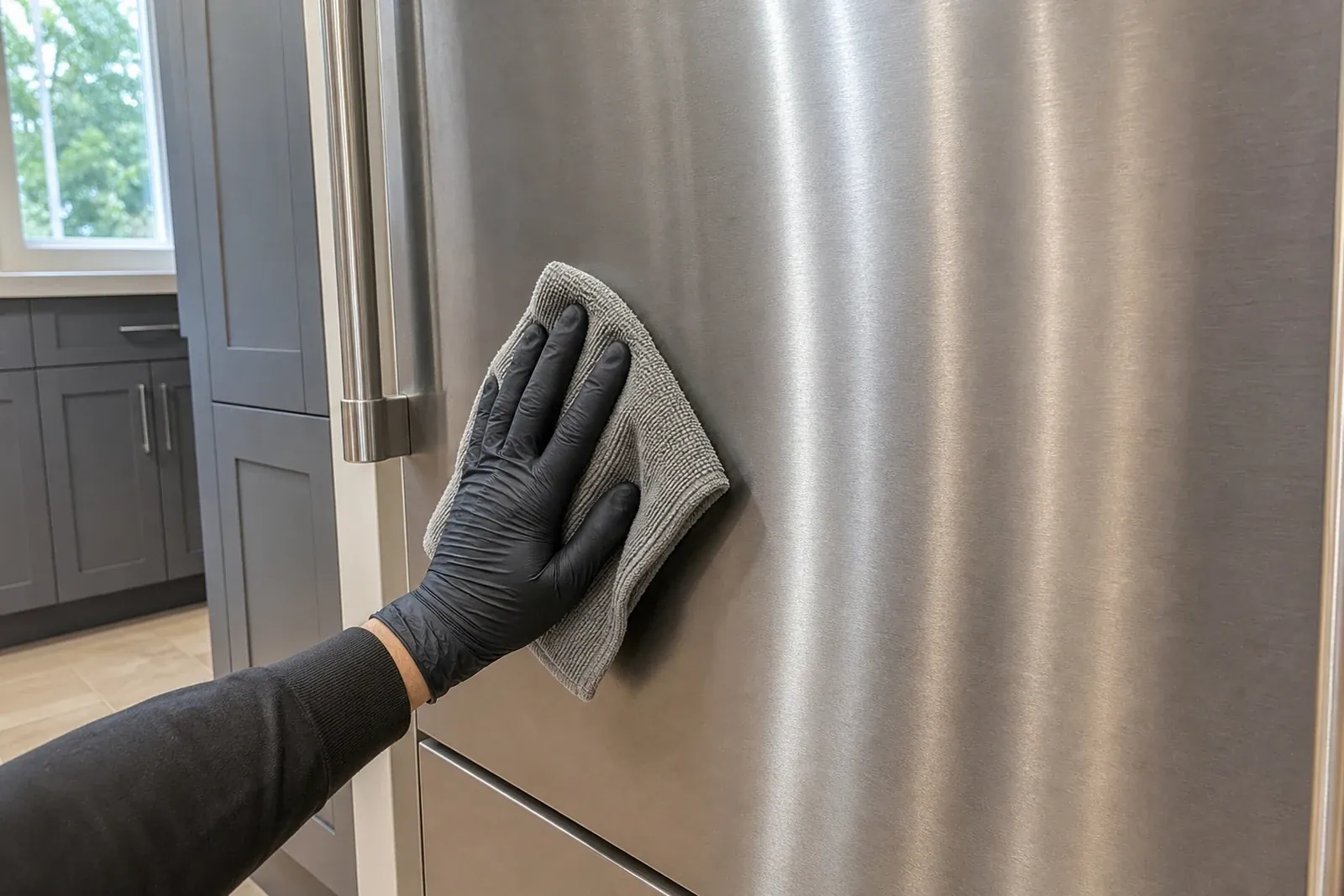
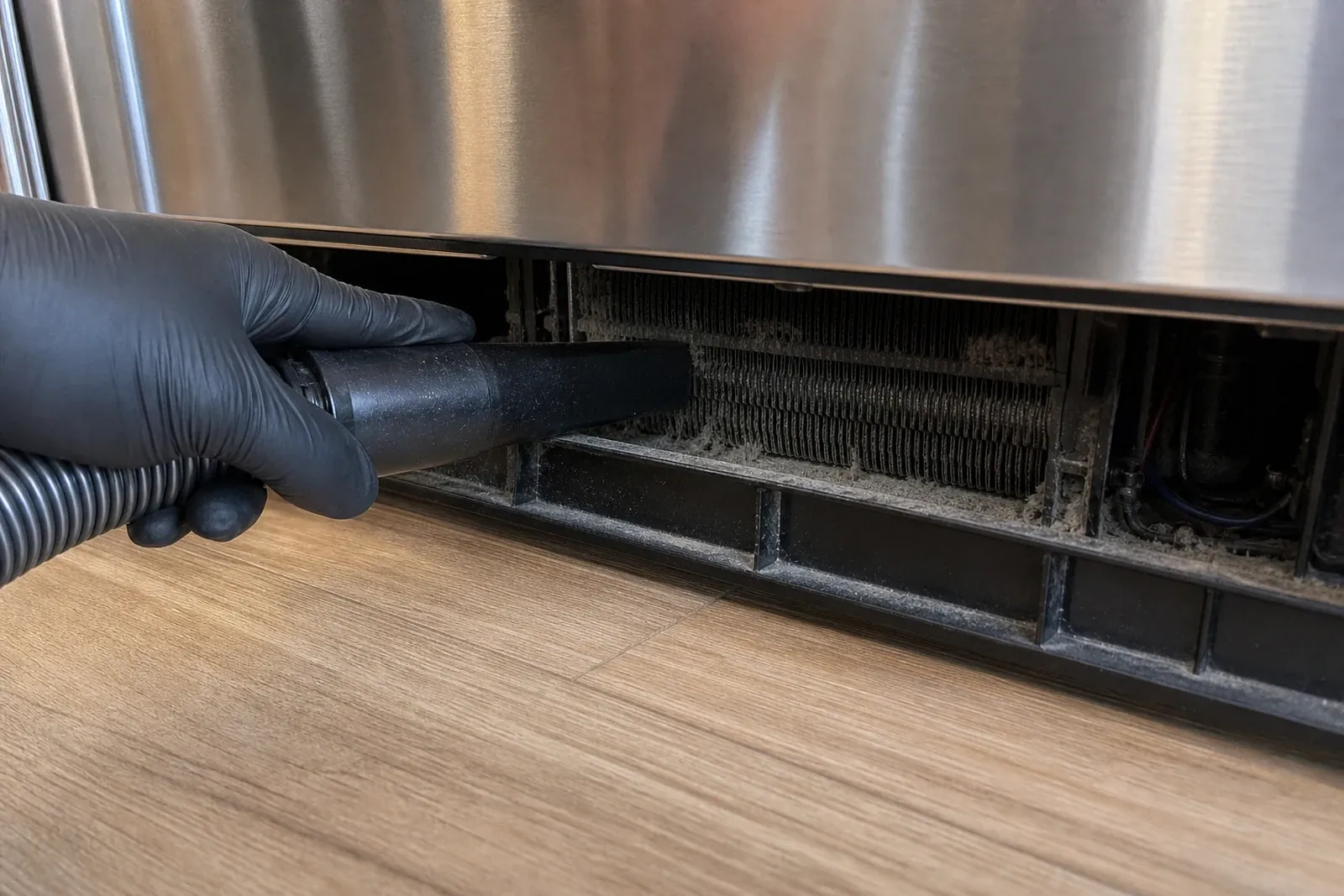
- Condenser coils — San Ramon punishes condensers. Hot Diablo Valley summers, offshore Diablo winds that carry dust, and wildfire-season ash from the Diablo Range can coat a coil in days. A choked condenser can't shed heat, so the cabinet drifts warm. Vacuum and brush it; in Dougherty Valley, Gale Ranch, and Norris Canyon we clean coils every 3–6 months, not annually.
- Condenser fan — with the grille off, confirm the fan actually spins and isn't packed with lint or stalled. A dead fan looks exactly like a refrigerant problem from the front but is a far cheaper fix.
See the room, too: a wine column wedged beside a range, in direct afternoon sun, or in an un-air-conditioned room during a 105°F heat wave is fighting physics. Give it breathing room and shade.
After the lights flicker
Showroom Mode and the Sub-Zero 424 after a power outage
If your wine cabinet went warm right after a San Ramon outage — or after the power flickered during a heat-wave grid strain — suspect Showroom Mode before you suspect failure. This display/demo setting keeps the lights and panel alive but disables active cooling so a unit won't run in a showroom. A surge or reset can occasionally trip it, and the cabinet will sit at room temperature looking perfectly powered.
The classic Sub-Zero 424 and 427 wine units, and newer Designer wine columns, each have their own way out of this mode through the control panel; the exact key sequence is model-specific, so confirm yours against the model number on the tag rather than guessing. On a wine 424/427 the tag sits inside the cabinet — photograph it and we'll match the procedure. If the unit is powered, lit, not in Showroom Mode, and still won't pull down to 55°F, the next step is the sealed system or control board, not more button-pressing. Our error-code and alarm guide covers what a flashing service indicator means before you clear anything.
Estate collections
Long-held collections and built-in wine columns in San Ramon
Many homes in Norris Canyon Estates, Canyon Lakes, Blackhawk, and the Bishop Ranch area carry dual-zone wine columns holding collections built over decades — bottles that don't tolerate a week of slow warming while a part is on order. For those kitchens the priority is conservative: stabilize the cabinet, verify the fault, and protect the wine, not gamble on a guess. If a sealed-system repair is genuinely needed, the unit may still be inside Sub-Zero's 12-year sealed-system warranty on the compressor, condenser, evaporator, drier, and tubing — worth checking before any quote.
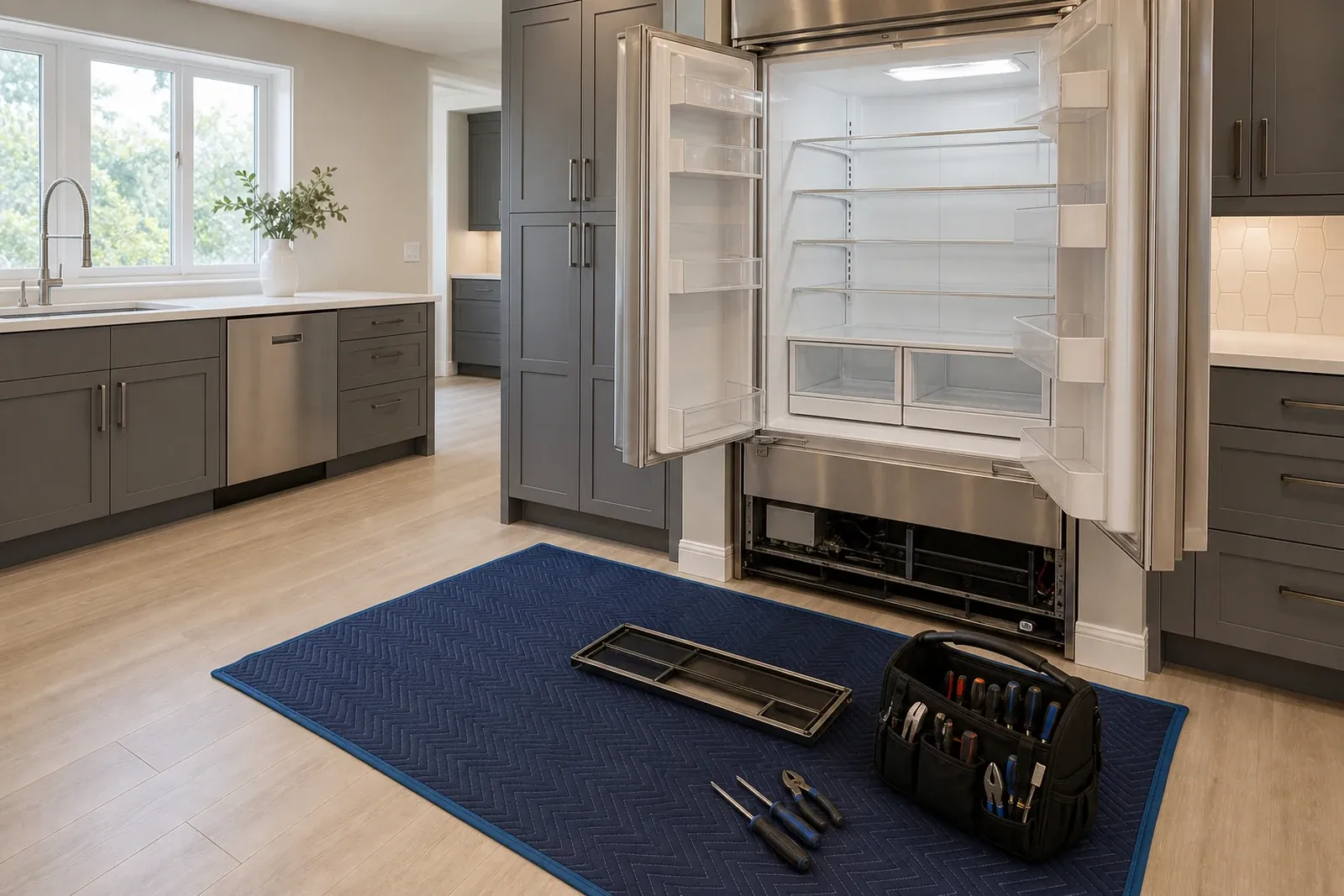
Panel-ready built-ins across the newer Dougherty Valley and Windemere tracts need care on the pull-out so custom cabinetry stays unmarked; that's covered under our cabinet-safe service. For columns specifically, see our San Ramon estate wine column and Designer/PRO column repair pages, and the broader wine cellar cooling service. Every diagnosis is flat-quoted and approved before work begins — the $95–$150 service call is credited toward the repair.
Next step
Call with the Sub-Zero model number
Have the model-tag photo, current fresh-food and freezer temperatures, and the symptom timeline ready. That lets the San Ramon intake route the visit around the likely Sub-Zero part family instead of a generic appliance script.
FAQ
Questions San Ramon homeowners ask before scheduling
Why is my Sub-Zero wine cooler not cooling?
The most common causes are a choked condenser coil, a stalled condenser fan, a failed door gasket, or — after a power event — Showroom Mode quietly disabling cooling. In San Ramon, Diablo-wind dust and wildfire-season ash clog condensers fast, so start there. Clean the coil, run the dollar-bill seal test, and confirm the fan spins. If it still won't pull down to 55°F, call (925) 940-3576.
My Sub-Zero wine fridge isn't holding temperature — what's wrong?
First confirm it's actually drifting, not just cycling: log the displayed and an independent thermometer reading every few hours for 24 hours. Normal units swing a few degrees. A steady climb points to heat rejection — dirty condenser, dead fan, or the cabinet sitting in sun or beside a range. Estate kitchens near Mount Diablo see extra heat load during summer; give the column shade and airflow.
Why is my Sub-Zero 424 not cooling after a power outage?
After a San Ramon outage or surge, the Sub-Zero 424 (and 427) can land in Showroom Mode — lights and panel on, cooling off, sitting at room temperature. Exit it through the control panel using the model-specific sequence on the cabinet tag. If the 424 is powered, not in Showroom Mode, and still warm, the sealed system or control board is the next suspect rather than more button-pressing.
What temperature should a Sub-Zero wine fridge be set to?
For long-term storage, set it near 55°F — the standard cellaring temperature that ages wine without rushing it. Serving temperatures are different: reds near 60–65°F, whites near 45–50°F. A dual-zone column can hold storage and serving bands at once; a single-zone unit holds one, so most owners keep 55°F and chill bottles separately before pouring.
How is single-zone different from dual-zone wine storage?
A single-zone cabinet maintains one temperature throughout — fine if you set it at 55°F for storage and chill bottles before serving. A dual-zone column runs two independent bands, so you can store reds warmer and whites cooler at the same time. If only one zone of a dual-zone unit drifts warm, that points to a fan, damper, or thermistor in that zone rather than a whole-system fault.
Does San Ramon's heat and water affect my wine column?
Yes. Hot Diablo Valley summers and 105°F heat waves raise the heat load a condenser must reject, and dust from offshore Diablo winds plus wildfire-season ash coat coils within days in Dougherty Valley, Gale Ranch, and Norris Canyon. Moderately hard DSRSD water can scale connected fittings. Cleaning the condenser every 3–6 months keeps a San Ramon wine column holding 55°F reliably.
Related