San Ramon · Diagnostic-first
Inside a San Ramon Sub-Zero Diagnostic Visit, Step by Step
We don't guess and swap parts. Every San Ramon visit follows the same path: intake, hands-on testing, an evidence-based decision, a flat quote you approve, and verified temperature recovery before we pack up. That's the difference between a real diagnosis and a parts-counter lottery.
Direct answer
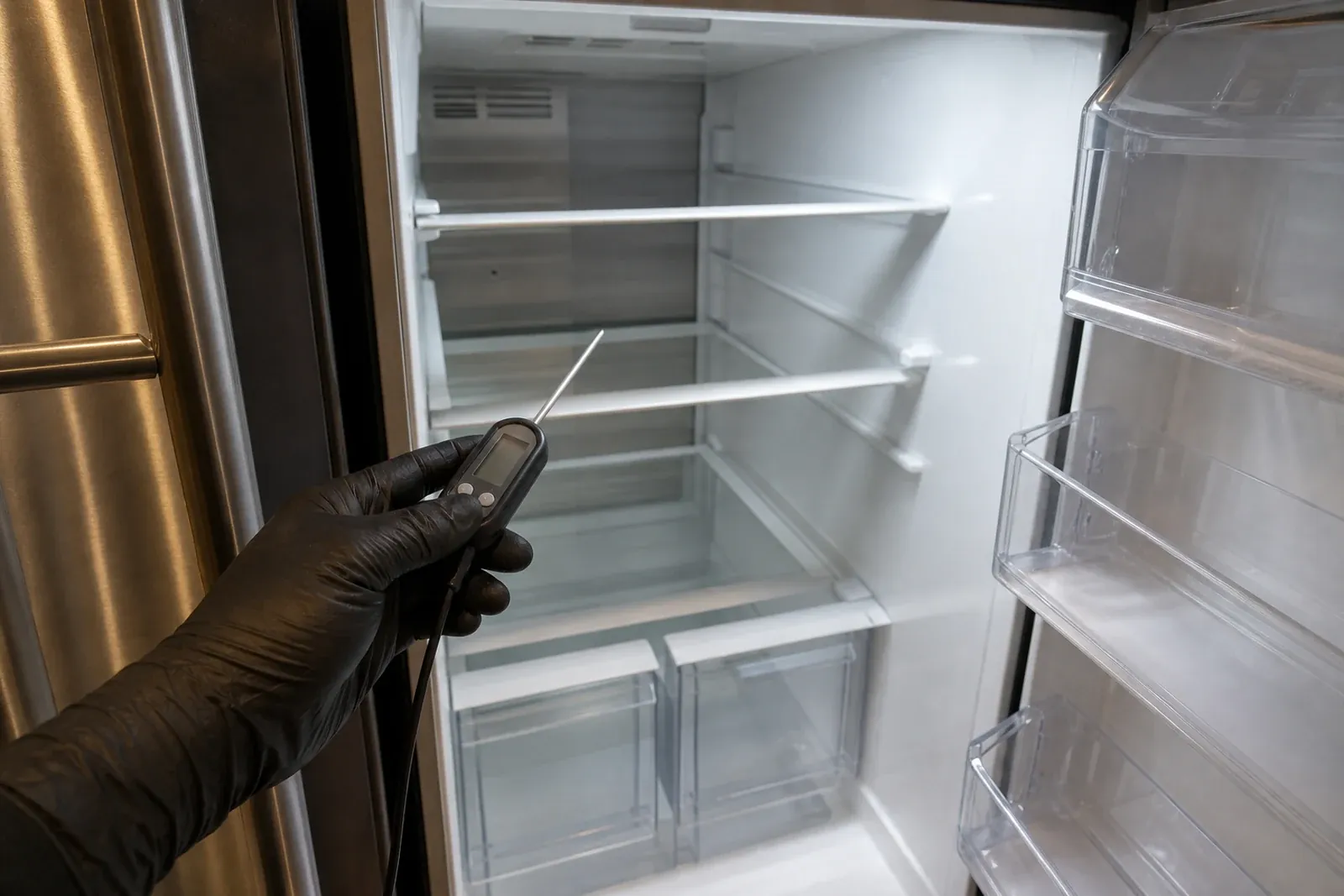
A San Ramon Sub-Zero visit starts with intake and a temperature snapshot, then live tests of airflow, door seals, fans, thermistors, and the control display. The readings point to one cause — maintenance, a part, a board, or the sealed system. You get a flat quote before any work, and we confirm temperature recovery before leaving. Call (925) 940-3576.
Step 1
Intake: the symptom story and a temperature baseline
The visit starts before we touch a tool. We listen to what you've seen — a fresh-food side drifting to 50°F in the August heat, a wine column climbing past 60°F, ice production that fell off after a Diablo wind event coated the coils in dust. Then we take a baseline reading of both compartments off the display and with our own probe, and note any standing alarm.
That timeline matters in San Ramon specifically. A unit that's struggled only since the last 100°F+ heat wave points toward condenser load; a Gale Ranch kitchen on DSRSD water with weak, hollow cubes points toward a scaled inlet valve and filter. We capture the model from the tag photo you sent or read it on site — see the model number guide for where it hides.
Step 2
First tests: airflow, seals, fans, thermistors, and the board
This is the core of a diagnostic-first visit. We run a fixed sequence of live checks and let the readings — not a hunch — tell the story:
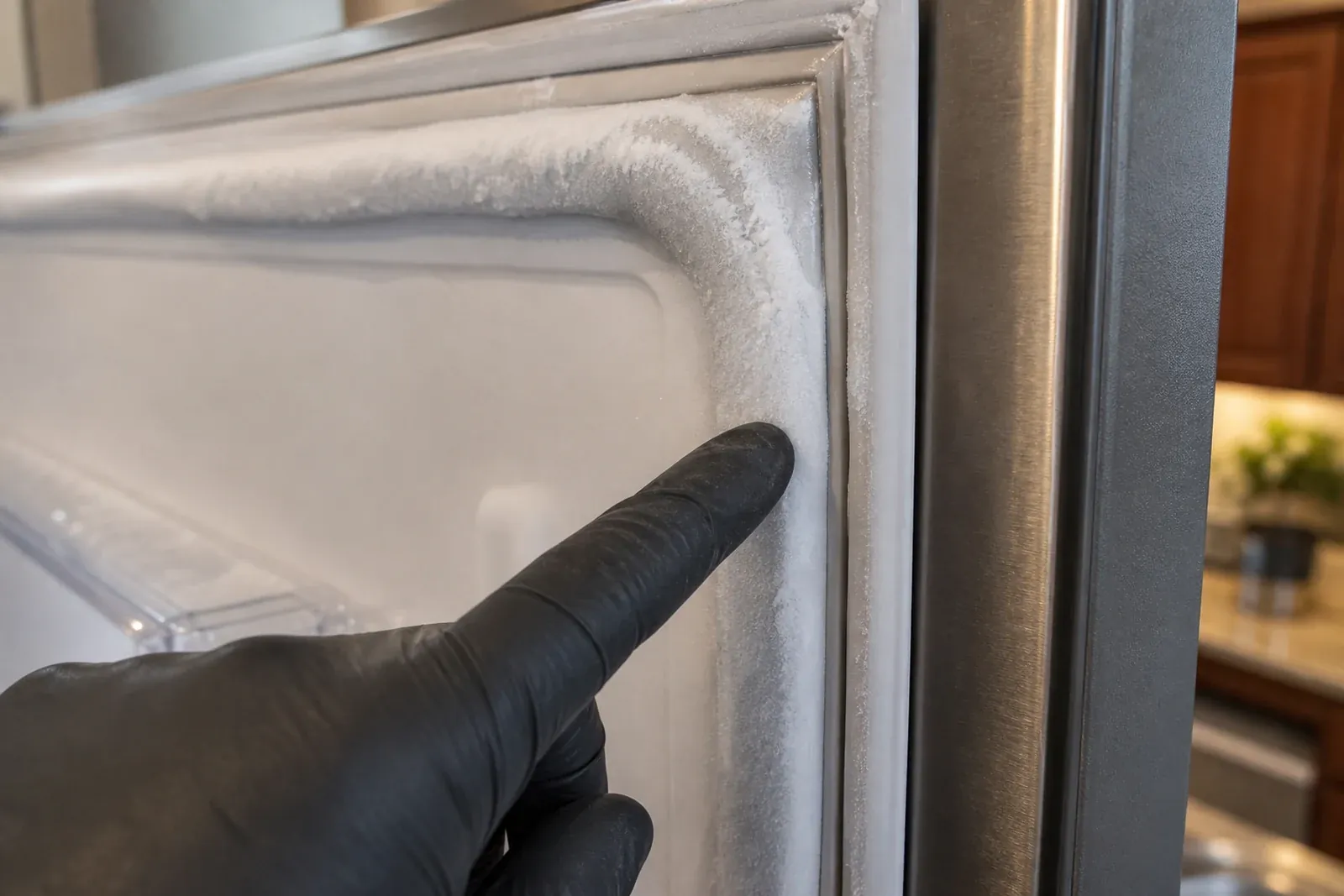
- Airflow and frost line — we open the evaporator area and read the frost pattern. A clean, even frost line is healthy; heavy ice or a bare coil signals a defrost or evaporator fault, not low refrigerant.
- Door seals — the dollar-bill test on each gasket. In San Ramon's swing from cold mornings to triple-digit afternoons, a tired seal sweats and overworks the compressor. Failed seals get logged on the gasket repair path.
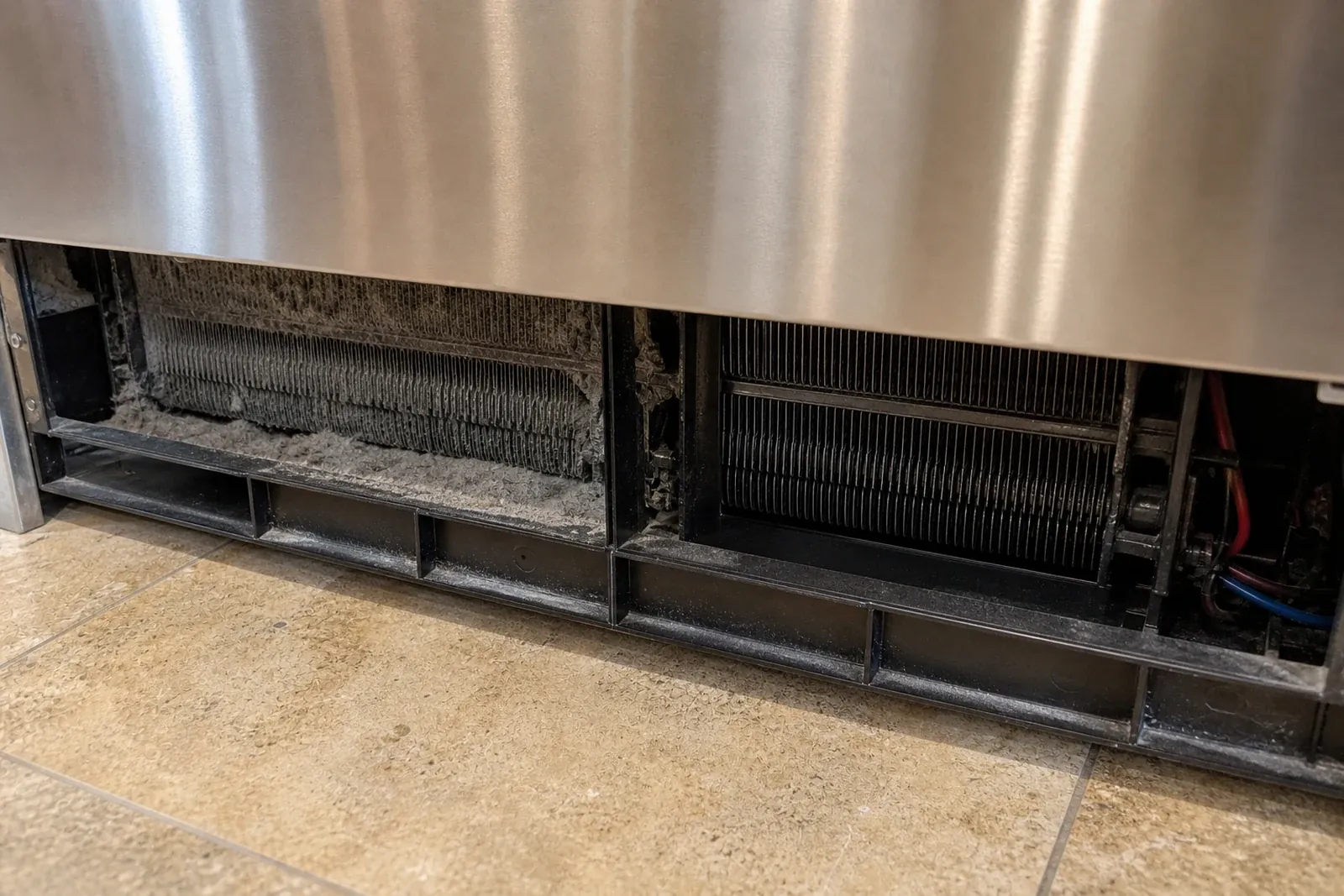
- Fans — condenser and evaporator fan motors checked for spin, noise, and current draw. A dust-loaded condenser fan from Dougherty Valley hillside grit is one of the most common real findings.
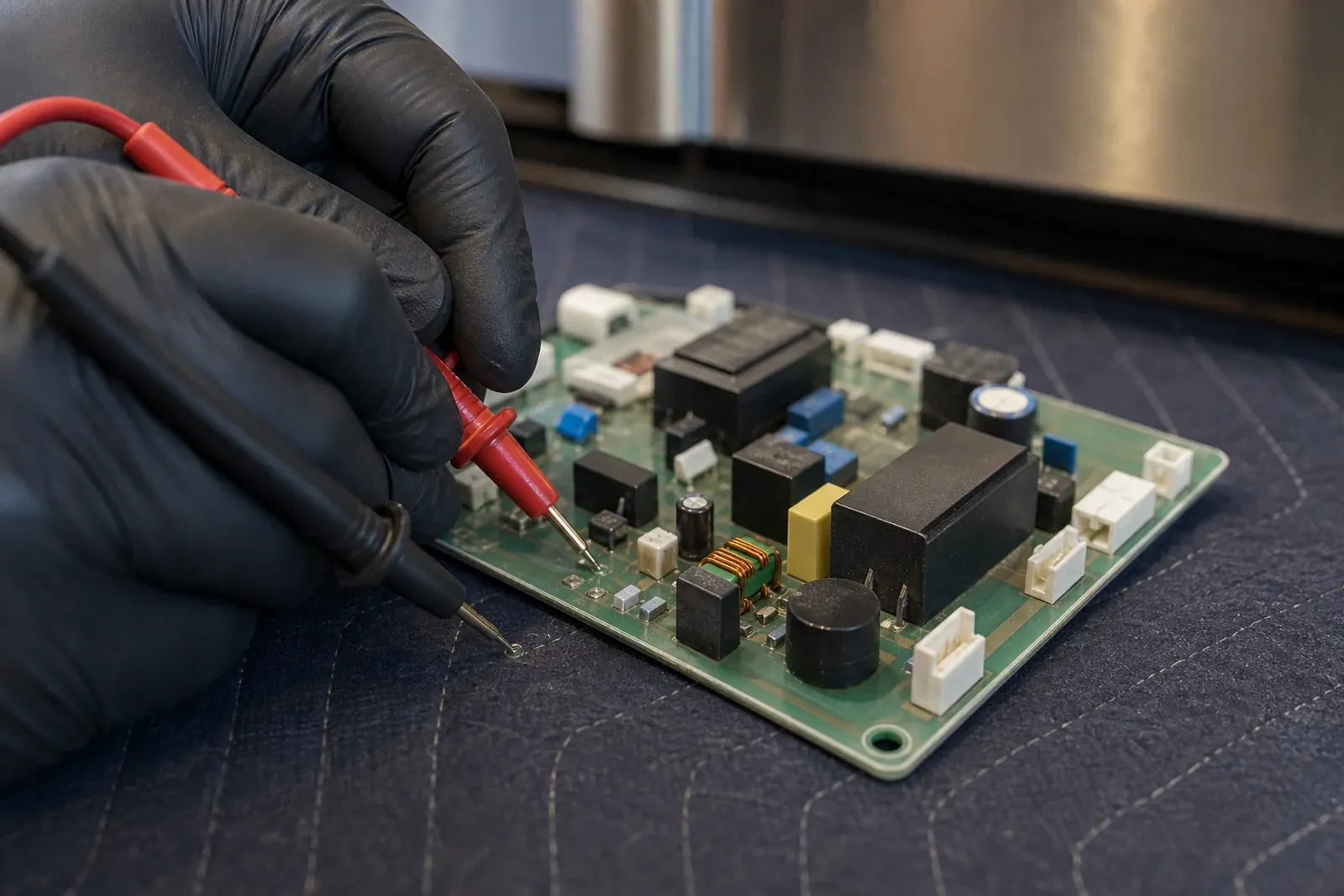
- Thermistors and sensors — we read each thermistor's resistance against spec to catch a sensor lying to the control board.
- Control display and codes — we read any "Vacuum Condenser," "Service," or EC code before clearing it, because a live code is evidence. We never clear it while temperatures are still rising.
Step 3
The decision point: what the evidence actually shows
By now the readings sort the problem into one of four buckets. We show you the evidence behind whichever one it is, so you understand the why, not just the price.
| Bucket | Typical evidence | What it means for the fix | San Ramon note |
|---|---|---|---|
| Maintenance | Dust-packed condenser, scaled water-inlet valve, overdue filter | Coil clean / valve / filter — often credited diagnostic only | Hot, dusty Tri-Valley summers and DSRSD hard water |
| Component part | Bad evaporator or condenser fan motor, failed thermistor, worn gasket | Replace the proven-bad part, then re-verify temps | $200–$650 for most non-sealed repairs |
| Control / board | EC code, erratic display, sensor logic conflict | Board test, reflash or replacement on confirmed fault | Newer Designer and 700-series boards |
| Sealed system | Both sides warm, nonstop run, abnormal compressor amp draw | Gauges + EPA 608 work; check 12-yr warranty first | $900–$1,800; phone quotes impossible |
Step 4
The flat quote — approved before any work begins
Once the cause is proven, you get a flat, all-in quote for that specific repair — parts and labor in one number — and nothing happens until you approve it. The $95–$150 diagnostic is credited toward the repair when you go ahead, so the testing isn't a sunk cost. No hourly meter running, no surprise add-ons mid-job.
If the readings point to the sealed system, we check the 12-year manufacturer warranty on the compressor, condenser, evaporator, drier, and tubing before you pay a cent — many older Norris Canyon and Canyon Lakes estates still fall inside it. And if the honest answer is that the repair exceeds roughly half the cost of a comparable new built-in, we'll say so; our repair-vs-replace page lays out that math. Full ranges live on the cost and diagnostic-fee pages.
Step 5
Verification: proving the temperature recovers
A part swap isn't a finished repair. After the work, we stay long enough to confirm the system is pulling down to target — fresh food toward 38°F, freezer toward 0°F, a wine zone holding around 55°F — and we re-read the thermistors and frost line to be sure the fix took. On a sealed-system or defrost repair, full recovery can take hours, so we leave you a logged starting point and tell you exactly what the display should show by morning.
You get the documentation: the model, the proven fault, the part installed, before/after temperatures, and any maintenance we'd watch — like a condenser clean every 3–6 months given San Ramon's dust and wildfire-season ash. That record makes the next visit faster and supports any warranty claim. See the parts & warranty page for what's covered.
Why it matters
Diagnostic-first vs. the parts-swap shop
A lot of "fixes" fail because someone replaced a part the symptom merely resembled. A warm fridge with a cold freezer, for example, is almost never low refrigerant — it's usually a dirty condenser, a defrost fault, a stalled evaporator fan, a bad thermistor, or a failed gasket. Swapping a compressor on that unit wastes your money and still doesn't cool. Our not-cooling diagnostic walks that exact logic.
Diagnostic-first means we earn the part with evidence first, quote it flat, and verify recovery before we leave. For older San Ramon Village ranch homes with tight cabinet cutouts or panel-ready built-ins across Bishop Ranch and Twin Creeks, that discipline also protects your cabinetry — we pull on floor protection only once we know the real job. See cabinet-safe service and our case notes for real examples.
Next step
Call with the Sub-Zero model number
Have the model-tag photo, current fresh-food and freezer temperatures, and the symptom timeline ready. That lets the San Ramon intake route the visit around the likely Sub-Zero part family instead of a generic appliance script.
FAQ
Questions San Ramon homeowners ask before scheduling
What happens during a Sub-Zero repair visit?
We start with intake — your symptom timeline and a temperature baseline of both compartments — then run live tests on airflow, door seals, fans, thermistors, and the control display. The readings identify one cause, you get a flat quote before any work, and we verify the temperature recovers before leaving. Most San Ramon visits run 60–90 minutes. Book online or call (925) 940-3576.
How do you diagnose a Sub-Zero refrigerator?
By measurement, not guesswork. We read frost pattern and airflow at the evaporator, dollar-bill test each gasket, check condenser and evaporator fan motors for spin and current draw, verify each thermistor's resistance against spec, and read any "Vacuum Condenser" or EC code on the board before clearing it. Those readings sort the fault into maintenance, a part, the control board, or the sealed system.
How long does a Sub-Zero repair take?
A diagnosis plus most non-sealed repairs wrap in one 60–90 minute San Ramon visit. Gasket, fan, thermistor, or condenser work is typically same-day. Sealed-system or compressor repairs take longer and may need a return trip for a special-order part, and full temperature recovery can run several hours after the fix — which is why we leave you a logged baseline and what the display should read by morning.
Do you fix it on the first visit?
Usually, yes — maintenance, gasket, fan, thermistor, and most control issues are solved same-day, especially when you've sent a model-tag photo so we pre-stage the part. Sealed-system and compressor repairs, or an uncommon board for an older 500/600-series unit, may need a special-order part and a second trip. We tell you which it is the moment the diagnosis is complete.
Will I get a price before you start the repair?
Always. Once the testing proves the cause, you get a flat, all-in quote for that repair and nothing proceeds until you approve it. The $95–$150 diagnostic is credited toward the work when you go ahead. If it's a sealed-system fault, we check the 12-year manufacturer warranty first — common on older Canyon Lakes and Norris Canyon estates. See our diagnostic and pricing page.
What makes your diagnostic different from other repair shops?
We earn every part with evidence before installing it. A warm fridge with a cold freezer, for instance, is rarely low refrigerant — it's usually a dirty condenser, defrost fault, evaporator fan, thermistor, or gasket, and swapping a compressor there fixes nothing. We diagnose first, quote flat, verify the temperature recovers, and document it — so the fix actually holds in San Ramon's tough summer heat.
Related