San Ramon · door seals & condensation
Sub-Zero Door Gasket & Seal Repair in San Ramon
A Sub-Zero that sweats, frosts, or grows a black line along the door is almost never "broken" — it's usually a magnetic gasket that no longer pulls a tight, even seal. We diagnose seal failure honestly across the San Ramon Valley, from Dougherty Valley built-ins to Canyon Lakes panel-ready columns.
Direct answer
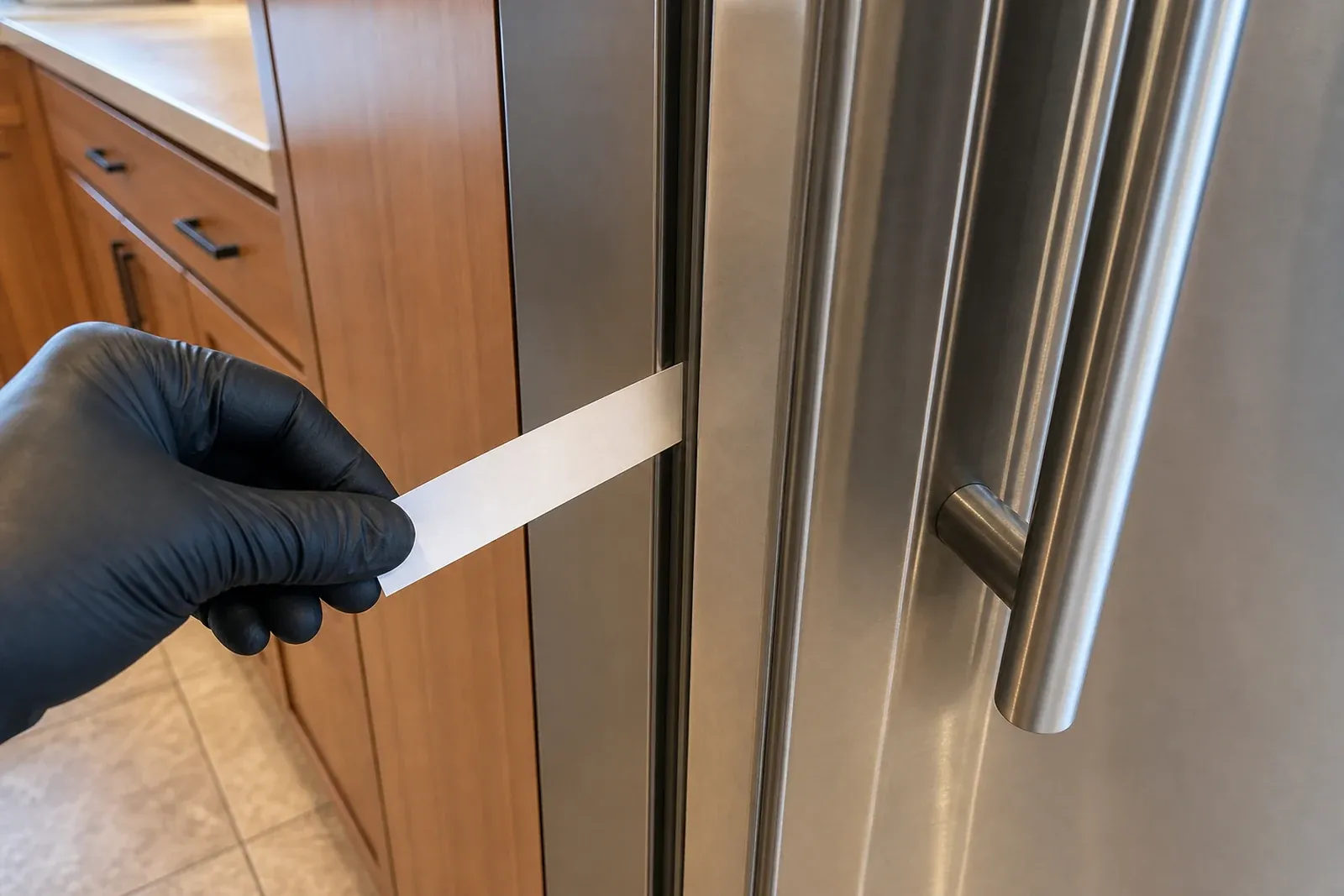
If your Sub-Zero is sweating or icing at the door, run the dollar-bill test: shut the door on a bill and tug. If it slides free anywhere, the gasket has lost its seal and humid Tri-Valley air is leaking in. Sub-Zero advises a technician replace the gasket. Call (925) 940-3576.
First question
Is it condensation, or a real seal failure?
Not every drop of water means a bad gasket. On a 100°F Diablo Valley afternoon, opening a built-in for 30 seconds lets warm, humid kitchen air hit cold steel, and a light film of sweat on the door panel or frame is simple physics — it clears on its own. A real seal failure looks different: water that beads in the same spot every day, a creeping frost line along one edge of the freezer door, or a soft, mildewy black line embedded in the gasket folds.
The fast way to tell them apart is to watch where and when moisture appears. Sweat that shows up only during summer heat waves, near an outdoor or island unit baking on a Norris Canyon patio, is usually humidity. Moisture or ice that returns at the same corner regardless of weather points to a leak path — air is getting past the seal, and the compressor is fighting it 24/7. We confirm it before recommending any part. If the unit is also struggling to hold temperature, that overlaps with our not-cooling diagnostic.
The test
The dollar-bill test, done right
Sub-Zero's own guidance is the dollar-bill (or paper-strip) test, and it takes two minutes. Close the door on a bill so half sticks out, then pull it straight out. A healthy magnetic gasket grips the bill with steady drag the whole way around. Anywhere it slides free with no resistance, the seal has failed at that spot.
- Work the full perimeter — top, hinge side, latch side, and especially the bottom, where gaskets crush and deform first.
- Note the failure zone. A weak spot only at one top corner often means a hinge or door-alignment issue, not a dead gasket.
- Check both doors on side-by-side (632/642/685) and French-door (BI-36/42/48) units — they wear unevenly.
- Inspect the gasket itself for tears, flattened sections, hardened rubber, or a magnet that's lost its grip.
If the bill drags everywhere and the rubber is supple, your seal is fine — chase the moisture elsewhere. If it falls out at one or more points, that's your answer.
Diagnosis
Three different problems that look identical
Door sweating, frost, and mold can come from three distinct causes, and swapping a gasket only fixes one of them. A correct diagnosis saves you from paying for a part that won't solve the problem. Here's how we tell them apart on a San Ramon service call.
| Cause | What we see | The real fix |
|---|---|---|
| Gasket compression loss | Even moisture/frost along one edge; bill slides free in multiple spots; rubber flattened or hardened | Replace the gasket (technician-seated) |
| Hinge / door sag | Leak only at one corner; door visibly hangs low or sits proud; bill grips elsewhere | Adjust or rebuild hinge, realign door |
| Panel-reveal / cabinet alignment | Panel-ready built-in not sitting flush in a tight Twin Creeks or San Ramon Village cutout; uneven gap | Re-shim and square the door in the cabinet |
The repair
Why Sub-Zero says a technician should replace the gasket
A Sub-Zero gasket isn't a press-on strip. It's a magnetic seal anchored under a retainer, and on many built-in and Designer models it must be warmed and worked into a precise channel so it lies flat with no waves or pinches. Sub-Zero advises a technician replacement for exactly this reason — a DIY gasket that goes in cold and twisted often seals worse than the old one, and you'll be back to sweating in a week.
Our process: confirm the correct OEM gasket for your exact model and door, warm the new seal (warm water or controlled heat) so the rubber relaxes, seat it evenly into the retainer, and re-run the dollar-bill test all the way around before we call it done. On a frost-prone freezer door we also verify the control behavior hasn't been masking a separate issue. Every gasket we install is backed by our parts and labor warranty.
San Ramon angle
Mold, hard water, and the Tri-Valley climate
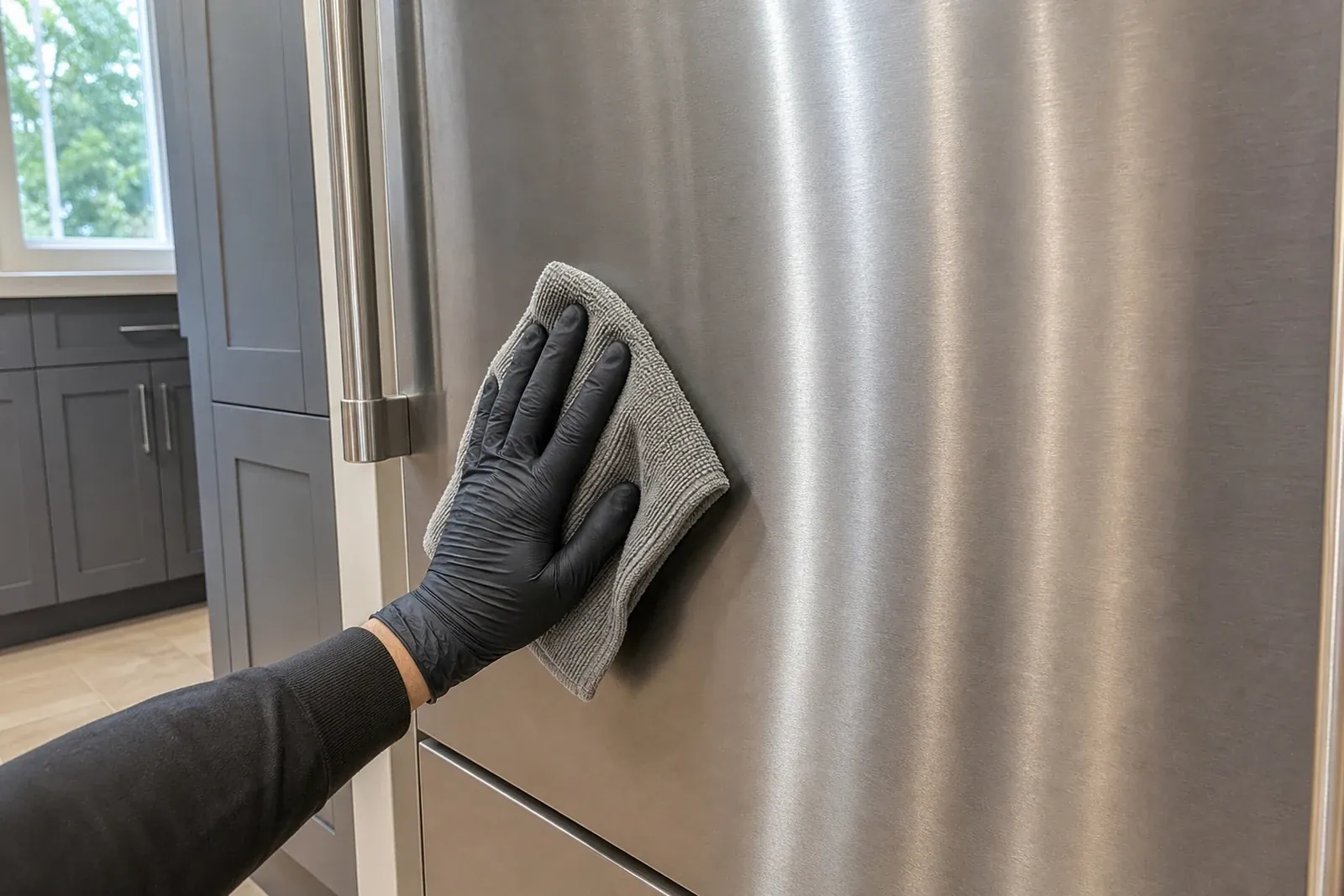
That black line in the gasket folds is mildew feeding on the moisture a leaking seal lets in, and it spreads fast in summer humidity. You can scrub a healthy gasket clean with warm soapy water (never bleach, which dries and cracks the rubber). But if mold keeps coming back after cleaning, the gasket is leaking and holding moisture in its creases — cleaning won't fix the cause.
- Diablo heat: sustained 90–105°F afternoons push the compressor hard, so even a small leak shows up as condensation or a faster-growing frost line.
- Estate & outdoor units: wine columns and island refrigerators on San Ramon patios face a brutal seal load — sun, heat, and a constant indoor/outdoor humidity swing.
- Cabinet fit: older San Ramon Village ranch-home cutouts and tight panel-ready installs make door alignment as important as the gasket itself.
A failing seal makes the whole system work overtime. If you're also seeing dust-loaded coils from Dougherty Valley hillside dust, fixing both at once restores efficiency. See our full maintenance calendar to stay ahead of it.
Next step
Call with the Sub-Zero model number
Have the model-tag photo, current fresh-food and freezer temperatures, and the symptom timeline ready. That lets the San Ramon intake route the visit around the likely Sub-Zero part family instead of a generic appliance script.
FAQ
Questions San Ramon homeowners ask before scheduling
Why is there condensation around my Sub-Zero door gasket?
Condensation forms when warm, humid kitchen air reaches the cold sealing surface — common on hot San Ramon afternoons after the door's been open. If the sweat clears on its own and appears randomly, it's just humidity. If water beads in the same spot every day, the gasket is leaking and letting Tri-Valley air infiltrate the cabinet. Run the dollar-bill test to confirm, or call (925) 940-3576.
How do I know if my Sub-Zero door gasket is bad?
Shut the door on a dollar bill and pull it out. A good magnetic gasket drags steadily; anywhere it slides out freely, the seal has failed there. Other signs: a recurring frost line along one freezer-door edge, hardened or torn rubber, a mildew line in the folds, or a compressor that runs nonstop. Check the whole perimeter, especially the bottom edge.
There's mold on my Sub-Zero door gasket — what should I do?
Clean the gasket folds with warm, soapy water and a soft cloth — avoid bleach, which dries and cracks the rubber. If the black line keeps returning after cleaning, the seal is leaking and trapping moisture in its creases, so cleaning only treats the symptom. A recurring mold line in San Ramon's humid summers usually means the gasket needs replacing. Call (925) 940-3576 for a seal evaluation.
Can I replace a Sub-Zero door gasket myself?
Sub-Zero recommends a technician replace the gasket. The magnetic seal seats into a retainer channel and must be warmed and worked in flat — a cold, twisted DIY install often seals worse than the worn original and traps frost or moisture. We confirm the correct OEM part for your exact model, warm and seat it evenly, and re-test the seal before leaving.
Why does my Sub-Zero freezer door build up frost on one side?
A frost line on one edge means warm, moist air is leaking past the seal and freezing as it meets the cold interior. It's often a compression-flattened gasket or a door that's sagged out of alignment at the hinge. We diagnose which — gasket, hinge, or cabinet fit — because replacing the seal won't help if the door simply hangs low. Common on older built-ins around the Tri-Valley.
My Sub-Zero is sweating in summer but seems to seal fine — is something wrong?
Probably not. During San Ramon heat waves, opening a built-in lets 90–100°F humid air contact cold steel, producing light surface sweat that evaporates on its own. If the dollar-bill test grips firmly all the way around and there's no recurring frost or mold, your seal is healthy. If moisture pools in one consistent spot or the unit runs constantly, then we'd look closer.
Related