San Ramon · San Ramon Village 1960s-70s ranch homes
Older Sub-Zero Service for San Ramon Village Ranch Homes
The original San Ramon Village tracts off Montevideo and Pine Valley (94583) are full of 1960s-70s ranch homes with kitchens that have been remodeled at least once — and many of them still run a Sub-Zero from the late 1990s or early 2000s. Those older units are very often worth fixing, but they need a technician who knows the legacy boards, the early refrigerants, and how to work inside dated cabinet cutouts without wrecking them.
Direct answer
Yes, we service older Sub-Zero units throughout San Ramon Village (94583) — including 500/600-series built-ins from 1998-2002 and earlier R-12/R-134a-era machines. We diagnose first, confirm parts are available for your model, and give an honest repair-vs-replace read. A maintained Sub-Zero runs 25-30 years, so most of these are worth keeping. Call (925) 940-3576.
Why this neighborhood is different
Older ranch homes, older built-ins
San Ramon Village is the original San Ramon — the 1960s-70s ranch and split-level tracts in the 94583 core, west and central of Bishop Ranch, that predate the master-planned hillsides of Dougherty Valley and Gale Ranch by thirty years. These kitchens have usually been opened up and remodeled, often in the late 1990s or 2000s, and that's exactly when a lot of homeowners installed the Sub-Zero that's still in the wall today.
That history shapes the service call. The unit in front of us is frequently a 500-series or 600-series built-in from 1998-2002, occasionally an even older model from the R-12 era. The cabinet around it was built to that appliance's footprint by a remodeler decades ago, so the cutouts run tight and the millwork is dated, stained, and not designed to come apart twice. And the original owners are often still in the house, which means we're servicing a machine that has cooled the same kitchen for twenty or twenty-five years.
None of that is a problem — it's our wheelhouse. But it does mean the visit is as much about judgment and access as it is about parts: is this older unit worth the repair, can we still get what it needs, and how do we get it out of a 1970s cabinet without leaving a mark. The rest of this page walks through each of those.
The honest verdict
Is a 20-year-old Sub-Zero worth repairing?
Usually, yes. A properly maintained Sub-Zero is engineered to run 25-30 years, so a unit installed in 2001 is middle-aged, not finished. The deciding factor is what's actually broken and what the fix costs against a new built-in's installed price — not the number on the calendar. We diagnose first, then give you a flat quote and a straight read before you spend anything.
The reason older San Ramon Village units lean toward repair is the cabinetry. These Sub-Zeros are framed into custom 1970s millwork that was fit to the exact opening; replacing the appliance often means a new unit doesn't match the cutout, and you're suddenly into a cabinet rebuild on top of the fridge. Keeping the working shell you already have is a big part of the value, which is the same logic we lay out on the core repair-vs-replace page and our cabinet-safe service. Here's the rough decision frame we use on an older unit:
| What we find | Typical cost band | Our read |
|---|---|---|
| A single common part (fan motor, thermistor, damper, gasket, control board) | $200-$650 repair | Repair — far below replacement, restores years of life |
| Condenser-driven long run times / 'Vacuum Condenser' light | Often just a deep clean + board check | Repair — cheapest fix on the list, common on 1998-2002 units |
| One sealed-system failure (compressor/evaporator) on an otherwise sound unit | $900-$1,800 — check the 12-yr warranty first | Usually repair, especially to keep custom cabinetry |
| Multiple major systems failing at once on a 25+ yr unit | Approaches or exceeds ~50% of a new built-in installed | Replace may be the honest call — we tell you |
Parts reality
Can you still get parts for an old Sub-Zero?
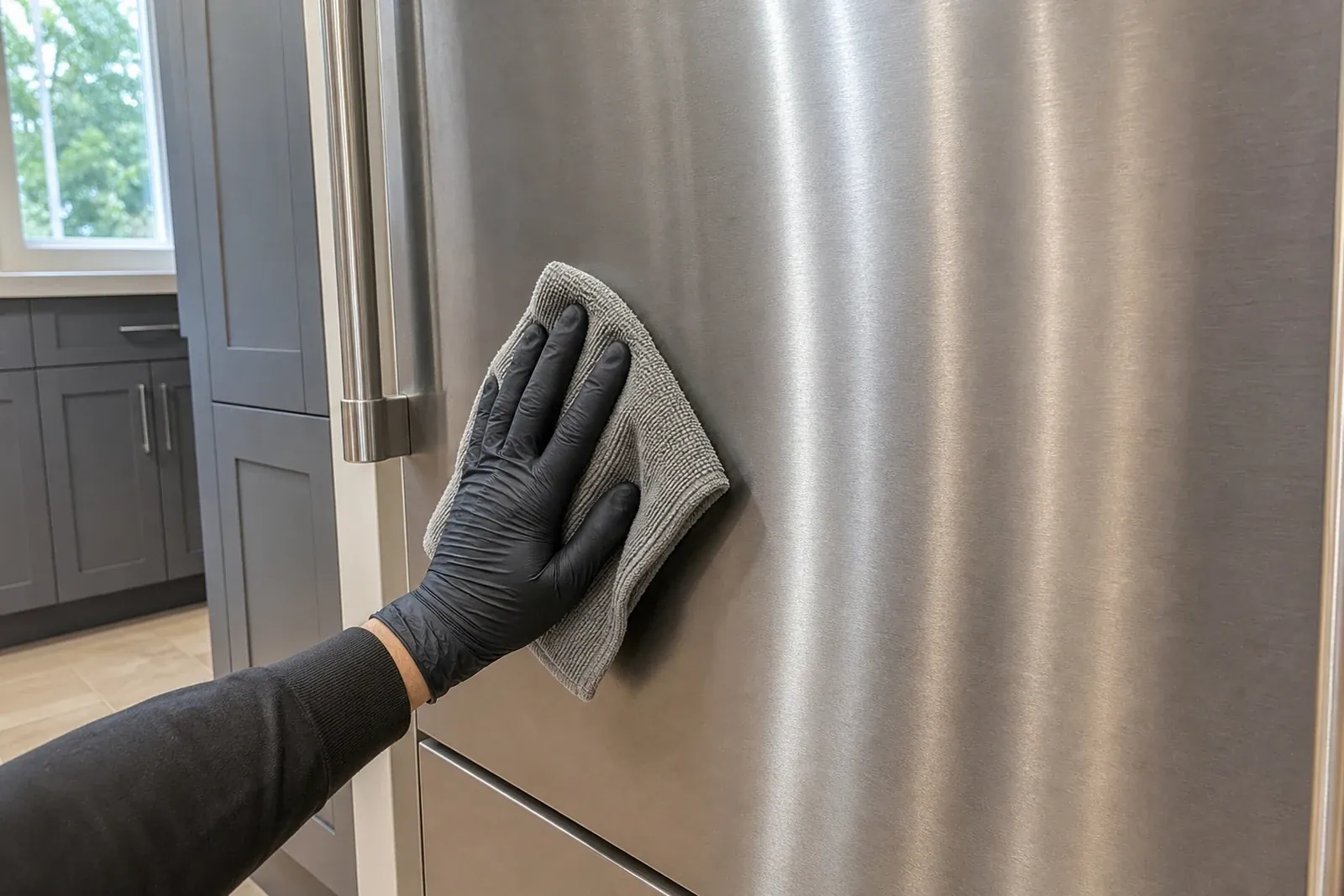
For the great majority of San Ramon Village units, yes. Sub-Zero supports its built-ins for a long time, and the 500/600-series and the 1998-2002 generation are well within parts availability — fan motors, thermistors, dampers, fill and inlet valves, gaskets, and control boards are all sourceable to the exact model. The catch is that they have to be matched precisely, which is why a clear photo of the model and serial tag matters so much on an older unit.
On these legacy models the tag is right where Sub-Zero has always put it: an Over/Under is inside the fridge door near the top hinge; a side-by-side is inside the freezer door near the top hinge. Snap that plate and send it when you book and we arrive with the correct part instead of guessing — see the full model number guide or the photo checklist. Where a specific legacy board or piece of trim has genuinely been discontinued, we say so honestly, look at reconditioned or factory-equivalent options, and factor that into the repair-vs-replace conversation rather than stringing you along. We use genuine or factory-spec parts matched to your tag — never a mismatched substitute that shortens the next repair.
Refrigerant eras
R-12, R-134a, and what your old unit runs on
One real difference with older Sub-Zeros is the refrigerant in the sealed system, and it tracks the era of the machine. The oldest units in San Ramon Village estates can still run R-12 (phased out for production in the mid-1990s); the late-1990s through 2000s generation — most of what we see here — uses R-134a; and current units run R-600a isobutane. Your model and serial tag tells us which one you have before we ever open the system.
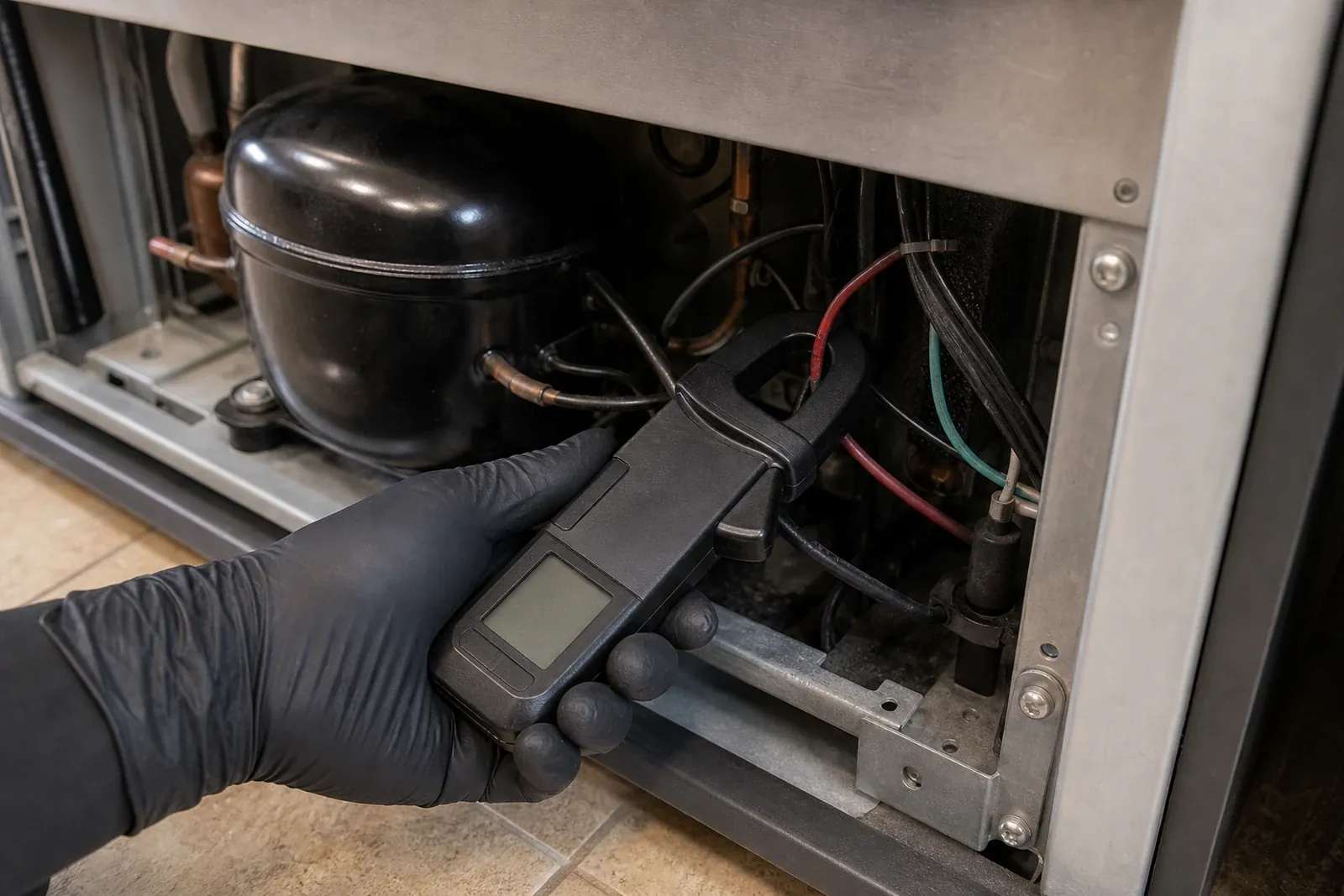
This is exactly why sealed-system work on an older unit isn't a job for a generalist. Recovering, evacuating, and recharging any of these refrigerants legally requires EPA Section 608 (Universal) certification, and an R-12-era system in particular has to be handled correctly, not vented. When we do sealed-system or compressor work, we confirm the refrigerant from the tag, put gauges and an amp draw on it, and check whether Sub-Zero's 12-year sealed-system warranty (compressor, condenser, evaporator, drier, tubing) still covers your unit before you pay a cent. A surprising number of 2000s-era units are still inside that window.
Cabinet-safe in dated millwork
Working inside a 1970s ranch-home cutout
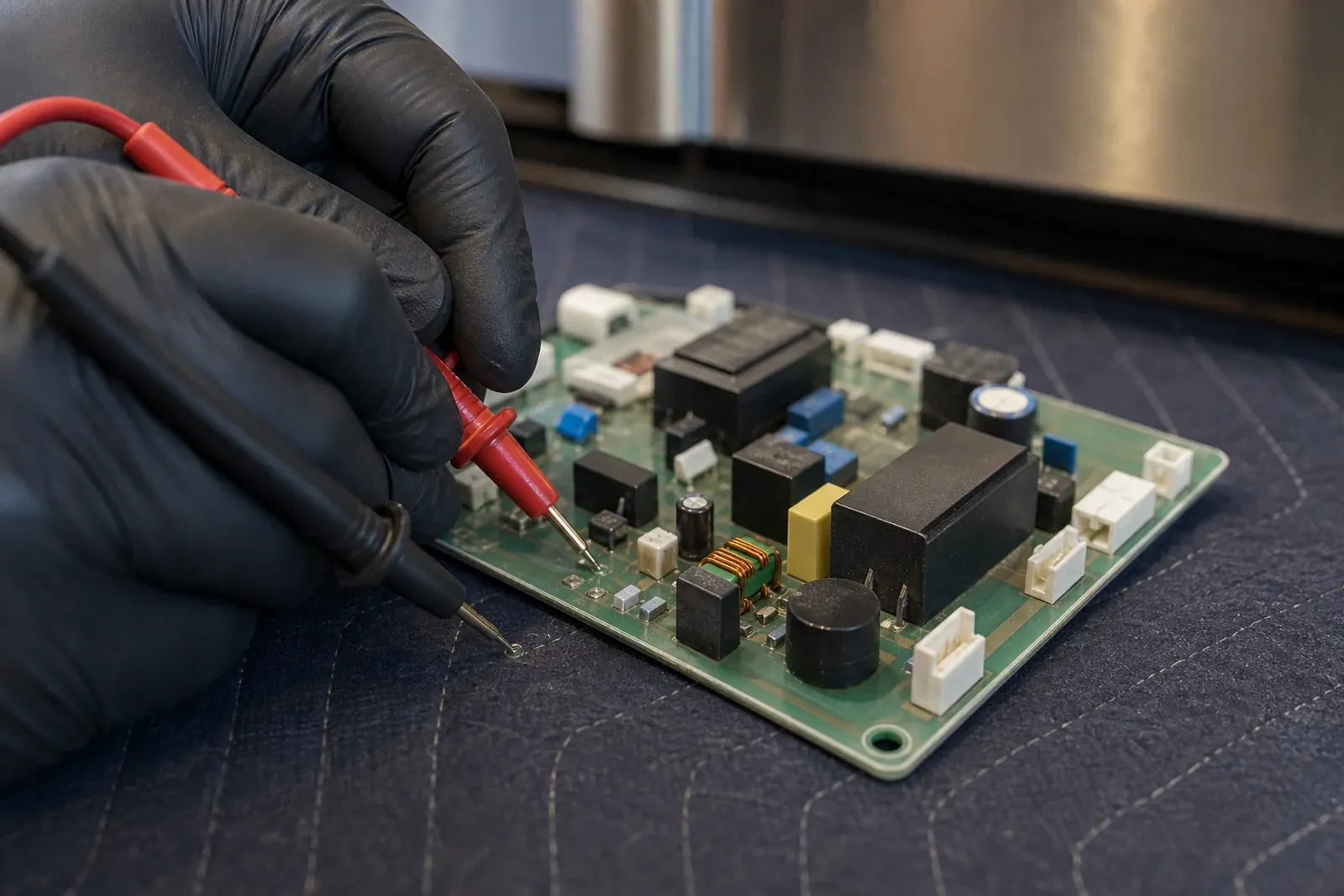
The cabinets in a remodeled San Ramon Village ranch home are the part we treat most carefully. A Sub-Zero installed in the late 1990s was framed into an opening a cabinet shop fit to it, often with tight, dated cutouts, stained hardwood reveals, and a toe-kick that was never meant to be disturbed again. A built-in this old also has heavier doors and grille hardware that may have been painted over or trimmed during the original install.
So before any tool comes out, the visit is about access and protection. We read how the unit is anchored, lay floor runners and a slip sheet under the rollers, pad both reveals, release the anti-tip brackets rather than forcing anything, and roll the unit straight out only as far as the repair needs — then reseat and re-level it so the doors close flush against decades-old cabinetry. Many faults never need a pullout at all: a stuck damper, a thermistor reading, a gasket that fails the dollar-bill test, an ice maker not making ice, or an error code on the display are diagnosed from the front. We only move the unit when the repair genuinely requires it, and we tell you first. Our full method is on the technician process page.
Booking & service area
San Ramon Village and the wider 94583 core
We dispatch across San Ramon Village, Twin Creeks, Bishop Ranch, Canyon Lakes, and the rest of the San Ramon Valley, plus Danville, Alamo, Dublin, and Pleasanton. Scheduling is by appointment from our San Ramon office at 2603 Camino Ramon, Suite 200 — no walk-ins, and we come to your kitchen. When you book an older unit, two photos move things along: the model and serial tag inside the door, and the cabinet opening so we bring the right legacy part and the right protection.
The diagnostic/service call runs $95-$150 and is credited toward the repair. Most non-sealed repairs land $200-$650; sealed-system or compressor work is $900-$1,800, always on a flat quote you approve first. Call (925) 940-3576 or book online — see full coverage on service areas and ranges on pricing. To get the most life out of an older unit between visits, our maintenance calendar covers condenser cleaning (every 3-6 months in the hot, dusty Tri-Valley) and water-filter changes for DSRSD's moderately hard water.
Next step
Call with the Sub-Zero model number
Have the model-tag photo, current fresh-food and freezer temperatures, and the symptom timeline ready. That lets the San Ramon intake route the visit around the likely Sub-Zero part family instead of a generic appliance script.
FAQ
Questions San Ramon homeowners ask before scheduling
Is it worth repairing a 20 year old Sub-Zero?
Usually yes. Sub-Zero built-ins are engineered for 25-30 years with maintenance, so a 20-year-old unit is middle-aged, not done. In a San Ramon Village ranch home the custom 1970s cabinetry was fit to that exact appliance, so keeping the working unit is often the smarter spend than a new built-in plus a cabinet rebuild. We diagnose first and give you an honest flat quote. Call (925) 940-3576.
Can you still get parts for an old Sub-Zero?
For most older units, yes. The 500/600-series and the 1998-2002 generation common in San Ramon Village are well within parts availability — fan motors, thermistors, dampers, valves, gaskets, and control boards source to the exact model. We match parts off your model and serial tag (inside the fridge or freezer door near the top hinge). If a specific legacy piece is genuinely discontinued, we tell you and weigh it into the repair-vs-replace call.
Do you service older homes in San Ramon Village?
Yes — San Ramon Village is the original 1960s-70s core of San Ramon (94583) and a routine part of our service area, along with Twin Creeks, Bishop Ranch, and Canyon Lakes. We're set up for older built-ins in dated, tight cabinet cutouts: floor protection, careful pullout, and a flush reseat into decades-old millwork. Scheduling is by appointment from 2603 Camino Ramon, Suite 200; we come to your kitchen. Call (925) 940-3576.
What refrigerant does my old Sub-Zero use?
It depends on the era, which your model and serial tag tells us. The oldest units can still run R-12, the late-1990s through 2000s generation uses R-134a, and current units use R-600a isobutane. Sealed-system work on any of these legally requires EPA Section 608 certification, so it's not a generalist job. We confirm the refrigerant from the tag and check the 12-year sealed-system warranty before any work.
My Sub-Zero flashes 'Vacuum Condenser' or a service light — is the old unit failing?
Not necessarily. That flashing message means the compressor has been running long and inefficiently, and on 1998-2002 600-series units it most often points to a dirty condenser, not a dead machine. In the hot, dusty Tri-Valley the coils load up fast. We clean the condenser, check the board, and — only if temps are near normal — hold the door-ajar key about 15 seconds to clear it. Don't clear it while temps are still rising. Call (925) 940-3576.
How do I find the model number on my older Sub-Zero?
On these legacy built-ins the tag is inside the cabinet: an Over/Under has it inside the fridge door near the top hinge, and a side-by-side has it inside the freezer door near the top hinge. Snap a clear photo of that plate and send it when you book — it lets us arrive with the correct legacy part for your 500/600-series or 1998-2002 unit instead of guessing.
Related