San Ramon · Seasonal upkeep
A Sub-Zero Maintenance Schedule Built for San Ramon's Heat, Dust, and Hard Water
A Sub-Zero is engineered to run 25-30 years — but only if its condenser stays clean and its seals stay tight. In the Tri-Valley, Diablo heat, hillside dust, and wildfire-season ash shorten the safe interval between cleanings, so we built a calendar tuned to San Ramon's actual conditions rather than a generic factory chart.
Direct answer
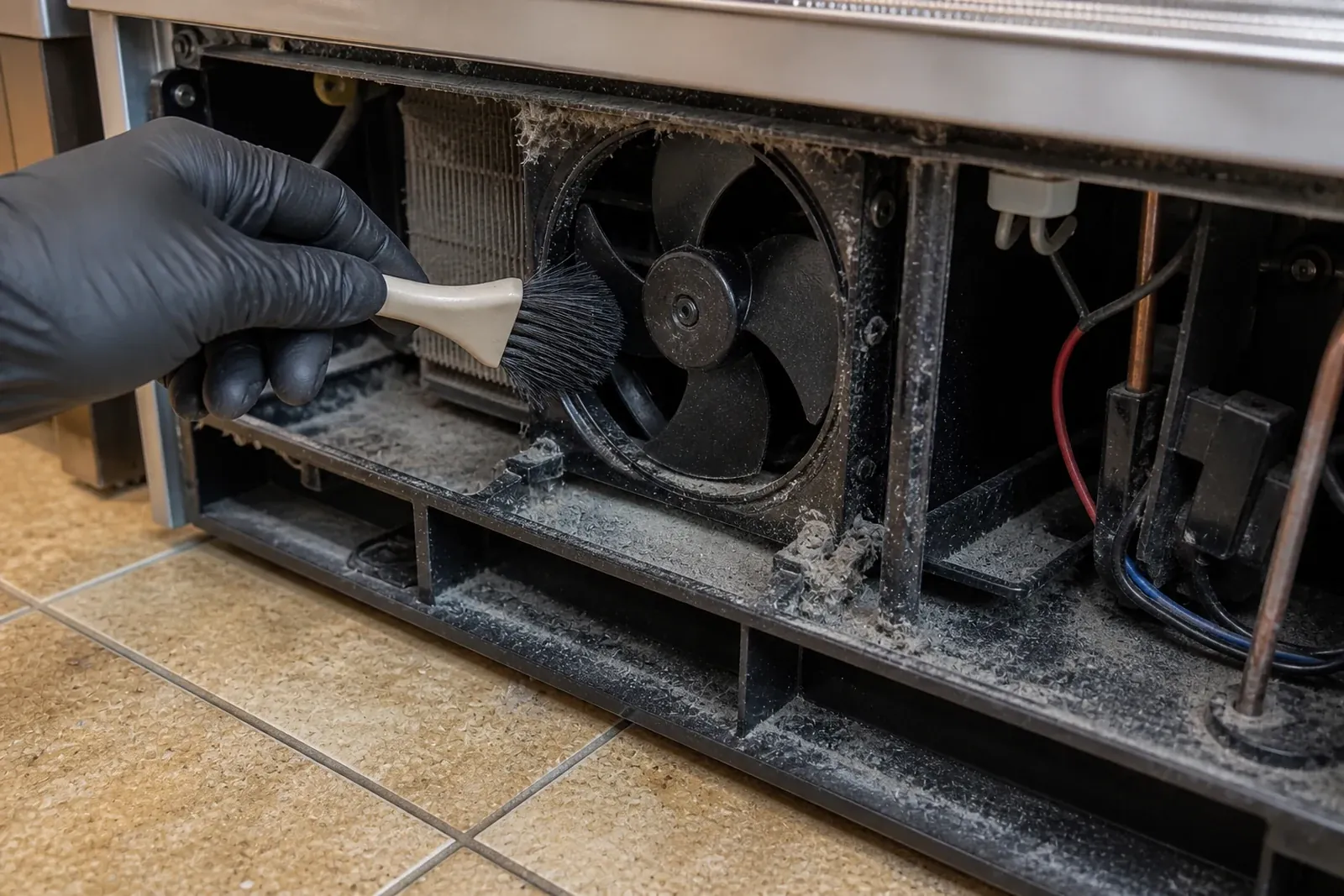
Clean the condenser every 6-12 months — but every 3-6 months in San Ramon, where Diablo heat and wildfire-season ash load the coils fast. Change the water filter every 3-6 months in DSRSD's moderately hard water, and check door gaskets twice a year. Book a tune-up at (925) 940-3576.
Why intervals differ here
San Ramon Runs a Sub-Zero Harder Than the Factory Chart Assumes
Sub-Zero's manual says clean the condenser every 6-12 months and swap the water filter every 3-6 months. Those numbers assume an average climate and average water. San Ramon is neither.
- Diablo Valley heat: inland summers sit at 90-100°F and spike toward 105°F during heat waves. A hot kitchen and a baking outdoor island force the compressor to run longer, and a dust-loaded condenser can't shed that heat — the fast track to a long-run alarm.
- Offshore Diablo winds & wildfire ash: northeast fire-weather winds carry dust and SCU-range smoke down onto condenser intakes in days. Homes in Dougherty Valley, Windemere, Gale Ranch, Henry Ranch, and Norris Canyon Estates sit closest to the open hillsides and load up fastest.
- DSRSD hard water: moderately hard water from the Dublin San Ramon Services District (via Zone 7) scales ice-maker inlet valves and shortens filter life — so the filter side of this calendar runs on the short end of the range.
If your built-in is warm now rather than overdue for upkeep, start with our not-cooling diagnostic instead.
The calendar
A Seasonal Schedule Tuned to Tri-Valley Conditions
Use this as a baseline. Homes nearest the open hillsides or with patio/island refrigeration should always pick the shorter interval. Log condenser cleanings on your phone so you can prove the interval to a warranty tech later.
| Season / month | What to do | Why it matters in San Ramon |
|---|---|---|
| Spring (Mar-Apr) | Deep-clean the condenser; vacuum the fan; dollar-bill seal test on every door | Clears winter dust before the first heat waves push the compressor hard |
| Early summer (May-Jun) | Change the water filter; verify freezer holds 0°F and fridge ~37°F | Hard-water scale builds over winter; ice demand climbs as temps rise |
| Peak summer (Jul-Aug) | Re-check the condenser if you're near open hills or run outdoor/island units | Diablo heat + ash means a spring cleaning may already be loaded again |
| Wildfire season (Sep-Oct) | Inspect & clean the condenser after any heavy-smoke or red-flag-wind stretch | SCU-range ash and offshore Diablo winds blanket coils in days |
| Fall (Nov) | Second filter change; confirm door alignment and gasket seal | Resets filter life before winter; tightens seals before holiday loading |
| Winter (Dec-Feb) | Listen for long compressor runs; clear vents around built-in grille | Quiet season to catch a developing problem before summer stress |
Step-by-step
How to Clean a Sub-Zero Condenser Yourself
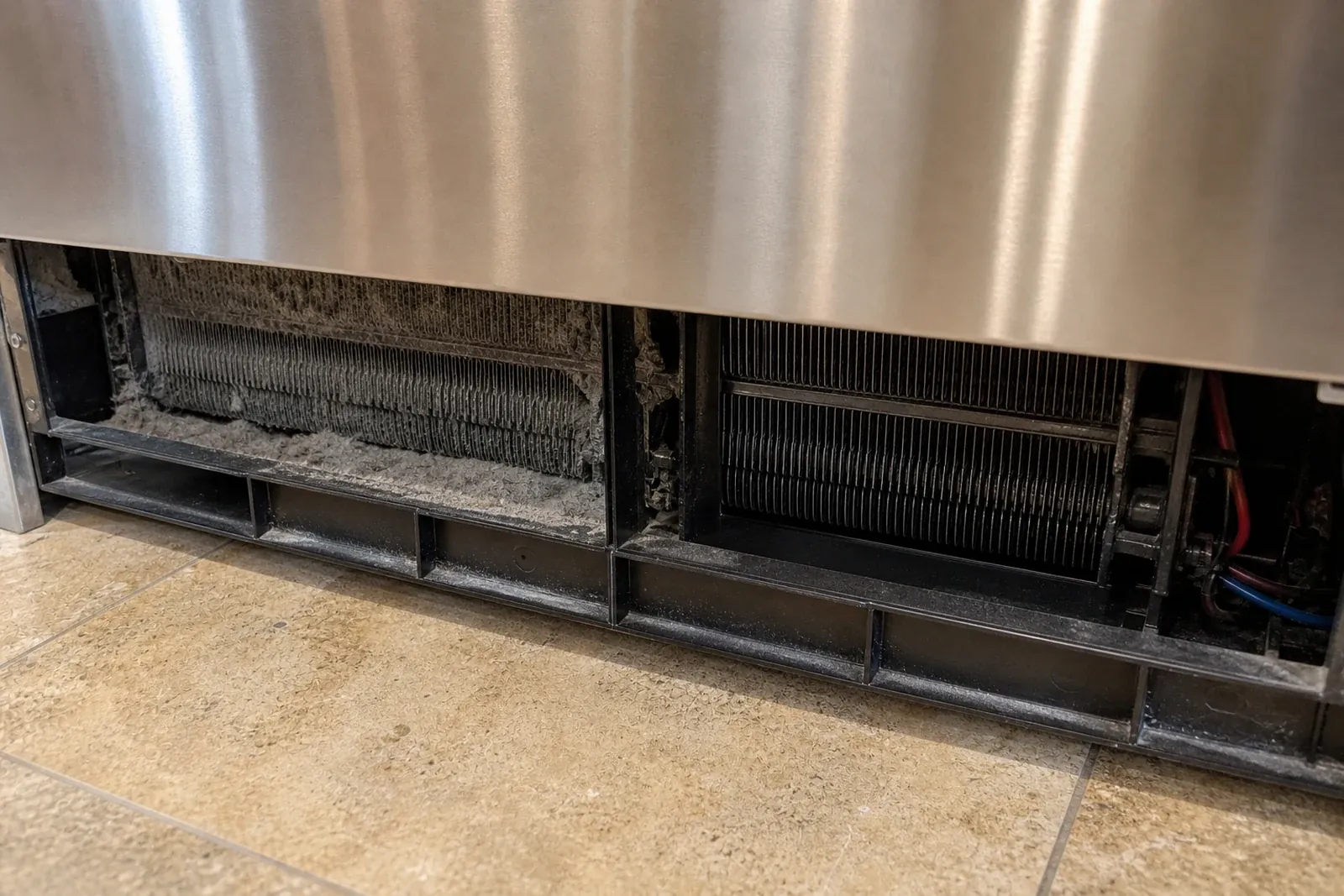
The single most valuable thing you can do is keep the condenser clean. On most built-ins (BI-36, BI-42, BI-48, 632, 642, 685) the condenser sits behind the upper grille; on PRO-48 and many Designer units it's accessed from the top or front grille. Here's the safe routine:
- Unplug or kill the breaker. Never brush a live condenser fan.
- Remove the front grille. It usually unclips or lifts off — no tools on most models.
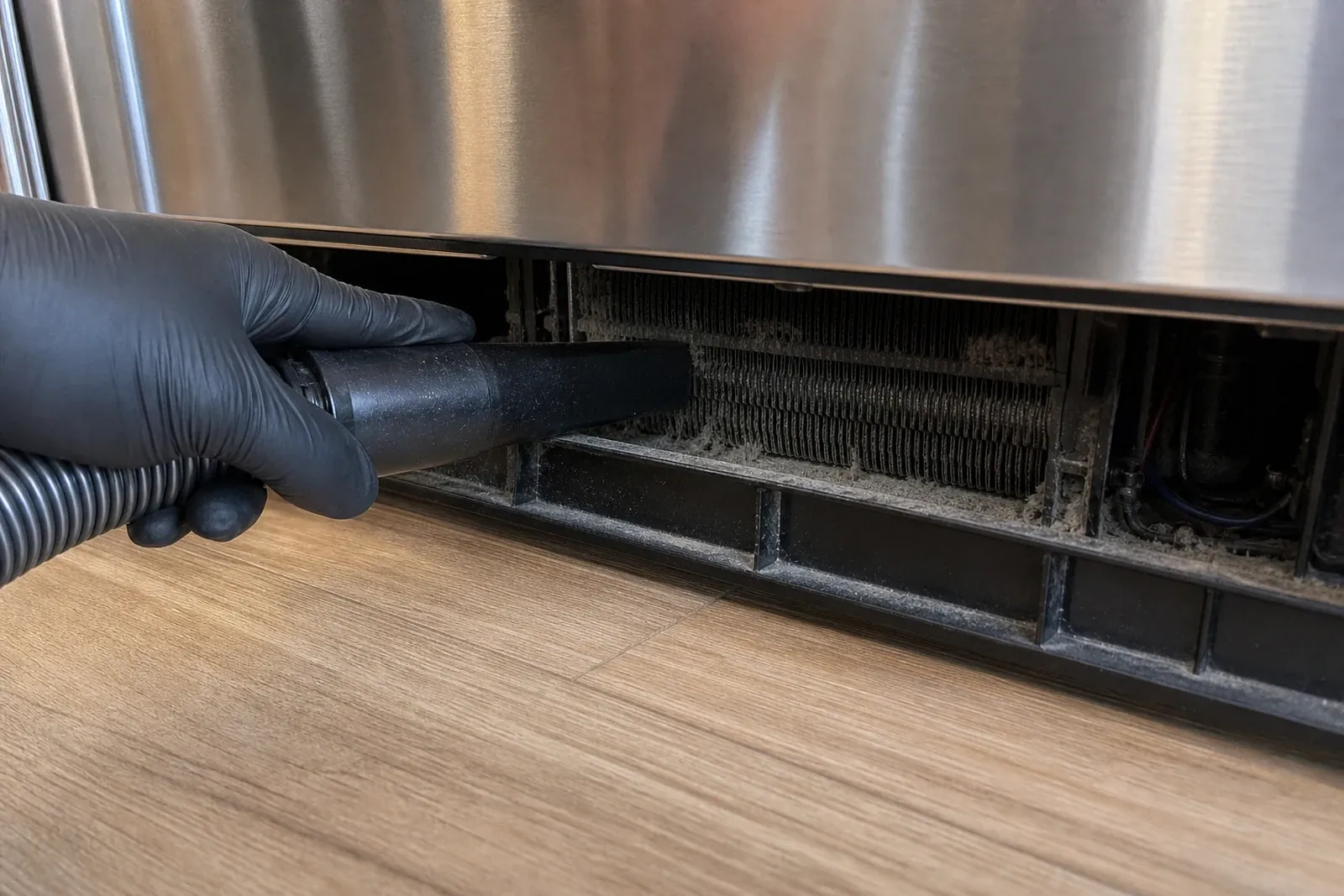
- Vacuum, then soft-brush the coils. Pull dust and ash off the fins with a vacuum-brush, then a soft coil brush. Work gently so you don't bend the aluminum fins.
- Clean the fan blades. Wipe each blade by hand; a dust-caked fan can't move heat.
- Reseat the grille, restore power, and confirm cooling. Give it a couple of hours and re-check temps.
If you'd rather not pull a panel-ready built-in out of tight cabinetry — common in older San Ramon Village kitchens — book a maintenance visit and we'll do it cabinet-safe. See our cabinet-safe service notes.
Water & seals
Filters, Gaskets, and the Dollar-Bill Test
Two quick checks catch most slow failures before they become emergencies:
- Water filter (every 3-6 months, shorter here): DSRSD's moderately hard water scales the ice-maker inlet valve and clogs filters faster than soft-water regions. Hollow cubes, slow ice, or off-taste usually means an overdue filter. More on this in our hard-water ice-maker guide.
- Door gaskets (check twice a year): close the door on a dollar bill. If it slides out with no drag, the seal has failed and the compressor is fighting San Ramon's summer heat to keep up. Condensation, mold, or frost at the seal is the same verdict. We replace gaskets and re-seat them with warm water so they sit true — see gasket & seal repair.
Wine columns and dual-zone storage in estate kitchens need the same condenser discipline plus a stable 55°F storage target; details on our wine storage page.
Where it pays off
Neighborhood Realities Across San Ramon
Maintenance intervals aren't one-size-fits-all across the city. Where your home sits changes how fast the condenser loads and how the visit gets scheduled:
- Dougherty Valley, Windemere, Gale Ranch, Henry Ranch: hillside dust and open-grass fire exposure mean the 3-6 month condenser interval, plus long, steep driveways to plan around. See Dougherty Valley dust & heat.
- Canyon Lakes & Norris Canyon Estates: gated golf-and-luxury communities — note gate/HOA access when you book, and expect panel-ready built-ins.
- Bishop Ranch, Twin Creeks, San Ramon Village: the central Crow Canyon corridor is our fastest route; older Village ranch homes hide tight, dated cabinet cutouts that need a careful, cabinet-safe pull-out.
- Outdoor & island refrigeration: patio units bake all summer and ingest the most ash — clean them most often. Details on our outdoor refrigerator page.
Not sure of your model before booking? Our model-number guide shows exactly where the tag hides.
Next step
Call with the Sub-Zero model number
Have the model-tag photo, current fresh-food and freezer temperatures, and the symptom timeline ready. That lets the San Ramon intake route the visit around the likely Sub-Zero part family instead of a generic appliance script.
FAQ
Questions San Ramon homeowners ask before scheduling
How often should I clean my Sub-Zero condenser coils?
Sub-Zero recommends every 6-12 months, but in San Ramon we advise every 3-6 months. Diablo Valley heat waves push the compressor hard, and offshore winds plus wildfire-season ash from the SCU/Diablo range can load condenser intakes in days. Homes near open hillsides in Dougherty Valley, Gale Ranch, or Norris Canyon need the shorter interval. Questions? Call (925) 940-3576.
What is a good Sub-Zero maintenance schedule?
A spring deep-clean of the condenser, a summer and a fall water-filter change, condenser re-checks after wildfire-smoke or red-flag-wind stretches, and a twice-yearly dollar-bill gasket test. In San Ramon's heat and hard water, lean toward the shorter end of every interval. Keeping this rhythm is how a built-in reaches its full 25-30 year life.
How often should I change my Sub-Zero water filter?
Every 3-6 months, and toward the shorter end here. The Dublin San Ramon Services District delivers moderately hard water (via Zone 7), which scales the ice-maker inlet valve and clogs filters faster than soft-water areas. Hollow or slow cubes and off-taste ice are the usual signs you're overdue. We carry filters and can swap one during a maintenance visit.
How do I clean a Sub-Zero condenser?
Cut the power, remove the front grille, then vacuum and gently soft-brush the coils and fan blades to clear dust and ash without bending the fins. Reseat the grille, restore power, and re-check temps after a couple of hours. If your panel-ready built-in is wedged into tight San Ramon cabinetry, call (925) 940-3576 and we'll handle it cabinet-safe.
How do I know if my Sub-Zero door gasket needs replacing?
Run the dollar-bill test: close the door on a bill and pull. If it slides out with no resistance, the gasket has failed. Condensation, mold, or frost along the seal confirms it. A leaking seal makes the compressor fight San Ramon's summer heat and runs up energy use — we replace and re-seat gaskets so they sit true. See our gasket & seal repair page.
Does regular maintenance keep my Sub-Zero's warranty valid?
Sub-Zero's sealed system carries a 12-year manufacturer warranty on the compressor, condenser, evaporator, drier, and tubing. Routine upkeep doesn't void it, and a clean condenser actually helps that hardware last — but neglect-driven failures are harder to claim. Logging your condenser cleanings gives you a paper trail if a sealed-system claim ever comes up.
Related