San Ramon · Tri-Valley water & ice care
San Ramon Hard Water and Your Sub-Zero Ice Maker
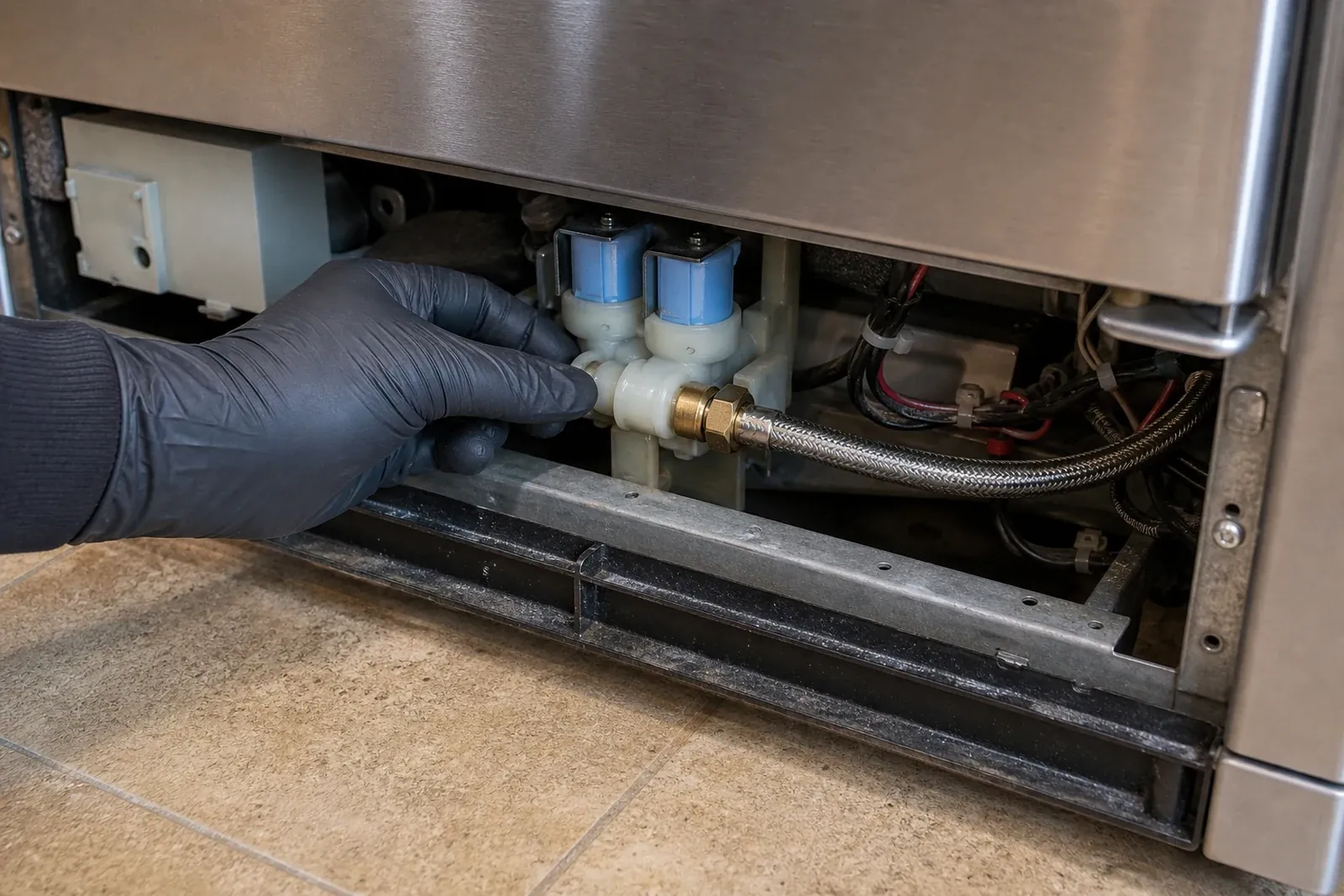
San Ramon's water runs moderately hard through the Dublin San Ramon Services District, and that mineral load quietly scales the part of a Sub-Zero ice maker you never see: the inlet valve and fill tube. The result shows up as cloudy, hollow, or slow ice long before anything looks broken.
Direct answer
Yes, San Ramon water is moderately hard. DSRSD water carried via Zone 7 leaves mineral scale on a Sub-Zero ice maker's inlet valve and fill tube, which shortens filter life to roughly 3-6 months and produces cloudy, hollow, or slow ice. Fresh filters, descaling, and a freezer near 0 degrees usually solve it. Call (925) 940-3576.
The water itself
Is San Ramon water actually hard?
San Ramon homes are served by the Dublin San Ramon Services District (DSRSD), drawing treated supply from the Zone 7 Water Agency. That water is best described as moderately hard: not the chalk-white extreme you see in the desert Southwest, but mineral-rich enough that calcium and magnesium build up steadily on anything water touches repeatedly.
You probably already notice the evidence elsewhere in the kitchen and bath: spotting on glassware, a white film inside the kettle, and crust around faucet aerators in older San Ramon Village homes and newer Dougherty Valley, Windemere, and Gale Ranch builds alike. A Sub-Zero ice maker drinks that same water, drop by drop, every cycle. Over months the minerals plate out on the narrow brass inlet valve port and the plastic fill tube, where flow is slow and surfaces are cool.
None of this is a defect. It is simply what local water does to a precision appliance over time, and it is why ice-maker complaints are one of the most common calls we take across the Tri-Valley.
Reading the ice
What cloudy, hollow, and slow ice are telling you
The shape and clarity of the cubes is a surprisingly good diagnostic. Sub-Zero clear ice forms when water fills, freezes evenly, and harvests on schedule. Hard-water scale and a tired filter disrupt that rhythm, and each failure mode leaves its own signature.
- Cloudy or white cubes usually mean dissolved minerals and trapped air, the direct fingerprint of hard water and an exhausted filter.
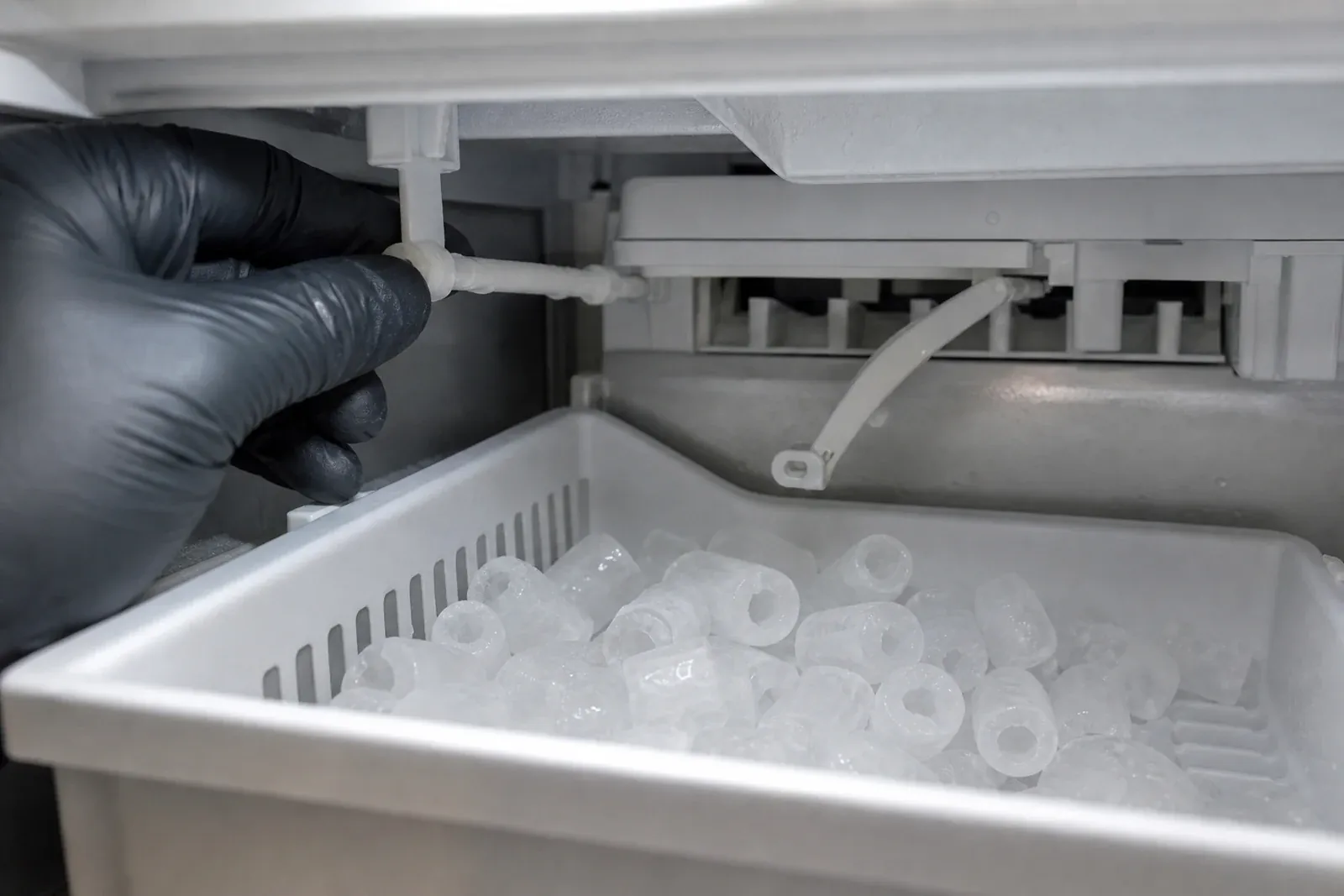
- Hollow or partially filled cubes point to restricted fill: a scaled inlet valve or a partly clogged fill tube letting too little water into the mold before the freeze starts.
- Slow ice or low output can come from the same restricted fill, or from a freezer running too warm to harvest on time.
- Small, shrinking, or off-tasting ice often tracks back to a filter that is months overdue.
Reading these together keeps you from replacing the wrong part. A scaled valve and a warm freezer can look identical at the bin, but the fix is completely different. The table below is the same triage we use on a service call.
| Symptom | Likely cause | Fix |
|---|---|---|
| Cloudy / white cubes | Hard-water minerals + spent filter | Replace filter; flush several cycles; descale if scale is heavy |
| Hollow / under-filled cubes | Scaled inlet valve or partly blocked fill tube | Descale or replace inlet valve; clear the fill tube |
| Slow ice / low volume | Restricted fill OR freezer too warm | Confirm freezer near 0 degrees first; then check valve & line |
| No ice at all | Closed shut-off arm, kinked line, or failed valve | Check arm down & bin seated; inspect line; test valve |
| Small or off-tasting ice | Filter long overdue (past 3-6 months) | Change filter; run and discard first two batches |
Valve vs. temperature
Is it the inlet valve or the freezer temperature?
This is the split that decides the whole repair, so it is worth getting right before anyone orders a part. Both a scaled inlet valve and a warm freezer can starve the ice maker, but they fail in opposite ways.
Point to the inlet valve / hard water when: the freezer is genuinely cold (frozen food is rock-hard, the compartment reads at or below about 5 degrees and ideally near 0), yet cubes come out hollow, slow, or short. Restricted fill with good freezing temperatures is the classic scaled-valve picture. You may also see mineral crust where the fill tube meets the mold.
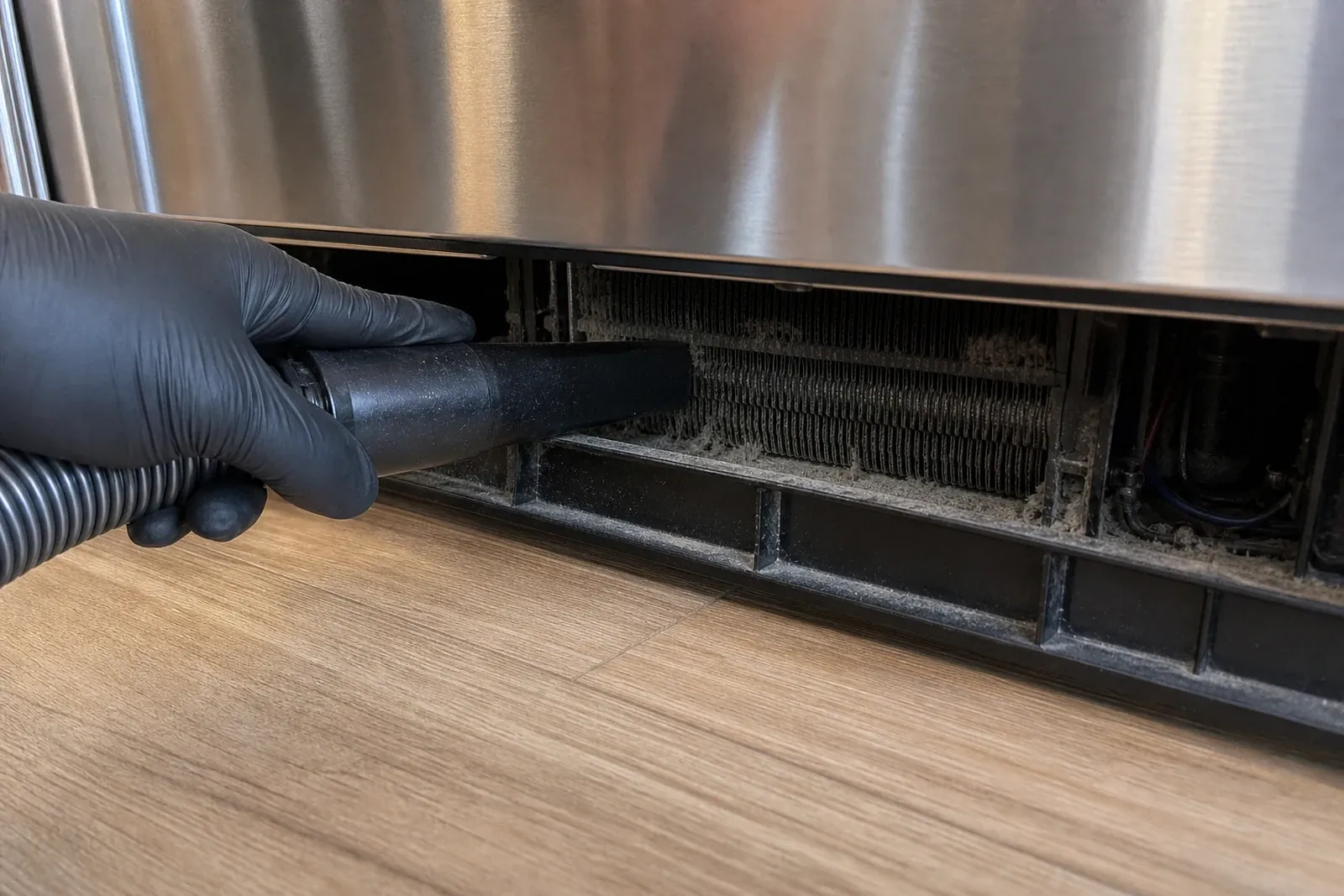
Point to temperature when: the freezer feels soft, ice cream is slushy, or other frozen items show partial thaw. A Sub-Zero needs its freezer near 0 degrees to harvest properly; let it warm to the teens and ice slows no matter how clean the water is. A warm freezer is its own diagnosis, often a cooling or airflow problem or a condenser smothered in Dougherty Valley hillside dust and Diablo-wind grit.
When both look suspect, we check temperature first because it is fast and non-invasive, then move to the water side. Working in that order avoids swapping a perfectly good valve on a unit that simply needed its condenser cleaned. If the cooling side is the culprit, the sealed-system path is a separate conversation entirely.
Cadence that works here
Filter and descaling schedule for San Ramon water
Manufacturer guidance gives a filter range, and local water tells you where to land inside it. In San Ramon's moderately hard supply, plan on a water filter change every 3 to 6 months rather than stretching to a year. Estate kitchens in Canyon Lakes, Norris Canyon Estates, and Twin Creeks that pour a lot of ice for entertaining tend to land at the shorter end.
- Water filter: every 3-6 months. Mark the date on the housing or your phone. After a change, run and discard the first two batches of ice and a few quarts of dispensed water to flush carbon fines.
- Descale the ice circuit: roughly once a year, sooner if you see hollow cubes or visible crust. A food-safe descaler clears the inlet valve port and fill tube before the buildup chokes flow.
- Condenser: every 3-6 months in dusty, hot, wildfire-prone San Ramon. A clogged condenser raises freezer temperature, which then masquerades as an ice problem. See the maintenance calendar.
- Inspect the supply line and shut-off when you change the filter, especially in older San Ramon Village ranch homes where saddle valves and aging copper hide behind tight cabinet cutouts.
The 315I undercounter ice maker deserves its own note: as a standalone unit it has no freezer compartment buffering it, so its harvest depends heavily on a clean condenser and an unrestricted water feed. In a warm summer kitchen or an outdoor island that bakes on a Diablo Valley patio, the 315I shows scale and heat stress earlier than a built-in's ice maker does.
What we do on site
How we diagnose and fix it
Our approach is diagnostic-first and honest. We do not guess a part over the phone, and we confirm the freezer temperature before touching the water side.
A typical visit on a hard-water ice complaint runs like this:
- Verify the basics: ice maker switched on, shut-off arm down, bin fully seated, and the freezer holding near 0 degrees.
- Trace the water path: filter age, supply line for kinks or scale, and the inlet valve for restricted flow or a weak solenoid.
- Inspect for scale: fill tube and valve port for mineral buildup; descale or replace as the evidence dictates.
- Check the cold side: condenser condition and harvest cycle, so a warm-running unit is not misread as a water problem.
If a part is needed, we install genuine Sub-Zero / factory-spec components matched to the exact model from your tag, and you get a flat quote approved before any work begins. Our diagnostic / service call runs $95-$150 and is credited toward the repair; most non-sealed ice-maker repairs land in the $200-$650 range. Not sure which model you have? The model-number guide shows where the tag hides, or a quick photo of the tag lets us arrive with the right valve in hand.
To book, call (925) 940-3576 or book online. We schedule by appointment across San Ramon, Danville, Dublin, Pleasanton, Alamo, and Blackhawk.
Next step
Call with the Sub-Zero model number
Have the model-tag photo, current fresh-food and freezer temperatures, and the symptom timeline ready. That lets the San Ramon intake route the visit around the likely Sub-Zero part family instead of a generic appliance script.
FAQ
Questions San Ramon homeowners ask before scheduling
Is San Ramon water hard?
Yes. San Ramon is served by the Dublin San Ramon Services District (DSRSD) with supply from the Zone 7 Water Agency, and that water is moderately hard. It is mineral-rich enough to leave scale on faucet aerators, glassware, and the inside of a Sub-Zero ice maker's inlet valve and fill tube over a few months.
Why are my Sub-Zero ice cubes cloudy or hollow?
Cloudy cubes are usually dissolved minerals and trapped air from San Ramon's hard water plus a filter past its prime. Hollow or under-filled cubes mean the mold isn't filling fully, typically a scaled inlet valve or a partly blocked fill tube restricting flow. A fresh filter and descaling fix most cases; a few need a new valve. Call (925) 940-3576.
How often should I change my Sub-Zero water filter in San Ramon?
Every 3 to 6 months. San Ramon's moderately hard DSRSD water loads the filter faster than the year some manuals suggest, and high-ice households in Canyon Lakes, Twin Creeks, and Norris Canyon Estates land at the shorter end. After each change, run and discard the first two batches of ice to flush the new cartridge.
Does hard water damage a Sub-Zero ice maker?
It doesn't break it overnight, but mineral scale steadily builds on the inlet valve port and fill tube, restricting flow and producing hollow, cloudy, or slow ice. Left unaddressed, a scaled valve eventually fails to fill at all. Regular filter changes and an annual descale keep the water circuit clear and protect the valve.
Is it the inlet valve or the freezer temperature?
Check the freezer first. If frozen food is rock-hard and the compartment is near 0 degrees yet ice is hollow or slow, the problem is restricted fill, usually a scaled inlet valve or fill tube. If the freezer feels soft or ice cream is slushy, it's a temperature or cooling issue, often a condenser caked with Dougherty Valley dust and Diablo-wind grit.
Does San Ramon's 315I undercounter ice maker need different care?
Yes. The standalone 315I has no freezer compartment buffering it, so its output depends entirely on a clean condenser and an unrestricted water feed. In a hot summer kitchen or an outdoor island that bakes on a San Ramon patio, it shows hard-water scale and heat stress earlier than a built-in's ice maker, so keep its filter and condenser on a tight schedule.
Related