San Ramon · Wine-room cooling
Keeping a Sub-Zero Wine Cellar Stable Through a San Ramon Summer
A walk-in wine room is a different animal from a wine column: you are asking one Sub-Zero unit to hold a whole room steady, not a sealed cabinet. When a cellar starts drifting in July, the room is usually the problem before the appliance is — so the first job is reading the room, then the unit.
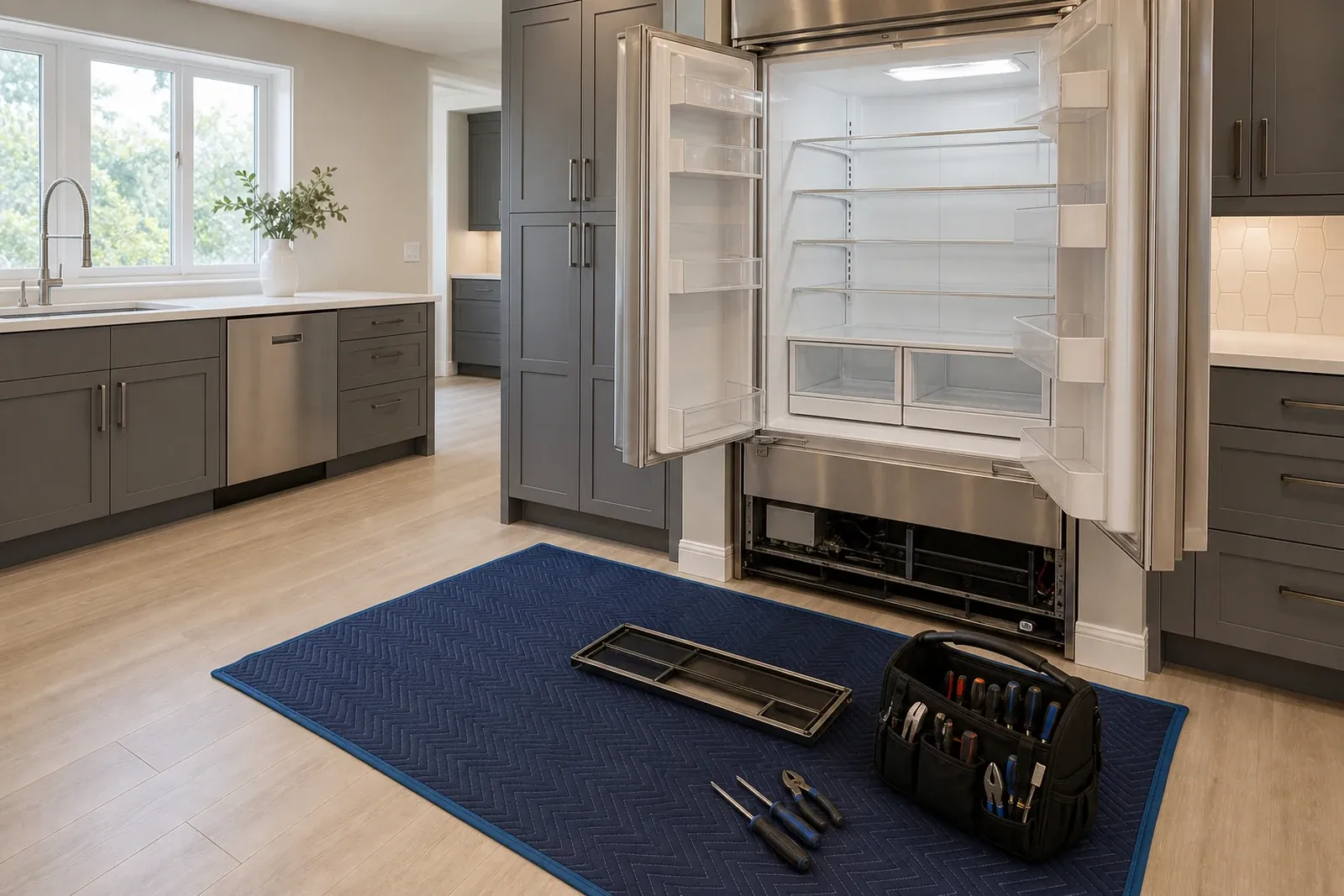
Direct answer
A dedicated wine cellar should hold near 55°F with 60–70% relative humidity, steady year-round. When a San Ramon room drifts warm in summer, suspect room load first — a failing door seal, a glass wall baking in Diablo Valley heat — then a dust-choked condenser, then the unit. Log the room a full day before judging. Call (925) 940-3576.
The standard
What a wine cellar should actually hold
The target for long-term storage is well established: roughly 55°F with 60–70% relative humidity, and — this is the part people miss — held stable. Wine doesn't fear 55°F or 57°F nearly as much as it fears swinging between the two every afternoon. Repeated temperature cycling pushes corks in and out, breaks the seal over years, and ages a collection faster than a steady degree or two of warmth ever would. So when you judge a cellar, you judge two things: the average it holds, and how tightly it holds it.
A wine room is harder to keep in that band than a wine column, and the reason is volume. A sealed Sub-Zero column has a few cubic feet of insulated cabinet to control; a walk-in cellar might be a hundred times that, behind a real door, often with a glass wall, sometimes with recessed lights throwing heat down onto the racks. Every one of those is a path for heat and a place for humidity to escape. The cooling unit can be flawless and the room can still drift — which is exactly why a cellar diagnosis starts with the room, not the compressor.
| What you observe in the room | Likely cause | Where it points |
|---|---|---|
| Room sits ~55°F, 60-70% RH, steady all day | Healthy cellar — cooling matches the load | No fault — log it and leave it alone |
| Holds overnight, climbs every hot afternoon | Room heat load exceeds the unit's capacity in summer | /san-ramon-sub-zero-summer-heat-not-cooling |
| Slow steady climb that never recovers | Heat-rejection fault — condenser choked or fan stalled | /sub-zero-sealed-system-compressor |
| Temp fine but air turns dry, corks shrinking | Humidity control / over-cooling / outside-air leak | /san-ramon-sub-zero-temperature-log-not-cooling |
| Condensation, frost, or mold at the cellar door | Door seal failing — warm humid air leaking in | /sub-zero-door-gasket-seal-repair |
| Unit runs constantly but room won't reach set point | Undersized or struggling sealed system vs the room | /sub-zero-not-cooling-diagnostic |
Evidence first
Log the room for a day before you blame the unit
The single most useful thing you can do before calling anyone is put an independent thermometer-hygrometer in the middle of the room — not on a shelf next to the cooling outlet, where it reads the supply air, and not by the door, where it reads the leak. Write down the temperature and humidity every couple of hours for a full 24 hours, and note the outdoor high. A cellar's behavior across one hot San Ramon day tells you almost everything.
- Steady near 55°F and 60–70% all day — the room and unit are matched; whatever felt warm was a door left open or a reading taken right after restocking. Leave it alone.
- Fine at night, climbs every afternoon as the house heats up — this is a load pattern, not a broken unit. The cooling can't out-run the heat coming through a glass wall or a sun-side cellar in Diablo Valley heat.
- Slow climb that never recovers, day or night — now it points at the equipment: a condenser choked with hillside dust, a stalled fan, or a sealed-system fault.
- Temperature holds but humidity falls and corks look dry — an over-cooling or air-leak problem, which is its own diagnosis entirely.
Bring that log to the visit. It turns "the cellar feels off" into a pattern that usually names the fault before we open the unit's grille, and it is the backbone of our temperature-log diagnostic. Without it, cellar drift is guesswork; with it, we often know whether to look at the room or the refrigeration before we arrive.
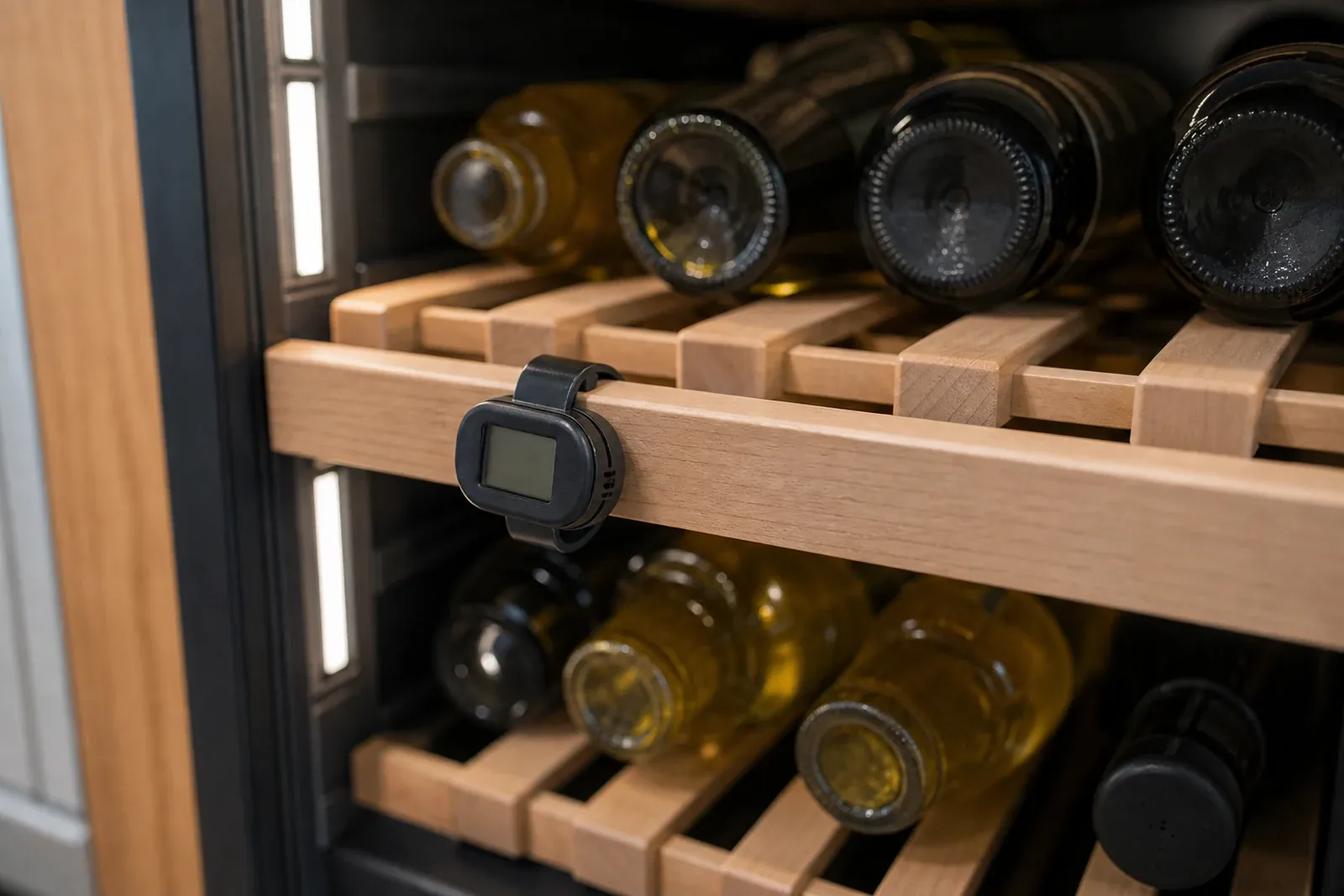
Read the room
Why a wine room drifts when the unit is fine
Most cellar calls we take in the San Ramon Valley turn out to be the room, not the refrigeration — and on a dedicated wine room, the cooling unit is only as good as the box it's cooling. A cellar is essentially a small insulated structure, and the four things that let heat or moisture win are predictable:
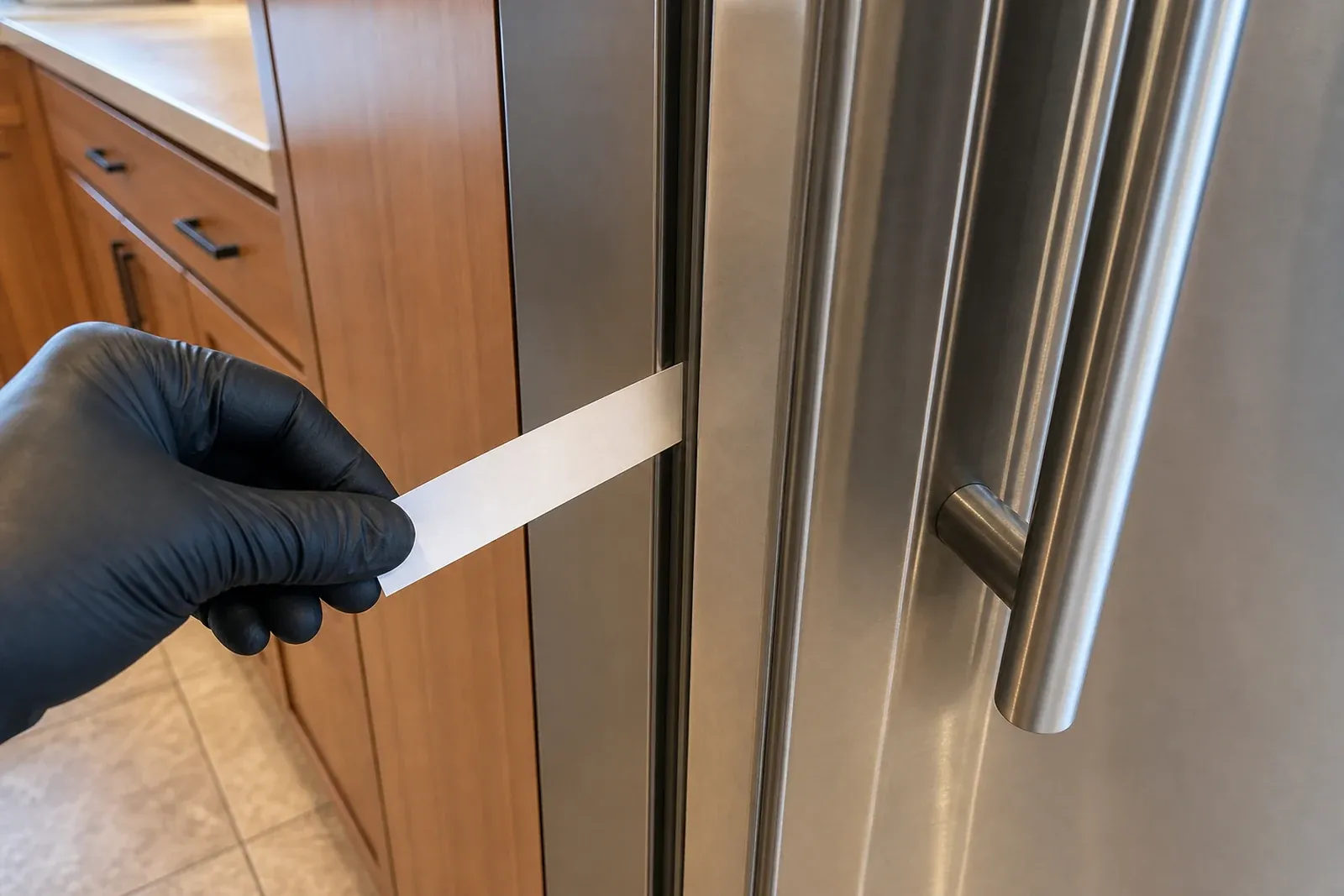
- The door seal. A cellar door takes the same dollar-bill test as a refrigerator gasket — close it on a bill and if it slides out with no drag, the seal has failed. A leaking cellar door bleeds cold and pulls warm, humid house air straight into the room, and you'll often see the evidence as condensation, frost, or mold right at the jamb. That's the same failure pattern we cover on the door gasket and seal page.
- The glass. Big glass-wall cellars are gorgeous and they are a thermal weak point — single or poorly-sealed glass dumps summer heat into the room every afternoon. If the room holds overnight and only fails when the sun's on that wall, the glass is your answer, not the compressor.
- The lighting. Recessed cans and display lights left on for a party throw real heat down onto the racks. A room sized for its cooling can lose the band simply because the lights ran all evening.
- The vapor barrier. Older cellar builds, and rooms cut into a basement or a converted closet in a San Ramon Village home, sometimes lack a proper vapor barrier, so humidity leaks and the unit fights a losing battle to hold both numbers.
None of those are a refrigeration repair. So the diagnosis is honest from the start: if your log shows a clean load pattern and the door fails the bill test, we tell you it's the room — and we don't sell you a compressor you don't need. Confirm the band the room should hold against our wine storage temperature guide first.
Summer load
Why San Ramon summers push a cellar to its limit
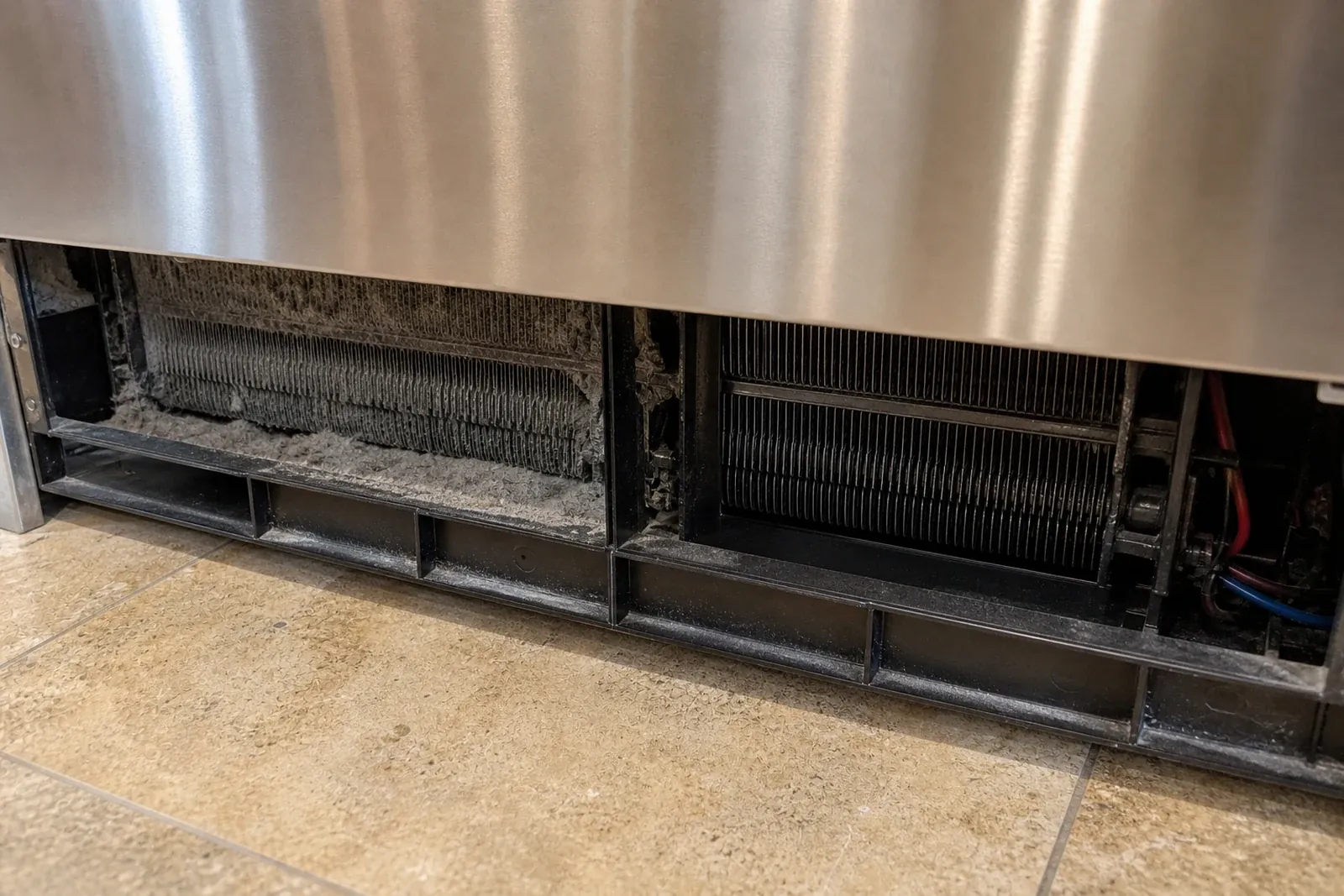
A wine room only holds its band if the cooling unit can reject heat outdoors, and San Ramon makes that the hard part of the job for months at a time. When Diablo Valley summers run 90–100°F and heat waves push toward 105°F, the unit's condenser has to dump far more heat just to hold 55°F inside — and the room itself is soaking up that same heat through every wall, window, and door. Many cellar cooling units vent into an adjacent space — a garage, a mechanical room, a butler's pantry — and if that space is baking in the afternoon, the unit is trying to throw heat into hot air and simply can't keep up. A cellar that holds beautifully in spring can start losing every July afternoon for exactly this reason.
On top of the heat, San Ramon throws dust and ash at the coil faster than any manual assumes. Offshore Diablo winds drive fine hillside dust off the Dougherty Valley, Gale Ranch, and Norris Canyon grades, and wildfire-season ash from the Diablo Range can coat a condenser intake in days. A choked coil can't reject heat, so the room drifts warm no matter how the thermostat is set. For cellar units in our hot, dusty pocket we clean the condenser every 3–6 months, not the annual default — the schedule lives in our maintenance calendar, and the seasonal ash problem in particular is covered on our wildfire-season condenser page. If the coil is clean and the room still climbs through a hot afternoon, that's when we look at the sealed system — and on a unit under twelve years old, that work may still fall under Sub-Zero's 12-year sealed-system warranty.
Estate dispatch
Cellar service across San Ramon's estate homes
Walk-in and walk-down wine rooms show up most in the larger estate kitchens of the San Ramon Valley — the newer hillside builds in Dougherty Valley, Windemere, and Gale Ranch, the golf-community homes around Canyon Lakes and The Bridges, the gated Norris Canyon Estates, and out toward Blackhawk and Diablo at the foot of Mount Diablo. These addresses come with realities a verify-first, flat-quote approach is built around. Gated communities like Canyon Lakes and Norris Canyon need gate or HOA access arranged up front, and the long, steep driveways on the Dougherty Valley and Norris Canyon grades mean we plan a longer appointment window so the visit isn't rushed.
The priority with a serious collection is conservative: stabilize the room, prove the fault with your log, and protect the wine rather than gamble on a guess. If the room is the problem — a failing cellar-door seal, a glass wall, a missing vapor barrier — we tell you plainly and point you to the right trade rather than replace refrigeration that isn't broken. If the cooling unit genuinely is involved, sealed-system work needs EPA Section 608 certification and gauges, never a phone quote; our EPA 608 page covers that. Panel-ready and built-in units across the newer master-planned tracts get a careful pull-out under our cabinet-safe service so custom millwork stays unmarked. Every diagnosis is flat-quoted and approved before work begins, and the $95–$150 service call is credited toward the repair. To get on the calendar, call (925) 940-3576 or book online — tell us the neighborhood and any gate code so we arrive ready.
Next step
Call with the Sub-Zero model number
Have the model-tag photo, current fresh-food and freezer temperatures, and the symptom timeline ready. That lets the San Ramon intake route the visit around the likely Sub-Zero part family instead of a generic appliance script.
FAQ
Questions San Ramon homeowners ask before scheduling
What temperature and humidity should a wine cellar be?
Aim for about 55°F with 60–70% relative humidity, held steady year-round. The exact degree matters far less than the stability — repeated swings work corks loose and age wine faster than a steady degree of warmth. Judge your cellar by its 24-hour average and how tightly it holds, not by a single reading taken right after you opened the door on a hot San Ramon afternoon. If it can't hold the band, call (925) 940-3576.
Why is my wine room not holding temperature?
On a walk-in cellar, the room is usually the culprit before the unit is. Log the room for a day: if it holds overnight but climbs every hot afternoon, that's a heat-load problem — a glass wall, a sun-side cellar in Diablo Valley heat, or display lights left running — not a broken compressor. A slow climb that never recovers points instead at a condenser choked with hillside dust or a sealed-system fault. Condensation or mold at the door means the seal is leaking.
Do you service Sub-Zero wine storage in San Ramon estates?
Yes. We service Sub-Zero wine units and cellar cooling across San Ramon's estate homes — Dougherty Valley, Windemere, Gale Ranch, Canyon Lakes, Norris Canyon Estates — with dispatch out to Blackhawk and Diablo. Gated communities need gate or HOA access arranged in advance, and the long hillside driveways mean we book a longer window. Call (925) 940-3576 with your neighborhood and any gate code so we arrive ready.
How do I keep a wine cellar stable in summer?
Through a San Ramon summer, the wins are mostly about heat load and the condenser. Keep the cellar door's seal tight (it takes the same dollar-bill test as a fridge gasket), shade or upgrade any glass wall, and don't leave display lights running. Make sure the space the cooling unit vents into isn't itself baking. And clean the condenser every 3–6 months — Diablo-wind dust and wildfire ash choke a coil in days here, which is the fastest way to lose the band.
Is a wine room different from a Sub-Zero wine column to service?
Yes — they're diagnosed differently. A wine column is a sealed cabinet, so a fault is almost always in the appliance. A walk-in wine room asks one unit to hold a whole space, so the room itself — door seal, glass, insulation, vapor barrier, lighting heat — is in play before the refrigeration is. That's why a cellar diagnosis starts by logging the room, and why we'll tell you when the fix isn't a refrigeration repair at all.
Why is my wine cellar's humidity too low?
Low humidity with a correct temperature usually means the room is over-cooling, leaking outside air, or lacks a proper vapor barrier — common in older or converted San Ramon Village cellars and basement builds. You'll often see it as shrinking, dried-out corks before the wine shows it. Log temperature and humidity together for a day; if the temperature holds fine but humidity keeps falling, it's an air-and-moisture problem rather than a cooling fault, and we'll diagnose it that way.
Related