San Ramon · Cited quick answers
Straight Answers to the Sub-Zero Questions San Ramon Owners Actually Ask
Short, accurate answers to the Sub-Zero questions we hear most across the Tri-Valley — where the model tag hides, what a diagnostic costs, how often to clean the condenser in San Ramon's heat and dust, and when a 20-year-old built-in is worth repairing. Each answer stands on its own and links to the full walkthrough.
Direct answer
Each entry below is a single self-contained fact for San Ramon Sub-Zero owners: the model tag sits inside the door near the top hinge (or left of the upper drawer on Designer/700 units), a diagnostic runs $95–$150 credited toward the repair, and a clean condenser every 3–6 months prevents most warm-box calls. Questions? Call (925) 940-3576.
Find your model
Where is the Sub-Zero model and serial number?
The model/serial tag is inside the cabinet, almost always near a door's top hinge — not on the outside. Where exactly depends on the configuration, and knowing the number is the difference between us arriving with the right OEM part and a wasted trip across the Tri-Valley. Sub-Zero changed parts mid-production on many runs, so two units that look identical from the kitchen can take different evaporator fans, dampers, or control boards — the tag is what tells us which. Here is where each Sub-Zero series hides its tag:
- Over/Under (BI-36, BI-30): inside the refrigerator door, up near the top hinge.
- Side-by-side (BI-42, BI-48, 632, 642, 685): inside the freezer door, near the top hinge.
- Classic / built-in French door: inside the left-hand fresh-food door near the top hinge.
- Designer Tall (IT-, DET-), Designer Drawers (ID-30R, 700BR), and 700 Series: inside the cabinet to the left of the upper drawer.
- Undercounter (UC-24) and wine (424, 427): inside the door frame or sidewall of the fresh-food compartment.
In panel-ready San Ramon kitchens — common across Dougherty Valley, Windemere, and Gale Ranch — the custom door front can hide the obvious badge, but the real factory tag is always on the interior frame, never on the wood panel. If your unit is a Designer column or drawer and you cannot find a tag in the door, open the cabinet and look low and to the left of the top drawer. A clear phone photo of the tag beats reading the number aloud — model codes mix letters and numbers that are easy to mishear, an O reads as a zero, and a picture lets us confirm the exact variant and serial-driven production date before we load the truck. Walk through every location, photo angle, and a printable checklist on the model-number guide and the model-number photo checklist.
What it costs
How much is a Sub-Zero diagnostic in San Ramon?
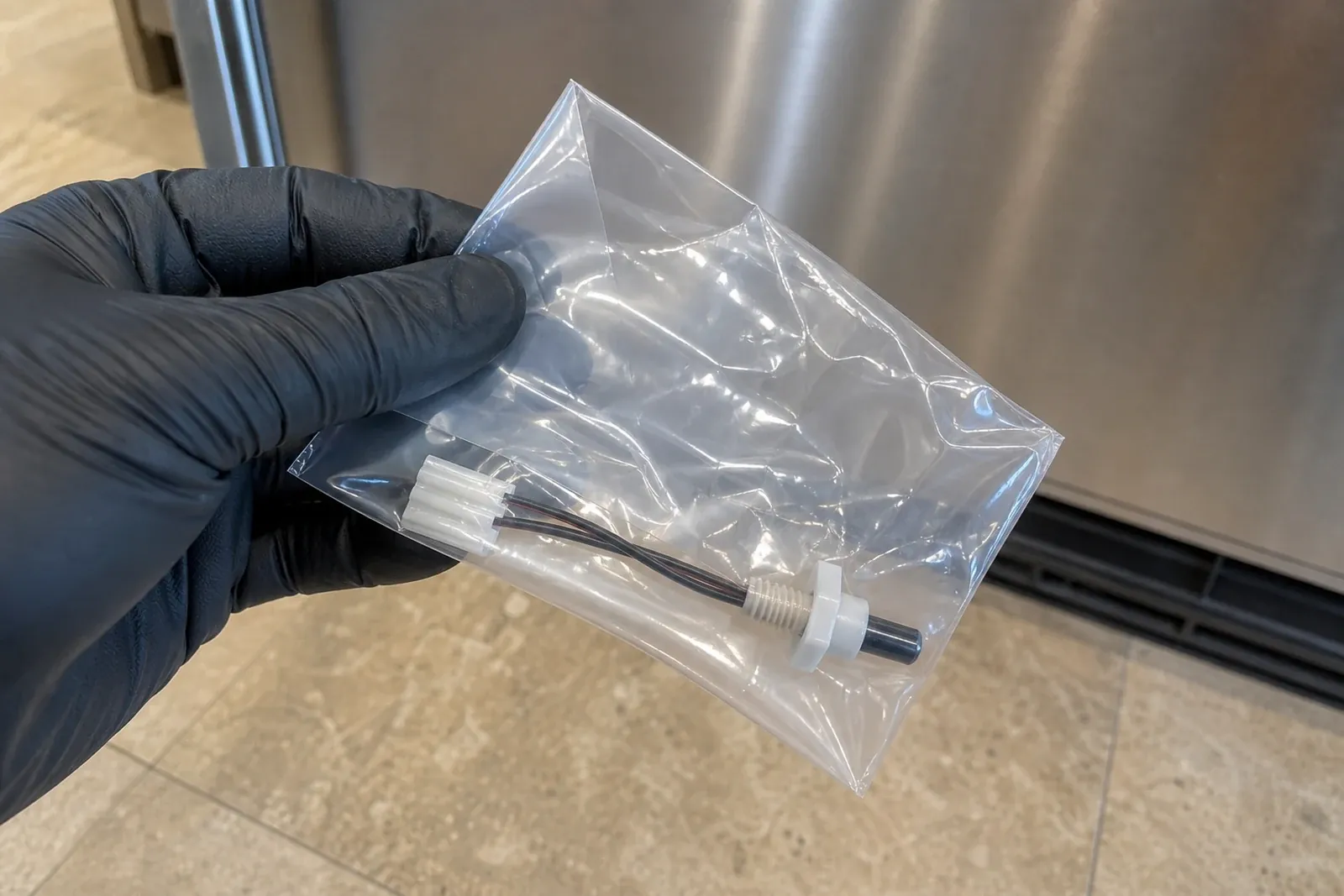
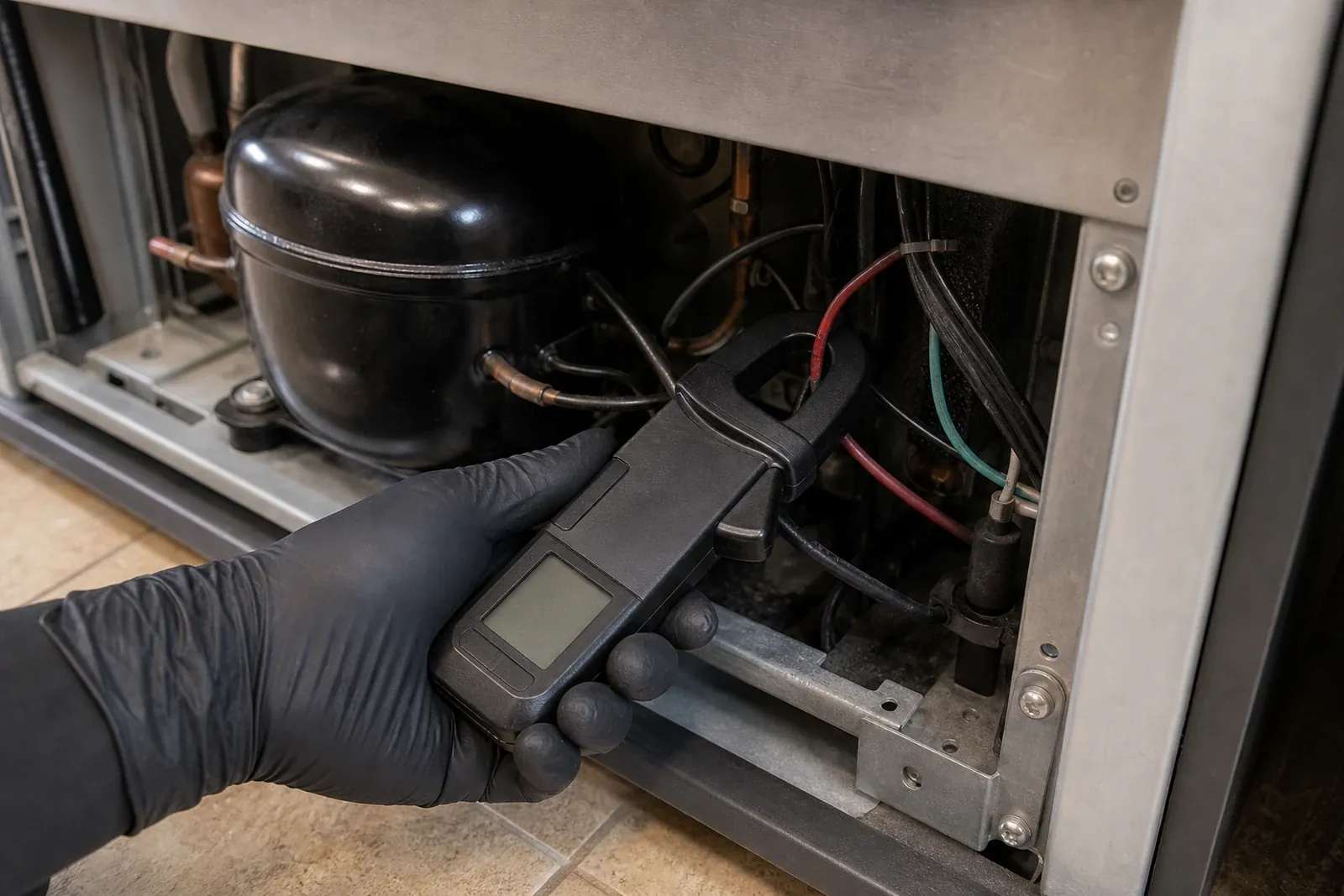
A Sub-Zero diagnostic in San Ramon runs $95–$150, and that fee is credited toward the repair if you approve the work. You always see a flat, written quote before anything is fixed — no surprise hourly meter, and no work starts until you say yes to the number. We never quote a sealed-system repair over the phone, because compressor and refrigerant faults need gauges and an amp-draw reading on site to confirm; phone guesses are how owners get talked into a compressor they did not need. The diagnostic buys you a real answer: which exact part failed, whether the fault is sealed-system or non-sealed, and whether your unit still falls inside the 12-year sealed-system warranty window. That last check alone can move a job from a four-figure bill to a covered repair, which is why we read the serial date before quoting anything on the compressor side. The wider cost picture for the Tri-Valley:
| Job | Typical range | Notes |
|---|---|---|
| Diagnostic / service call | $95–$150 | Credited toward the repair you approve |
| Most non-sealed repairs (fan motor, thermistor, damper, gasket, board) | $200–$650 | Flat quote approved before work |
| Sealed-system / compressor | $900–$1,800 | Check the 12-year sealed-system warranty first |
Maintenance
How often should a Sub-Zero condenser be cleaned here?
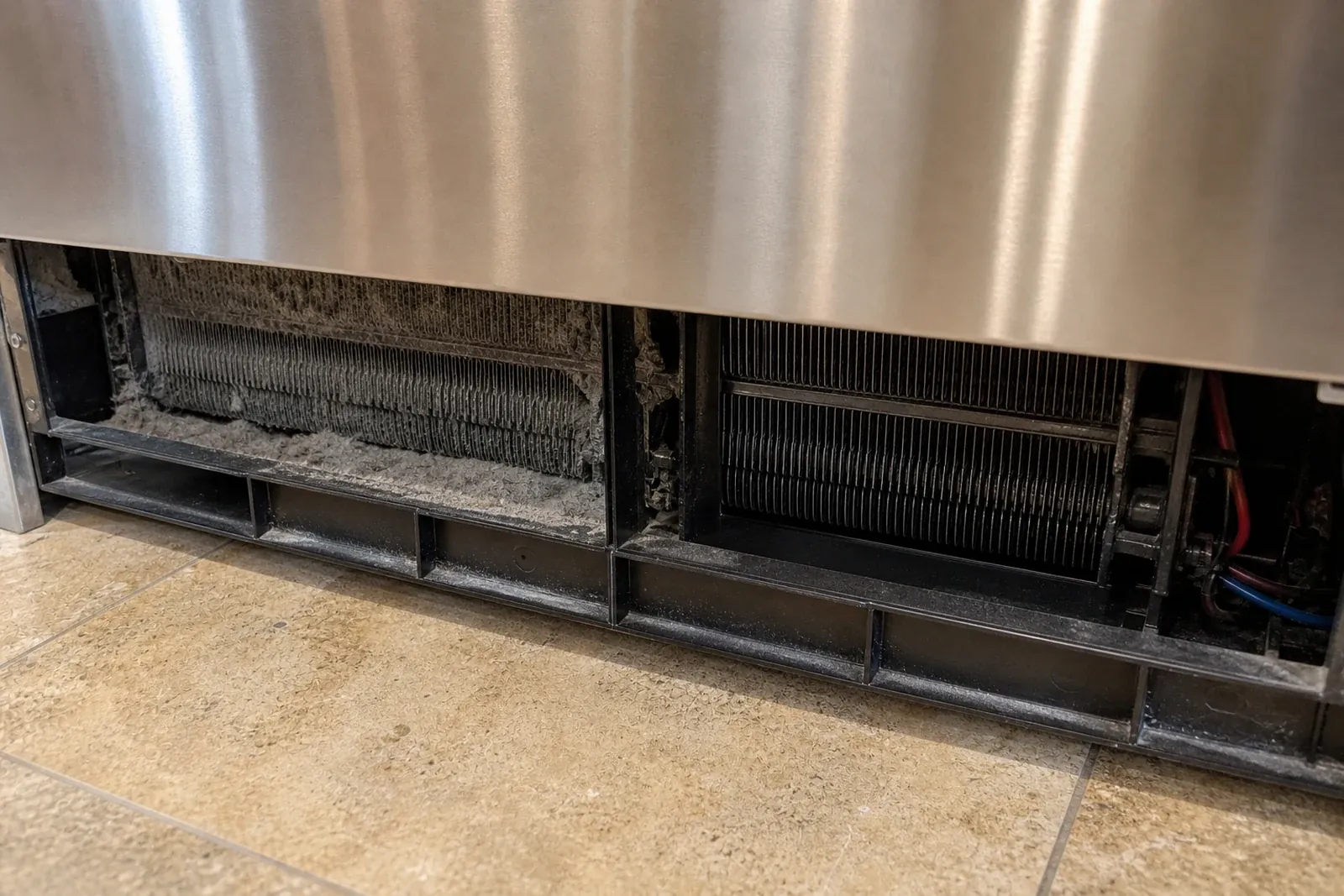
Sub-Zero's baseline is every 6–12 months, but in San Ramon you should clean the condenser every 3–6 months. The Tri-Valley earns the shorter interval: inland summers push kitchens to 90–105°F so the compressor works harder, offshore Diablo winds drive hillside dust off the open slopes of Dougherty Valley, Gale Ranch, and Norris Canyon, and a single wildfire-season smoke event from the Diablo Range can mat a grille with fine ash in days. Outdoor and island units on Blackhawk and Canyon Lakes patios bake in direct afternoon sun on top of all of that, so they sit at the very short end of the range and sometimes need attention monthly through a hot, smoky stretch.
A choked coil cannot shed heat, so head pressure climbs, the box drifts warm, and the compressor runs long — symptoms that look like an expensive failure but are really just a dirty coil starving for airflow. Catching it early is the difference between a vacuum-and-go and a service call. Cleaning is owner-friendly and takes about ten minutes: cut power at the breaker, pop the lower grille, vacuum the grille louvers and the fan shroud with a brush attachment, clear any pet hair or lint felted into the fins, restore power, and recheck both compartment temperatures in 24 hours. Never bend the fins or poke metal between them. Exposed hillside and outdoor units load fastest, so set a calendar reminder rather than waiting for a warm-box surprise. See the full schedule on the maintenance calendar and the dust-and-heat deep dive for Dougherty Valley.
Keep or replace
How long do Sub-Zero refrigerators last, and is repair worth it?
A well-maintained Sub-Zero lasts 25–30 years, so repair is usually the smart call. The rule of thumb: repair unless multiple major components have failed at once, or the quoted repair exceeds roughly 50% of what a new comparable built-in would cost installed. A single fan motor, thermistor, damper, gasket, or control board on a 20-year-old unit is almost never a reason to scrap it — those are wear parts on a machine built to outlast them. Two San Ramon realities tilt the math even further toward repair: the cabinetry and the warranty.
- Custom millwork: in estate kitchens around Canyon Lakes, Norris Canyon, Blackhawk, and Diablo, the built-in is framed into bespoke cabinetry, often with a matching panel front and a fixed surround sized to that exact model. Replacing the unit frequently means re-cutting or rebuilding the surround and re-fronting the panel — work that can dwarf the repair cost and pull in a cabinetmaker on top of the appliance bill.
- The 12-year sealed-system warranty: Sub-Zero covers the compressor, condenser, evaporator, drier, and tubing for 12 years from the date of manufacture. If a sealed-system part fails inside that window, the most expensive component in the box may be covered — always have the serial date checked before paying for compressor or refrigerant work.
Replacement makes sense mainly when several majors stack up at once or the cabinet is being gutted anyway in a remodel. Otherwise, a sound 1990s or 2000s San Ramon built-in is usually worth keeping. Weigh the specifics on the repair-vs-replace page, and read how we confirm a true sealed-system fault on the sealed-system & compressor page.
Two quick tests
The gasket dollar-bill test and the 'Vacuum Condenser' message
Two checks come up on nearly every San Ramon call, and both give you a clean answer in seconds.
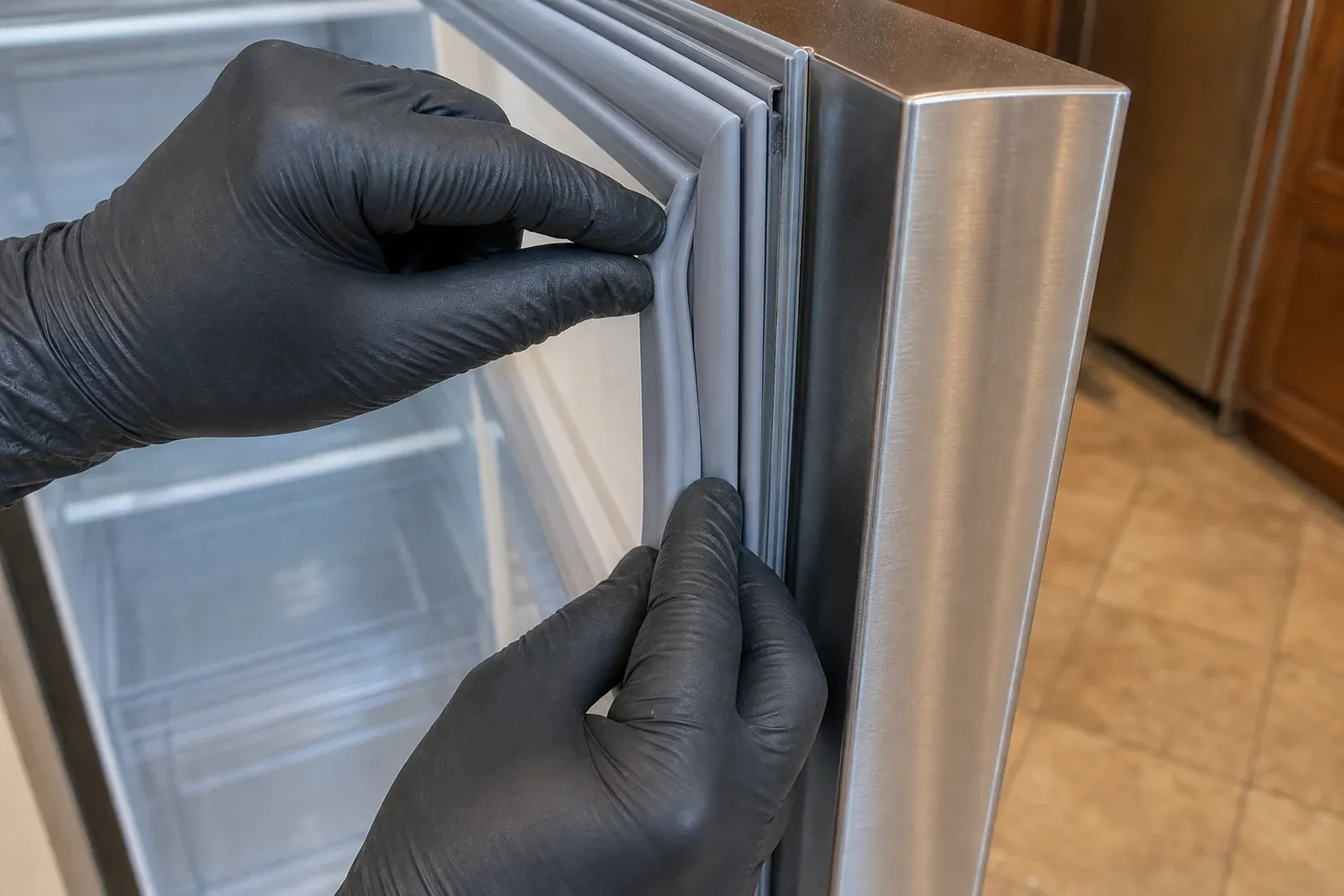
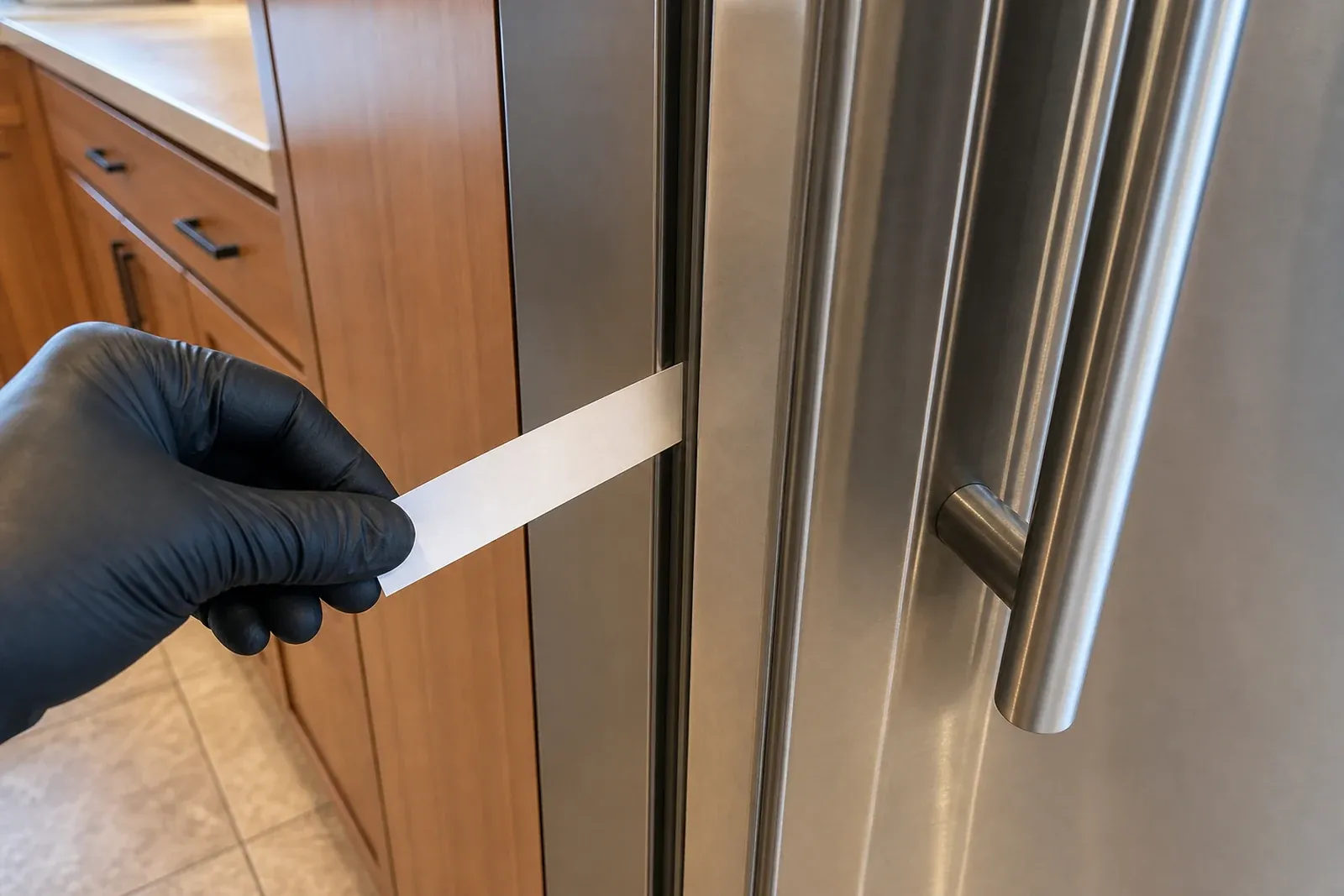
The dollar-bill gasket test. Close the door on a dollar bill and pull. If it slides out with no drag, the gasket has lost its seal; if you feel resistance, it is holding. Condensation, frost, or mold along the door edge confirms a failed seal — common when a tired gasket meets a humid kitchen or smoky outside air. Sub-Zero recommends a technician fit replacement gaskets so the new seal seats evenly; details on the door-gasket repair page.
The flashing 'Vacuum Condenser' or 'Service' message. On 1998–2002 500/600-series boards this means the compressor ran longer than expected — most often because the condenser is dirty. Clean the coil first, then hold the door-ajar (bell) key about 15 seconds to clear it only if temperatures are already back near normal. Do not clear it while the box is still warming — that reading is a clue we use to diagnose. Newer boards show EC-series codes instead. More on the error-codes and not-cooling diagnostic pages.
Quick-cite table
One-line answers you can scan
The short version of everything above, in one place — each row is a single fact with the page that goes deeper.
| Question | One-line answer | Deep page |
|---|---|---|
| Where is the model number? | Inside the door near the top hinge; left of the upper drawer on Designer/700 units | /sub-zero-model-number-guide |
| What does a diagnostic cost? | $95–$150, credited toward the repair | /sub-zero-repair-diagnostic-fees-pricing |
| How often to clean the condenser? | Every 3–6 months in San Ramon's heat and dust | /sub-zero-maintenance-calendar |
| How long does a Sub-Zero last? | 25–30 years when maintained | /sub-zero-repair-vs-replace |
| How do I test the gasket? | Dollar-bill slides out with no drag = failed seal | /sub-zero-door-gasket-seal-repair |
| What does 'Vacuum Condenser' mean? | Compressor ran long; clean coil before clearing the code | /sub-zero-error-codes-alarms |
Next step
Call with the Sub-Zero model number
Have the model-tag photo, current fresh-food and freezer temperatures, and the symptom timeline ready. That lets the San Ramon intake route the visit around the likely Sub-Zero part family instead of a generic appliance script.
FAQ
Questions San Ramon homeowners ask before scheduling
How do I locate my Sub-Zero serial and model tag?
It is inside the cabinet near a door's top hinge — the refrigerator door on Over/Under units, the freezer door on side-by-sides, and the left fresh-food door on Classic French-door models. Designer Tall, Designer Drawers, and 700-series units put the tag inside the cabinet left of the upper drawer. Snap a clear photo and text or read it to us at (925) 940-3576 so the right OEM part comes on the first visit.
How much is a Sub-Zero diagnostic in San Ramon?
A diagnostic in San Ramon runs $95–$150, and that fee is credited toward the repair when you approve the work. You get a flat written quote before anything is fixed. Most non-sealed repairs land between $200 and $650; sealed-system or compressor work runs $900–$1,800 and is never quoted over the phone — it needs gauges and an amp-draw reading on site.
How often should I clean my Sub-Zero condenser?
Every 3–6 months in San Ramon, tighter than Sub-Zero's general 6–12-month guidance. The Tri-Valley's inland heat, Diablo-wind hillside dust, and wildfire-season ash from the Diablo Range load the condenser grille fast — homes in Dougherty Valley, Gale Ranch, and Norris Canyon should plan on the short end, and outdoor or undercounter units even sooner.
What is the typical lifespan of a Sub-Zero?
A well-maintained Sub-Zero lasts 25 to 30 years, which is why repair usually beats replacement. Repair unless multiple major parts fail together or the quote exceeds about half the installed cost of a new built-in. In San Ramon estate kitchens the custom cabinetry built around the unit is a strong reason to repair rather than tear out and replace.
How do I know if my Sub-Zero door gasket has failed?
Use the dollar-bill test: close the door on a bill and pull — if it slides out with no resistance, the seal is gone. Condensation, frost, or mold along the door edge confirms it, and a tired gasket makes the compressor work harder, especially in San Ramon's hot, sometimes smoky air. Sub-Zero recommends a technician fit the replacement so the new gasket seats evenly.
What does a flashing 'Vacuum Condenser' message mean?
On 1998–2002 500/600-series Sub-Zeros it means the compressor ran longer than expected — most often a dirty condenser, which is common after a dusty or smoky San Ramon week. Clean the coil first, then hold the door-ajar (bell) key about 15 seconds to clear it only if temperatures are already near normal. If the box is still warming, leave the code alone and book a diagnostic at (925) 940-3576.
Related