San Ramon · Tri-Valley wine storage
Sub-Zero Wine Storage Temperature Across the Tri-Valley
Across the Tri-Valley, the difference between a cellar that ages gracefully and one that quietly cooks is a few degrees of stability. The target for long-term storage is right around 55°F — and most "my wine fridge is broken" calls turn out to be normal cycling, a choked condenser, or summer heat, not a dead compressor.
Direct answer
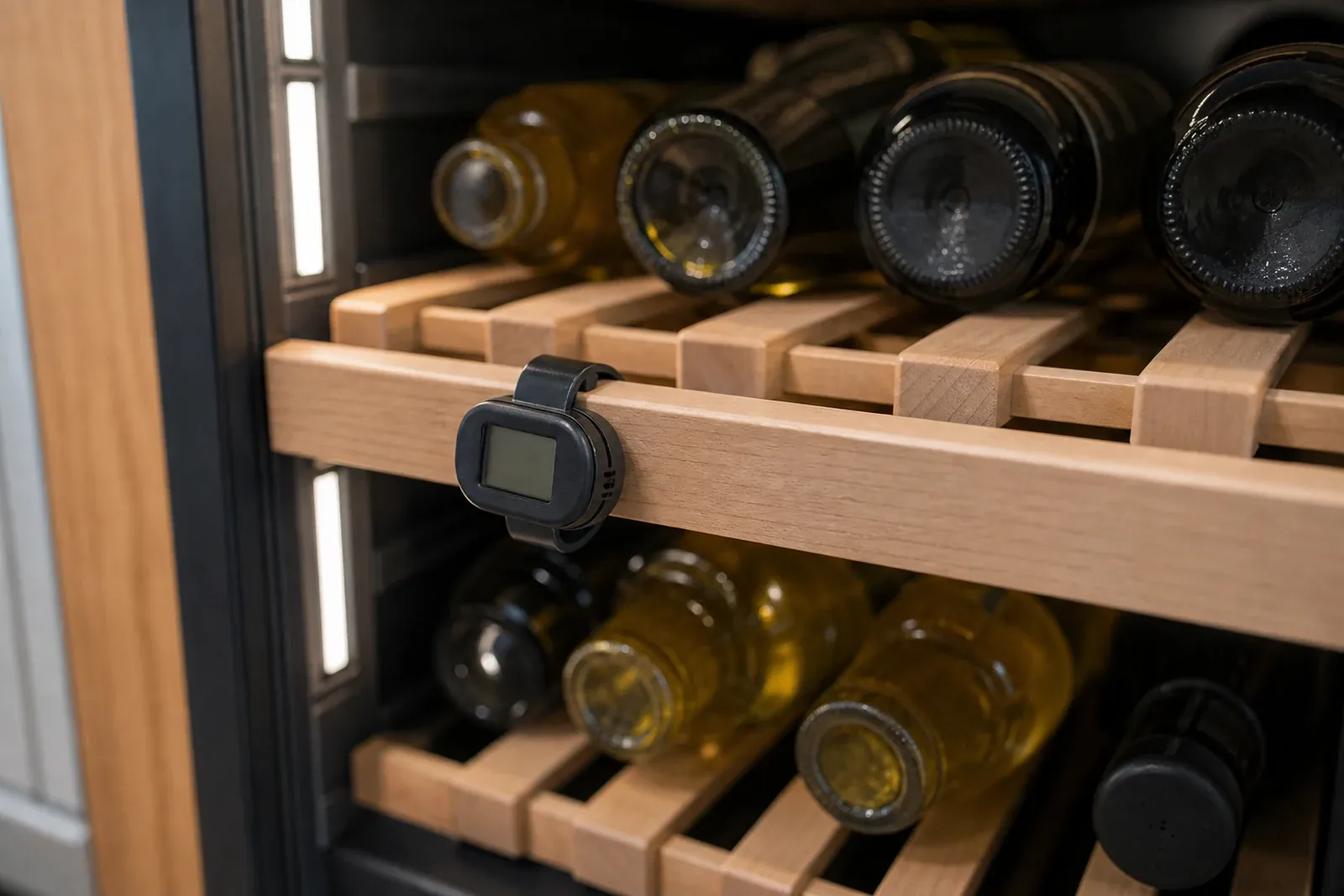
Long-term wine storage on a Sub-Zero should sit near 55°F, holding within roughly plus or minus 2°F over a day. We service Sub-Zero wine storage across the Tri-Valley — San Ramon, Danville, Alamo, Blackhawk, Diablo, Dublin and Pleasanton. Log a day of readings before calling it drift, then narrow it to one zone. Call (925) 940-3576.
The standard
What temperature should wine actually be stored at?
For long-term storage and aging, the widely accepted target is about 55°F — the classic underground cellar temperature. It is cool enough to slow the chemistry of aging without the cold-induced problems that come from storing wine in a kitchen refrigerator at 38°F, and it is the set point most Sub-Zero wine units are built around. Serving temperatures differ — a crisp white is poured colder, a bold red warmer — which is exactly why dual-zone units exist: one zone near 55°F for storage, a second tuned warmer or cooler for bottles you plan to open this week.
Just as important as the number is stability. Wine is far more forgiven by a steady 57°F than by a cellar that swings between 50°F and 62°F every day. Temperature cycling pumps the cork, accelerates oxidation, and is the real enemy of a collection. A healthy Sub-Zero holds each zone within roughly plus or minus 2°F of its set point over a normal day, and the cabinet is designed to swing inside that band as the compressor cycles and the door opens. So the first question is never "what's the perfect number" — it's "is my unit holding its band?"
| Temperature target | What it's for | What it means on a Sub-Zero |
|---|---|---|
| ~55°F (about 12-14°C) | Long-term storage / aging — reds and whites together | The benchmark a single-zone Sub-Zero is built to hold |
| ~50-55°F | Storing whites and sparkling for the near term | Cooler zone of a dual-zone unit |
| ~60-65°F | Short-term holding of reds near serving range | Warmer zone of a dual-zone unit |
| Swing of ±2°F over a day | Normal compressor cycling and door openings | No fault — the cabinet doing its job |
| Swing wider than ~5°F, or steady climb | Heat-rejection or sensor fault | Diagnose — see the drift section below |
Single vs dual
Single-zone vs dual-zone: which problem are you diagnosing?
Before you can diagnose drift, you need to know which kind of unit you own, because it changes everything about what a wrong reading means. A single-zone Sub-Zero wine unit — like a classic 424 or 427 — holds the whole cabinet at one set point near 55°F. When it drifts, the entire cabinet drifts together, so the suspects are the shared parts: the condenser, the condenser fan, the single evaporator and its fan, or the sealed system.
A dual-zone unit splits the cabinet into two independently controlled compartments that share one compressor and condenser but each get their own damper, temperature sensor, and airflow control. That split is the most powerful diagnostic clue you have:
- Both zones drift warm together — the problem is upstream of the split: a choked condenser, a stalled condenser fan, or the sealed system. The two zones can't both fail independently at once.
- Only one zone reads wrong — the sealed system is almost certainly fine. Suspect that zone's damper not opening fully, its sensor (thermistor) drifting, or its airflow. Thermistors commonly drift after roughly 8 years, which is why older units develop a one-zone problem long before anything mechanical wears out.
This is why our first questions are always "single or dual zone?" and "is it one zone or both?" Get those two answers and the fault usually narrows itself before a technician opens the grille. For built-in columns specifically, the deeper walk-through lives on our estate wine column page and our wine storage temperature page.
Evidence first
Diagnose the drift: log a day before you call it broken
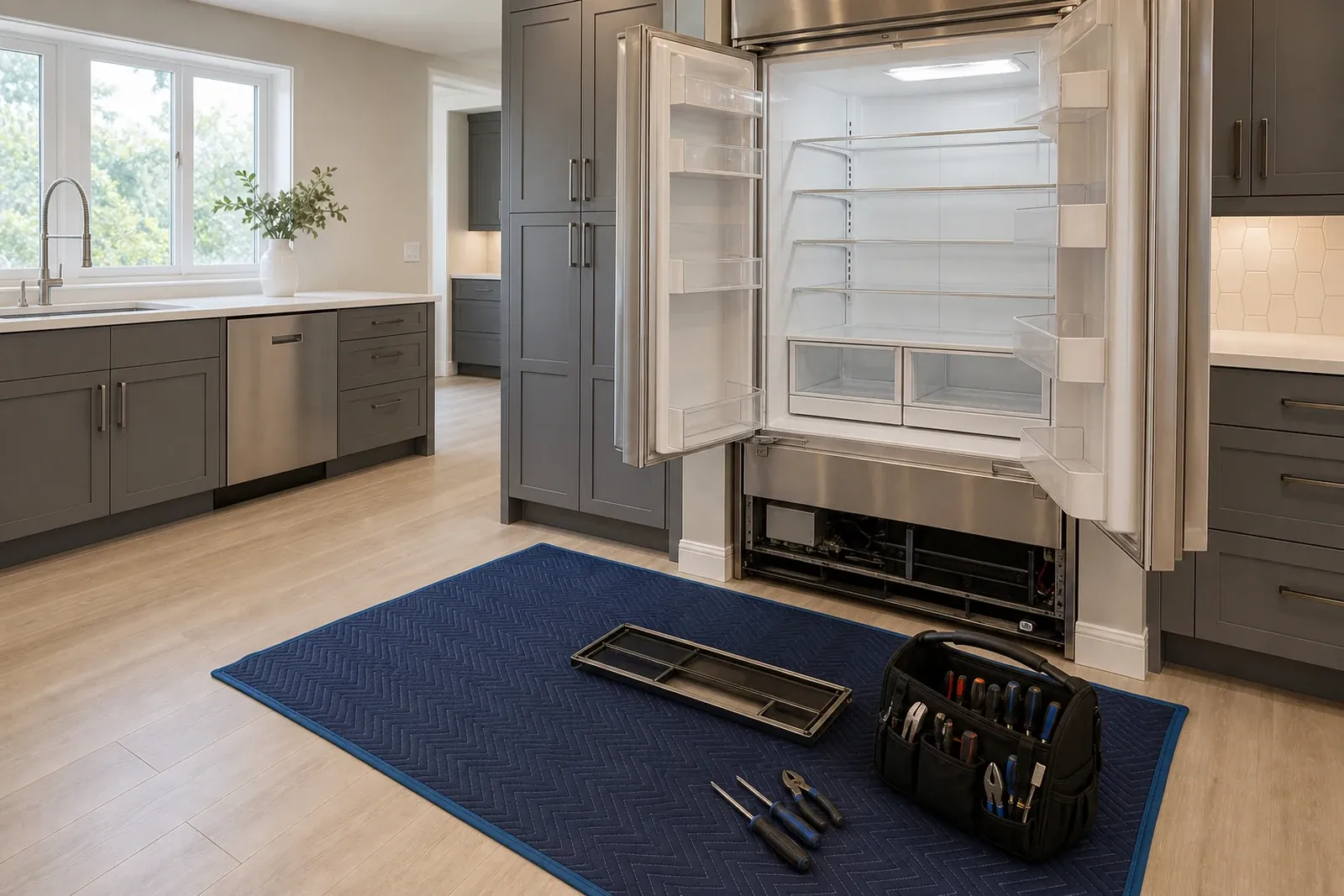
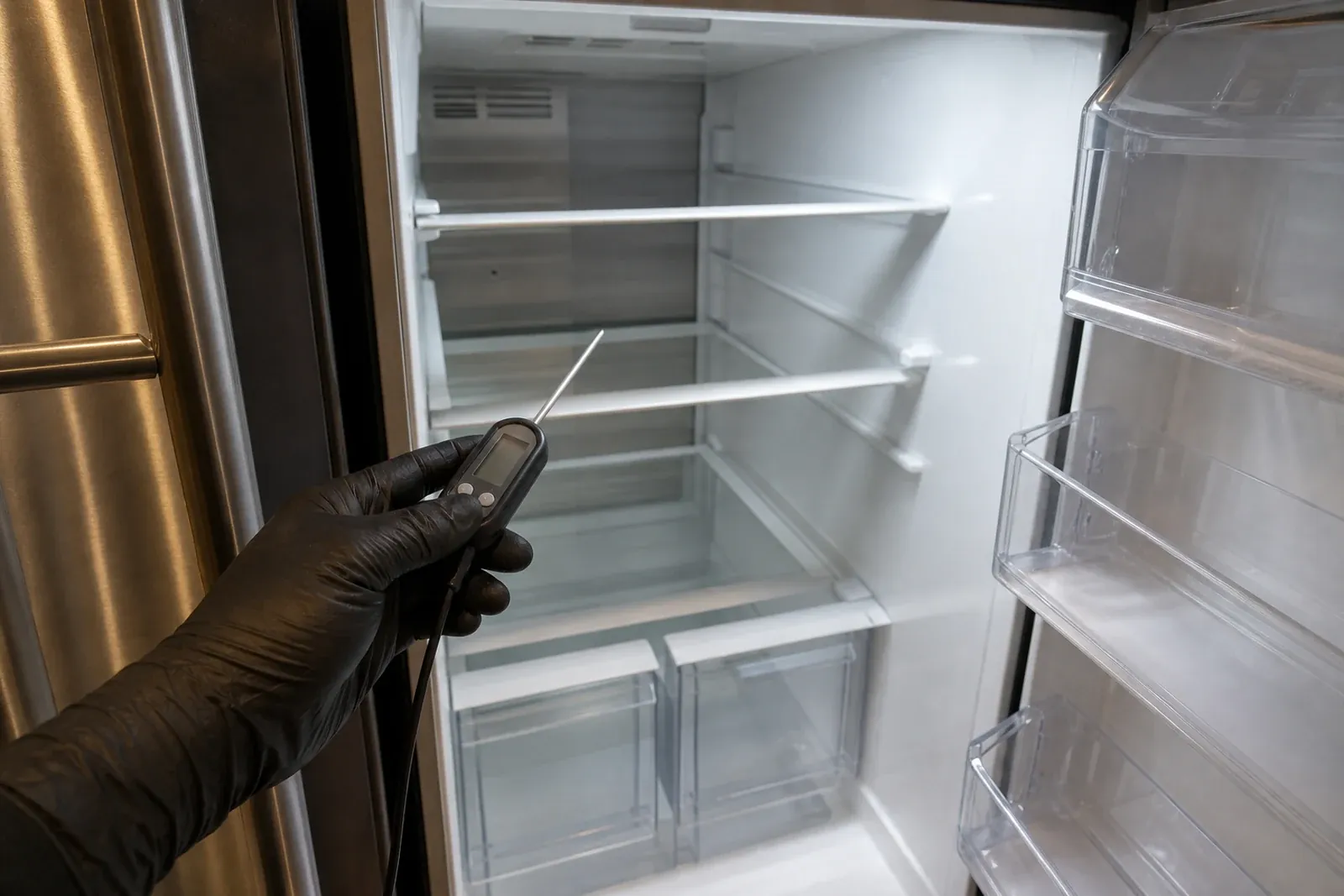
The single most useful thing you can do — and it costs nothing — is to log readings for 24 hours before deciding the unit is faulty. Most panic calls happen after one glance at a display right after someone pulled three bottles for a Danville dinner party, which is exactly when a perfectly healthy cabinet reads a couple of degrees warm. Set an independent thermometer on a middle shelf (one per zone on a dual unit), then write down both the display and the thermometer reading every few hours for a full day, keeping the door shut as much as you can.
- Display and thermometer stay within ~2°F of set point — leave it alone; you've proven it's cycling normally, for free.
- Display says 55°F but the shelf thermometer reads 61°F — the cabinet is reading itself wrong. That points at a thermistor or control board, not the cooling system.
- A slow, steady climb that never recovers — a heat-rejection fault: choked condenser, stalled condenser fan, or a unit baking near an oven or in afternoon Diablo sun.
- Only one zone climbs — keep the log per zone; that single pattern is the clearest clue you can hand us.
Bring the log to the visit. It turns "it feels warm" into a pattern and is the backbone of our temperature-log diagnostic. One quick first check before anything else: after a power outage some units land in Showroom Mode, which disables cooling — if both zones went warm right after an outage across the Tri-Valley grid, check that before assuming hardware. If the whole cabinet is genuinely warm, our not-cooling diagnostic covers the next steps.
Summer load
Why Tri-Valley wine units drift in summer
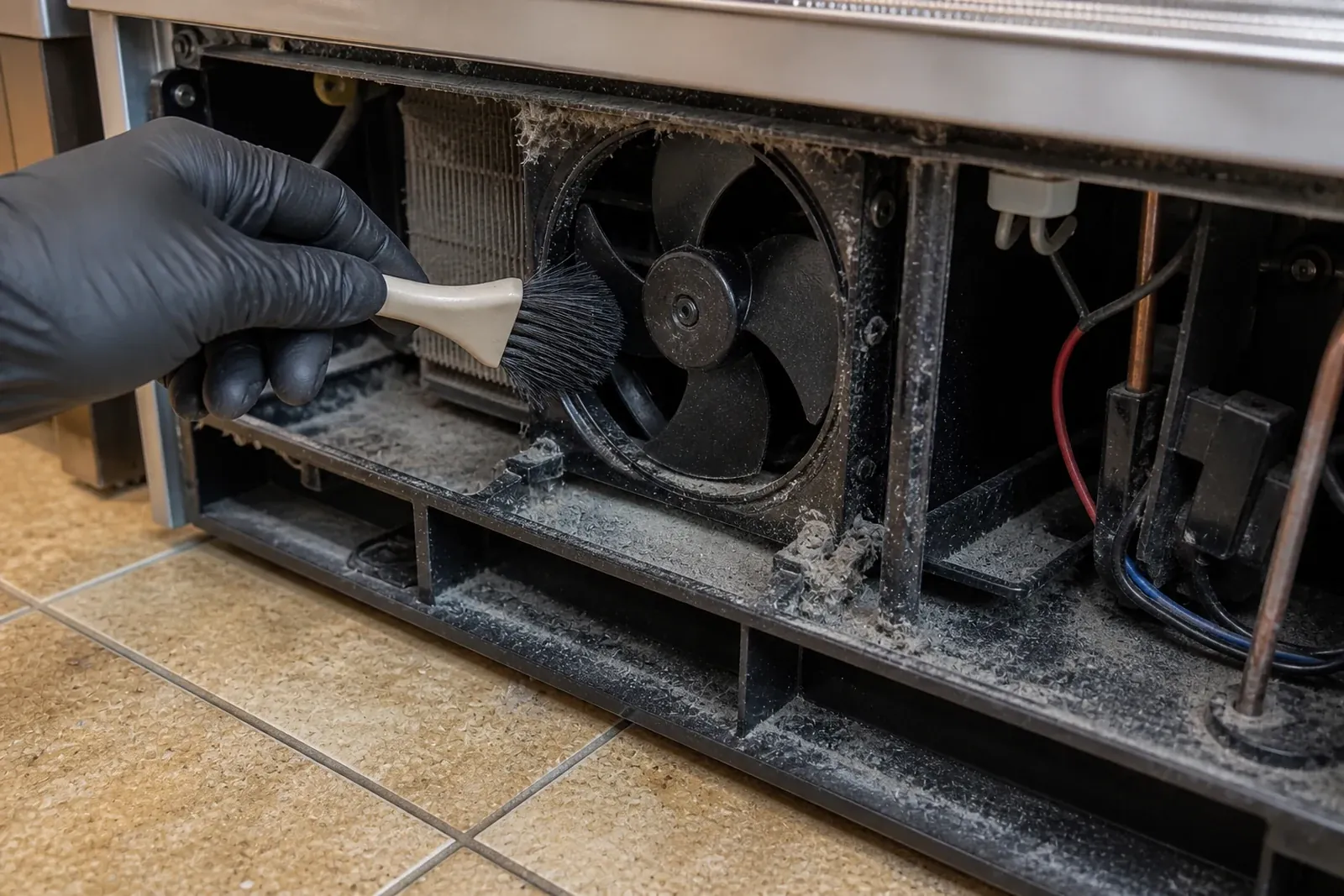
A wine unit only holds 55°F if it can shed the heat it pulls out, and Tri-Valley summers make that job harder than the manufacturer's manual assumes. When inland Diablo Valley heat runs 90-100°F and heat waves push toward 105°F, the condenser has to reject far more heat just to hold the same set point. If the coil can't keep up, the cabinet drifts warm no matter how perfectly the zones are set — and that single mechanism explains the great majority of "my wine fridge drifts in summer" calls across Danville, Alamo, Blackhawk and Dublin.
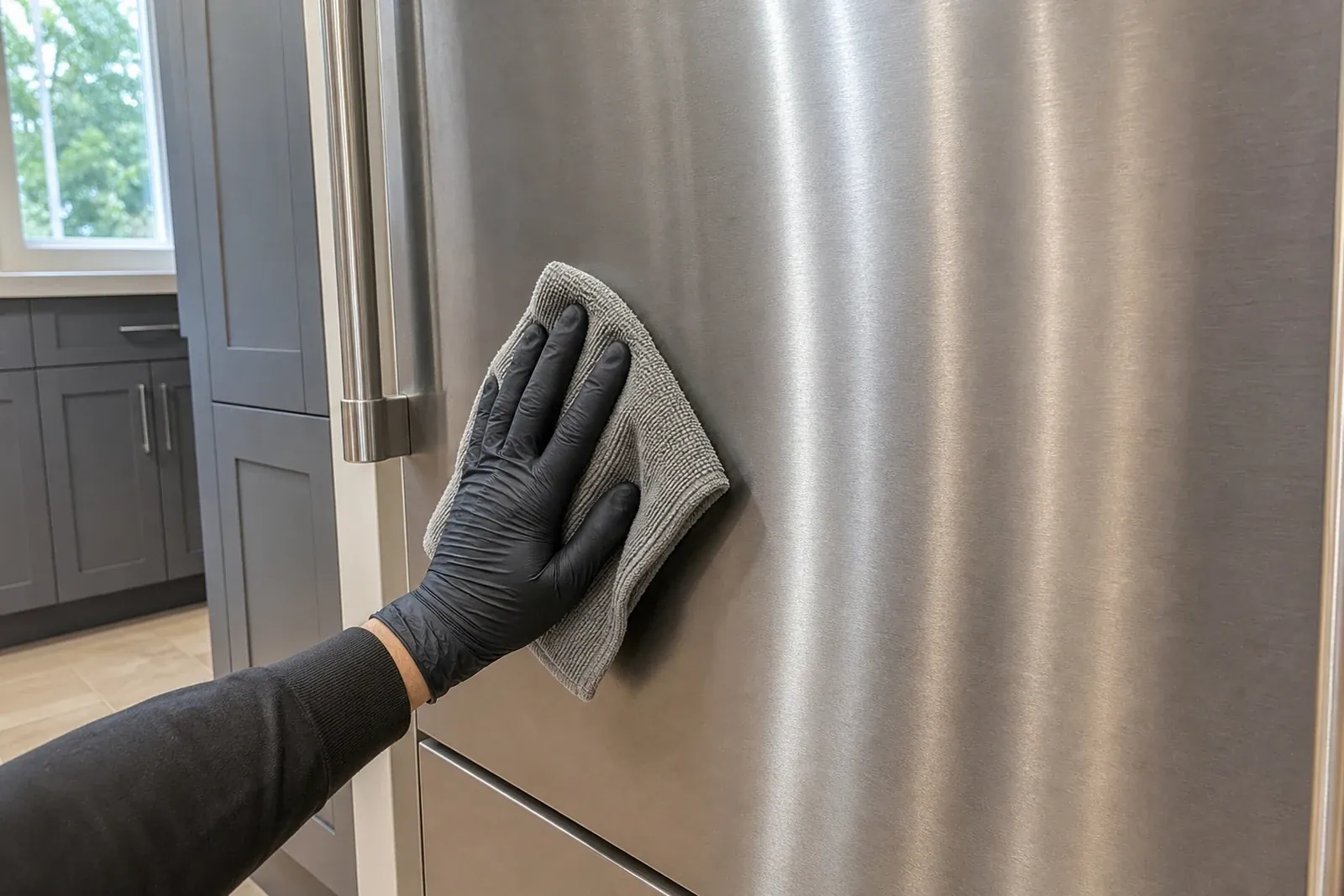
Two local realities make it worse. First, offshore Diablo winds drive fine hillside dust off the grades around Blackhawk, Diablo and the Dougherty Valley hills, and wildfire-season ash from the Diablo Range can coat a condenser intake in days rather than the months the schedule assumes. A choked coil is the most common cause of summer drift, full stop. Second, wine units are often built into a cabinetry wall beside a range, in a butler's pantry, or — in the worst case — as an outdoor or island unit baking on a patio in the afternoon sun. For Tri-Valley units we clean condensers every 3-6 months, not the annual default; the schedule lives in our maintenance calendar. If both zones climb together and the coil is already clean, the next suspects are the condenser fan and then the sealed system — which on a unit under twelve years old may still be covered by Sub-Zero's 12-year sealed-system warranty, so it's worth checking before paying.
Why it matters
Why Tri-Valley collectors invest in stability — and how we dispatch
Tri-Valley collections are rarely casual. Estate kitchens in Blackhawk and Diablo, the gated streets around Alamo, and the newer hillside builds of the San Ramon Valley hold cellars that took decades and real money to assemble — bottles that simply cannot be re-bought. That is the whole reason these homeowners invest in dual-zone columns and dedicated wine units instead of a converted beverage fridge: a Sub-Zero exists to hold that 55°F band steadily, year after year, through 105°F August afternoons and a power-flickering wildfire season. A unit that creeps from 55°F to 61°F over a week will quietly age a collection no insurance check can replace, which is exactly why catching drift early is worth more than the repair itself.
We service Sub-Zero wine storage across the wider Tri-Valley — San Ramon, Danville, Alamo, Blackhawk, Diablo, Dublin and Pleasanton — and our approach is built for it. Gated communities like Blackhawk and the Canyon Lakes area need gate or HOA access arranged up front, and the long hillside driveways around Diablo and Norris Canyon mean we book a longer window so the visit isn't rushed. Panel-ready units get a careful pull-out under our cabinet-safe service so custom millwork stays unmarked. Every diagnosis is flat-quoted and approved before work begins; the $95-$150 service call is credited toward the repair; and sealed-system work is done with EPA Section 608-certified gauges, never a phone quote. To get on the calendar, call (925) 940-3576 or book online — note the town and any gate so we arrive ready. See the full list on our service areas page.
Next step
Call with the Sub-Zero model number
Have the model-tag photo, current fresh-food and freezer temperatures, and the symptom timeline ready. That lets the San Ramon intake route the visit around the likely Sub-Zero part family instead of a generic appliance script.
FAQ
Questions San Ramon homeowners ask before scheduling
Who services Sub-Zero wine storage in the Tri-Valley?
San Ramon Sub-Zero Repair services Sub-Zero wine units and dual-zone wine columns across the Tri-Valley — San Ramon, Danville, Alamo, Blackhawk, Diablo, Dublin and Pleasanton. We're independent and focused on Sub-Zero refrigeration only, so the diagnosis is verify-first and flat-quoted, with the $95-$150 service call credited toward the repair. Gated Blackhawk and Diablo addresses need gate access noted up front. Call (925) 940-3576.
What temperature should wine be stored at?
For long-term storage and aging, the target is right around 55°F — the classic cellar temperature, cool enough to slow aging without the problems of storing wine in a 38°F kitchen fridge. Stability matters as much as the number: a steady 57°F beats a cabinet that swings between 50°F and 62°F daily. A healthy Sub-Zero holds within roughly plus or minus 2°F of its set point over a day. Dual-zone units add a warmer zone for bottles you'll open soon.
Do you service wine fridges in Danville and Blackhawk?
Yes. Danville and Blackhawk are core Tri-Valley dispatch areas for us, along with Alamo and Diablo at the foot of Mount Diablo. Gated estate communities like Blackhawk need a gate code or HOA access arranged in advance, and the long hillside driveways around Diablo mean we book a longer appointment window. Call (925) 940-3576 with the community and gate details so we arrive ready to work, not waiting at the gate.
Why does my wine fridge drift in summer?
Almost always heat rejection. When inland Tri-Valley summers run 90-100°F and push toward 105°F, the condenser must shed far more heat to hold 55°F — and if the coil is choked by Diablo-wind dust or wildfire-season ash, it can't keep up, so the cabinet drifts warm. The fix is usually a condenser cleaning, which we do every 3-6 months locally rather than annually. If both zones climb with a clean coil, the next suspects are the condenser fan and sealed system.
What's the difference between a single-zone and dual-zone wine unit when it drifts?
It changes the whole diagnosis. A single-zone unit holds the entire cabinet at one set point, so when it drifts it drifts as a whole — the suspects are the shared condenser, fan, evaporator, or sealed system. A dual-zone unit shares one compressor but gives each zone its own damper and sensor, so if only one zone reads wrong, the sealed system is almost certainly fine — suspect that zone's damper or thermistor, often a $200-$650 repair rather than a sealed-system job.
How much does it cost to fix a Sub-Zero wine unit that won't hold temperature?
It depends on what a 24-hour log and on-site diagnosis reveal. A condenser cleaning or a one-zone fault — damper, sensor, or fan — is usually a non-sealed repair in the $200-$650 range. A sealed-system or compressor repair runs $900-$1,800 and needs EPA-608 certified gauges, never a phone quote. The $95-$150 service call is credited toward the repair, and every job is flat-quoted and approved before work begins. Call (925) 940-3576.
Related