Symptom diagnosis · San Ramon
Sub-Zero refrigerator making noise in San Ramon
A built-in Sub-Zero is supposed to fade into the kitchen, so a new rattle, buzz, hum, or click stands out. Most of those sounds are a dusty fan and an easy fix — but one of them is worth taking seriously. Here is how to tell them apart.
4.9/5 · 929 verified customer reviews
Direct answer
A noisy Sub-Zero in San Ramon is most often a condenser fan loaded with construction and Diablo-wind dust behind the lower grille — a rattle or whir that is a cleaning or fan job. A buzz inside the freezer is the evaporator fan. A new deep hum or knock with warming compartments points at the compressor and is the one to call about now. Call (925) 940-3576.
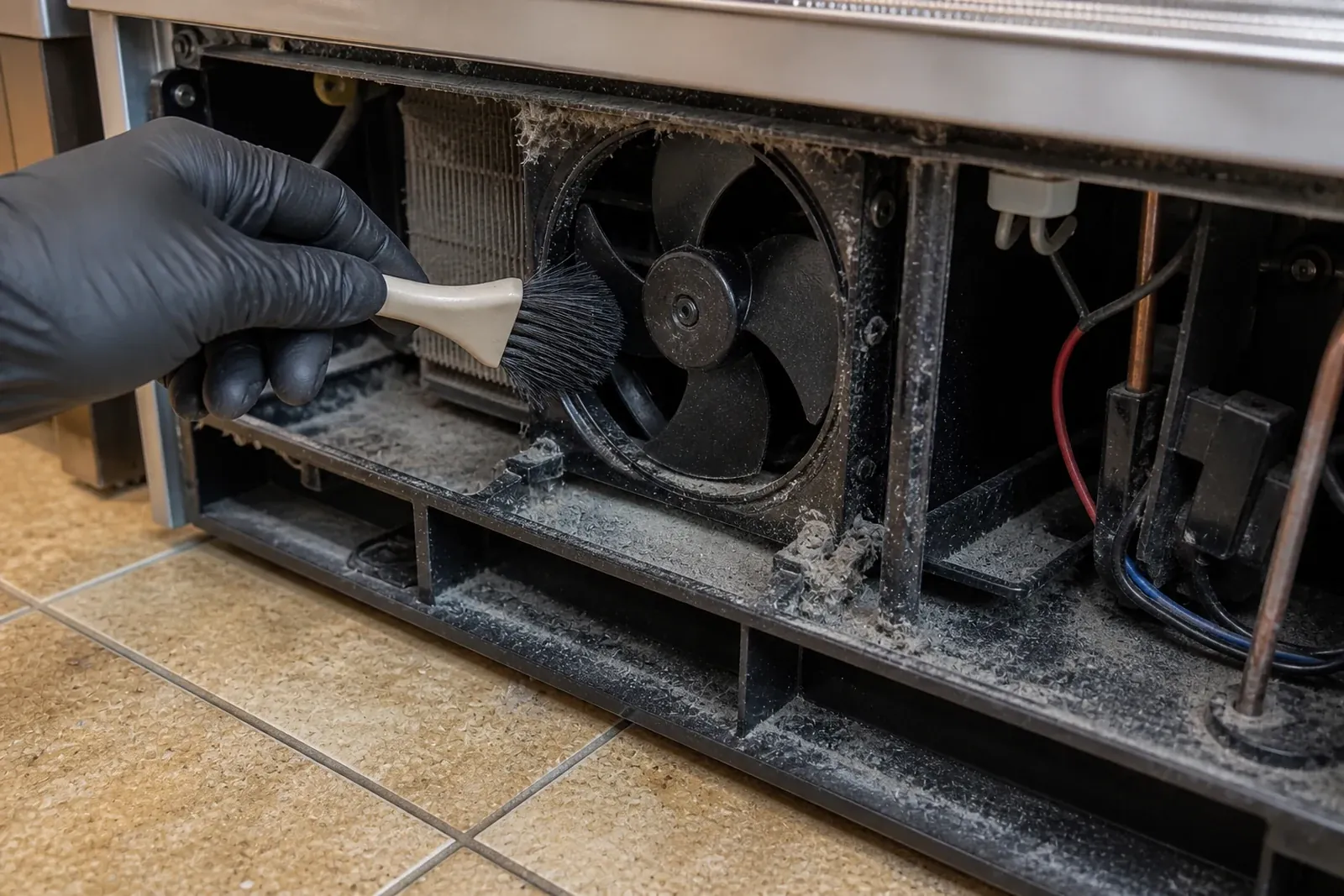
A Sub-Zero has only three things in it that make real, mechanical noise: the condenser fan behind the lower grille, the evaporator fan inside the freezer, and the compressor at the back. Everything else you hear — the clicks, pops, and gurgles — is the appliance doing its job. So when a new sound shows up, locating which of those three it comes from does most of the diagnosis, and tells you immediately whether you are looking at a quick cleaning or something that needs gauges.
San Ramon adds a specific twist to fan noise. The newer neighborhoods are still being built out, and the fine grey dust from active construction across Dougherty Valley and Gale Ranch, combined with seasonal Diablo winds carrying grit off the open hills, settles onto condenser coils and fan blades far faster than it would in a settled kitchen. Built-ins are also boxed into tight cabinetry, so a slightly unbalanced fan that might be inaudible in a freestanding fridge gets amplified by the enclosure into a rattle you notice from across the room. Both factors make a dusty condenser fan the single most common noise we are called about here.
What each sound means
Match the noise to its source
Identify the sound
Five steps before you call
- Locate where the sound lives. Stand at the lower grille, then open each door. A noise loudest at the grille is the condenser fan; loudest inside the freezer is the evaporator fan; coming from deep behind the unit is the compressor.
- Time it. Note whether the sound is constant, rises and falls with the cooling cycle, or fires periodically. Constant points to a fan or compressor; periodic clicks are usually the ice maker or defrost timer.
- Check the grille for dust. Pull the kickplate grille and look at the condenser and fan. A blanket of grey San Ramon dust on the coil and blades explains most rattles and whirs.
- Watch the temperatures. Confirm whether both compartments are still cold. A new hum with rising temperatures and nonstop running is the signal to stop guessing and call.
- Record it and the model tag. A short phone video of the sound plus the model-tag photo lets the San Ramon intake stage a condenser fan, evaporator fan, or sealed-system diagnosis before arrival.
If the trail leads to a deep hum or knock with poor cooling, that is a sealed-system or compressor diagnosis, not a phone quote. If it is the grille fan packed with grit, the Dougherty Valley dust-and-heat page explains why it loads so fast here, and the maintenance calendar sets the cleaning interval that keeps it quiet.
Run it or shut it off
What is safe to keep running in San Ramon
Not every noise means stop using the refrigerator. A grille rattle, a periodic ice-maker click, or a gentle gurgle is safe to live with while you schedule service, and on a dusty San Ramon condenser the rattle often quiets the moment the coil is cleaned. The sound that changes the math is a new deep hum or a hard knock paired with both compartments slowly warming and the unit running without ever cycling off. That combination suggests the compressor is laboring against a sealed-system problem, and continuing to run it hard in that state is how a repairable fault becomes a compressor replacement. If you hear that, move perishables to a backup, note your temperatures, and book the diagnosis promptly rather than waiting it out. For everything else, a clean and a fan check on the schedule in our maintenance calendar is usually all a quiet kitchen needs.
FAQ
San Ramon noise questions
Why is my Sub-Zero suddenly so loud in San Ramon?
The most common new noise we trace here is a condenser fan loaded with construction dust and Diablo-wind grit behind the lower grille — it rattles, whirs, or clicks against debris. Less often it is the evaporator fan inside the freezer, and least often a compressor laboring against a sealed-system fault. Where the sound is loudest tells us which, and only the last one is urgent.
Which Sub-Zero sounds are normal and which are not?
Normal: periodic clicks from the ice maker or defrost timer, gentle pops as the cabinet expands, and a soft refrigerant gurgle. Not normal: a persistent rattle or whir at the grille, a buzz inside the freezer, or a new deep hum or knock — especially paired with warming compartments. Normal sounds need nothing; the others are worth a look before they worsen.
Is it safe to keep running a noisy Sub-Zero?
It depends on the sound. A grille rattle or a periodic click is safe to run while you book service. But a new deep hum or hard knock combined with both sides warming and nonstop running means the compressor may be struggling — keep food moved to a backup and book promptly, because running it hard in that state can turn a repair into a replacement.
Does San Ramon dust really make refrigerators noisy?
Yes, more than most owners expect. Active homebuilding across Dougherty Valley and Gale Ranch, plus seasonal Diablo winds, load fine grit onto condenser coils and fan blades far faster than in a settled neighborhood. That debris unbalances the fan and dries its bearing, which is exactly the rattle-and-whir we clean or replace most often on San Ramon units.
How do I know if the noise is the compressor or just a fan?
Listen at the lower grille versus inside the freezer. A fan noise is loudest at its location and often changes pitch when you nudge the blade; a compressor noise comes from deep at the back, is a steady hum or knock, and usually rides with poor cooling. Fan jobs are modest repairs, while a sealed-system or compressor diagnosis needs gauges and amp readings.
Related
Booking
Quiet a noisy Sub-Zero — San Ramon
A short video of the sound and the model-tag photo let the San Ramon intake stage a condenser fan, evaporator fan, or sealed-system diagnosis. See the cost ranges for a number first.