Seasonal guide · 6 min read
Getting a built-in ready for San Ramon's hot inland summers
Tri-Valley summers run hot and dry, and that heat is the season a built-in Sub-Zero is most likely to struggle. A San Ramon owner's pre-summer checklist.
San Ramon sits inland, tucked against the Mount Diablo foothills, and summer here is a different animal than it is across the hills toward the Bay. The valley holds heat, afternoons climb, and the homes around Bollinger Canyon and Canyon Lakes can run warm well into the evening.
That heat is exactly when a built-in refrigerator is asked to work hardest — and it is the season we get the most calls about a Sub-Zero that cannot quite hold its numbers. A little prep before the first heat wave prevents most of them.
Why heat is the real test
A built-in sheds heat by pulling room air across its condenser coil. The hotter the kitchen, the harder that job is. On a 100-degree Tri-Valley afternoon, a coil that was merely dusty in spring suddenly cannot keep up, the compressor runs longer and warmer, and the unit drifts a few degrees off target. The fridge was fine in May; it is the heat that exposed a coil that needed attention.
Clean the condenser before the first heat wave
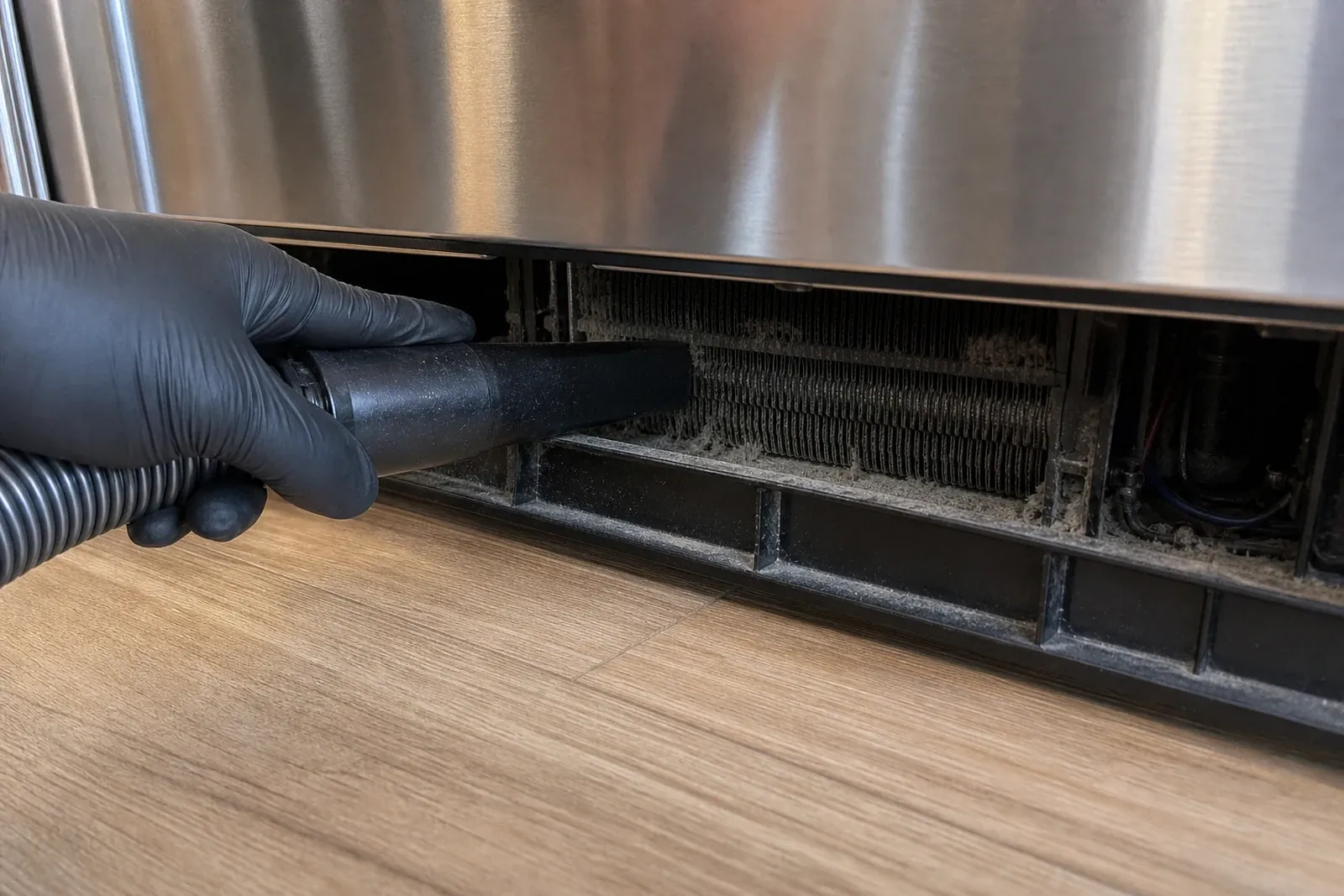
This is the single highest-value pre-summer step for a San Ramon owner. A condenser cleaning clears the coil so the unit can actually dump heat on the hot days ahead. It keeps the compressor cooler, which protects the most expensive part in the box, and it is far cheaper than the sealed-system repair a neglected coil eventually invites. Spring or early summer, before the real heat lands, is the time to do it.
Check the door seals and the airflow
A tired gasket leaks the most when the gap between inside and outside is widest — which is a hot afternoon. Run a quick check: the door should pull closed on its own and hold a sheet of paper snug all the way around. Inside, make sure packed shelves are not blocking the air vents, because a built-in relies on that internal circulation to stay even.
Mind the install location
Many San Ramon custom kitchens place the built-in near a south-facing window or beside a pro range. Both add heat load right where the condenser is trying to breathe. You cannot move the cabinetry, but you can keep the area around the grille clear and the coil clean, which lets the unit cope with a hot spot it was never going to escape.
FAQ
Questions & answers
When is the best time to service a built-in in San Ramon?
Late spring to early summer, before the valley's first real heat wave. A condenser clean and a gasket check then means the unit is ready when it is asked to work hardest.
My fridge was fine all winter and now drifts warm — why?
That is the classic Tri-Valley summer pattern. A coil that coped in cool weather can't dump enough heat on a 100-degree afternoon. It usually means the condenser needs cleaning rather than a major repair.
Go deeper
More San Ramon guides
Booking
Rather leave it to a specialist?
Have the failing compartment and model number ready, and you will get a real first opinion — not a sales pitch.