Wine storage guide · 6 min read
When a Sub-Zero wine column drifts warm in San Ramon
A Sub-Zero wine column should hold its zones to the degree. In San Ramon's hot inland summers, here is why a dual-zone unit drifts warm and what actually fixes it.
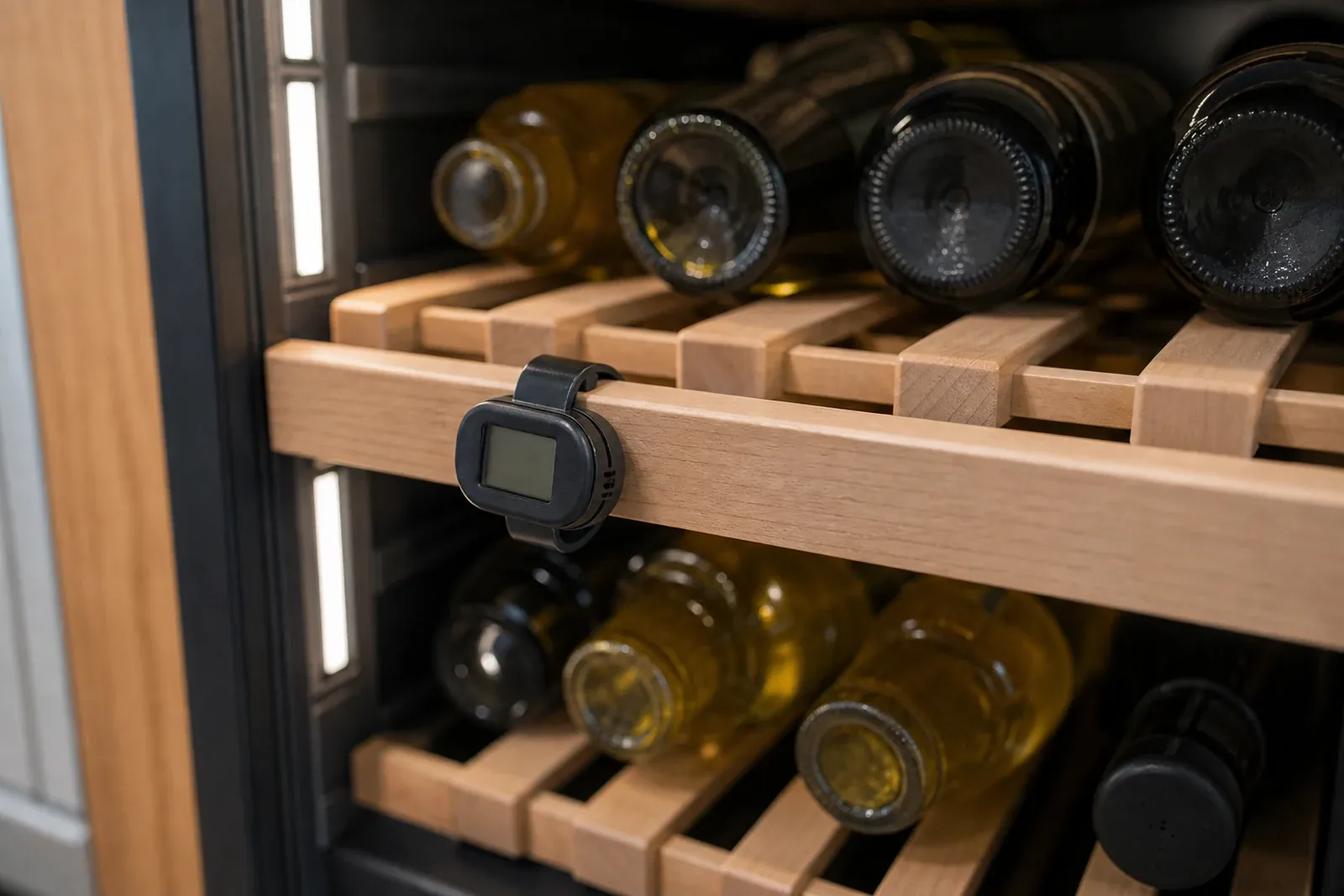
Sub-Zero builds serious wine storage — integrated columns and undercounter units engineered to hold a cellar's worth of bottles to within a degree or two. In the larger Gale Ranch and Norris Canyon estates around San Ramon, that column is often the centerpiece of a butler's pantry or a wine wall, and the owners who fill it are not casual about a few hundred bottles drifting off temperature.
The call we get most is some version of the same thing: the red zone reads right, but the bottles feel warm, or one zone has quietly climbed while the other holds. Tri-Valley summers, which bake inland well past what the coastal towns ever see, are usually what tips a marginal unit over the edge. Here is what is actually happening behind the glass door.
Two zones, one sealed system — and where it goes wrong
A dual-zone Sub-Zero wine unit holds two different temperatures from a single sealed refrigeration system, splitting the cold between an upper and lower compartment with a damper and a dedicated sensor for each zone. That elegance is also where most faults start. When one zone drifts warm while the other stays put, the problem is rarely the compressor — it is the zone sensor reading off, a stuck or miscalibrated damper sending cold air to the wrong compartment, or the evaporator fan that distributes that air slowing down.
When both zones drift warm together, the conversation shifts to the shared sealed system and the condenser. On a San Ramon summer afternoon, a condenser coil loaded with dust and pet hair simply cannot shed heat fast enough, and a wine unit — which runs at gentle, narrow temperatures — shows that strain before a regular fridge would. A coil clean often brings the whole cabinet back into spec.
The quiet faults bottles notice before you do
Wine is unforgiving of small, steady problems. A door gasket that no longer seals — easy to miss on a glass door you open and close gently — lets warm pantry air bleed in all day, and the unit answers by running longer and warmer. The UV-treated glass is part of that seal as much as it is sun protection; a tired gasket undoes both.
Vibration is the other one owners overlook. A wine cabinet is designed to run smoothly so sediment in older reds stays settled. A failing evaporator or condenser fan that starts to buzz or rattle is not just noise — it is agitation reaching the bottom shelf, exactly where your cellared bottles are most sensitive. If a previously silent column has developed a hum in the San Ramon heat, that fan is worth looking at before it both warms the cabinet and disturbs what's inside.
Repair or replace a wine unit
Most wine-cooler calls land firmly on the repair side. A drifted zone sensor, a damper, an evaporator fan, a gasket, a condenser clean — these are bounded, component-level fixes on a cabinet that was built to run for decades, and they cost a fraction of replacing an integrated column that was fitted to the cabinetry. We diagnose against the actual zone readings before quoting, so you are paying for the part that drifted, not a guess.
Replacement only really enters the picture when a sealed-system leak meets an older unit, where the repair approaches the value of the cabinet. Even then, for an integrated San Ramon installation the math often still favors the repair, because a like-for-like column has to fit the existing opening and surround.
FAQ
Questions & answers
One zone of my Sub-Zero wine unit is warm but the other is fine — what is it?
That split is the telltale sign of a zone-specific fault: a drifted zone sensor, a stuck damper sending cold air to the wrong compartment, or a slowing evaporator fan — not the compressor. We read both zones against spec before quoting so the fix matches the part that actually drifted.
Could San Ramon's summer heat be making my wine cabinet run warm?
Yes. A wine unit runs at gentle, narrow temperatures, so it shows a dust-loaded condenser sooner than a regular fridge does. On a hot Tri-Valley afternoon a clogged coil can't shed heat fast enough, and a condenser clean often brings the whole cabinet back into spec.
Is a humming wine cooler something to worry about for my bottles?
It can be. A wine cabinet is built to run smoothly so sediment in older reds stays settled; a new buzz usually means a failing evaporator or condenser fan, which both disturbs the bottles and tends to warm the cabinet. It is worth addressing rather than living with.
Go deeper
More San Ramon guides
Booking
Rather leave it to a specialist?
Have the failing compartment and model number ready, and you will get a real first opinion — not a sales pitch.